Keep the rest of my life away

24. Fantastic Place – Marillion

Marillion are probably the least “cool” band in the UK. Certainly the least covered in the mainstream music press these days considering the size of their fan base. I suspect they don’t care and more power to them for that. They were a big, big band for me as a teenager, presumably hooked in by “Kayleigh” in ’87 (some fine hair in that video) and then going backwards into the first two albums, “Script For A Jester’s Tear” and “Fugazi”. I don’t actually remember my route in but it must have been via the singles from “Misplaced Childhood” – they were probably the archetypal “handed down from older brother” kind of band but I didn’t have an older brother. I do vaguely recall liking a girl called Hayley at around the same time and I’m trying hard to suppress a memory of changing the chorus to “Kayleigh”* to fit my unreciprocated love. Sadly, a recurring theme of my teenage years. The lack of reciprocation, not the changing of lyrics to the chart hits of the day…

To fully immerse myself in this post I decided to listen to all of their studio albums, in order, up to and including “Marbles”, from which “Fantastic Place” is taken. That’s 13 records. It took me a couple of days and I did cheat a bit on day 2 when I had to listen to something else just to break things up. What struck me was the disconnect in my head between the two versions of Marillion – with Fish, with Steve Hogarth – and the reality. Fish era Marillion was the one that I grew up with and I was still a fan during the transition as Hogarth became the vocalist – in fact, the only line up I’ve seen live was with Hogarth round about “Season’s End” and “Holidays In Eden”. I still think of the band’s output as split roughly equally between the two singers but in actuality Marillion has long ceased to be Fish’s band. Albums with Fish: four. Albums without Fish: thirteen (counting the “Less Is More” acoustic re-workings album).

I lost track of the band just after “Holidays In Eden”, the second post Fish record. Listening back to it now it has its moments but it’s a little polite, particularly for my tastes back in 1991 when I was in thrall to fuzzed guitars and singing wasn’t singing unless it was a cathartic scream for understanding. Ironically the follow up, “Brave” is a fine record – a concept album about a girl found wandering on the Severn Bridge, unaware of who she is or how she got there – and I should have given it more of a chance back in ’94 when it came out.

There’s then a run of five albums between ’95 and ’01 which I’d never heard. This run also marks the point at which the band moved away from a traditional record label model for recording and distributing their music towards an ahead-of-its-time version of fan funding. I don’t know if they did it first but Marillion were certainly doing Kickstarter before anyone had even heard of Kickstarter. There’s an interesting Tedx talk from Mark Kelly (the band’s keyboardist) on crowdfunding on the band site: here.

Hearing these records for the first time, in sequence, was an enjoyable experience. A few songs popped out straight away as warranting further attention and “This Strange Engine”, in particular, as a complete album is one that I will go back to. Marillion don’t tend to write immediate songs though so repeated listens often repay; it’s music to sit and soak in rather than stuff to stick on in the background while you’re doing something else.

Those five take us up to “Marbles”. About three years ago I had noticed that a friend (who had been a fellow Marillion fan at school) had been listening to a couple of their songs that were unfamiliar to me – via last.fm, the marvelous music-meets-stats website (my profile is here). This piqued my curiousity and I found the songs on a streaming site. One of them would have been “Neverland” which I immediately fell in love with and subsequently ordered the album direct from Marillion.com. Who says streaming services don’t work ? Artist royalties is perhaps a debate for another time…

“Marbles” is a wonderful record. Built loosely around recurring themes of madness, escape and the loss of childhood innocence it showcases the band at its best – I think it’s their career highpoint (although “Clutching At Straws” from the Fish era is also a brilliant record). Those recurring themes, eagle eyed regular readers of this blog will have observed, are like cat nip for me but they wouldn’t be enough on their own for the record to resonate. Sometimes, for me, like quite a lot of what you might term prog, Marillion can lose the balance between a song and something that extends for its own sake. Sometimes the sounds don’t seem to be going anywhere. That never happens on “Marbles”. Never happens on the 13 minute opener “The Invisible Man”, never happens on 12 minute closer “Neverland”. And even never happens during the 17 minutes and 57 seconds of “Ocean Cloud”. Everything here, every note on this record, is perfectly judged, immaculately played, and serves each song. There’s nothing extraneous which is no mean feat given the length of the album.

There are four or five tracks on the record that I really love, particularly the stellar closer “Neverland” (well worth your time, linked on the Neverland reference above) but “Fantastic Place” is the one I have taken refuge in more times than I care to remember. Sunk into it and let it spirit me away. A song about escape that I use to escape.

As is becoming a recurring theme in this list my relationship with the song doesn’t rest on a literal read of the lyrics although there are themes here which resonate, notably about opening yourself up to somebody (say you understand me and I will leave myself completely; I’ll tell you all I never told you, the boy I never showed you) and the idea of release from everyday life (take me to the island, show me what might be real life; put your arms around my soul and take it dancing). This song, for me, is all about how it builds. It’s similar in some ways to where we started, way back with Warren Zevon and “Desperados Under The Eaves” – a self contained journey from disillusionment to the potential of something better.

“Fantastic Place” is a slow burner, from the muted, subdued opening – Hogarth almost murmuring the verse – through choruses that progressively grow in scope musically; it swells like a wave building until finally breaking into the bridge. That section as the bridge lyrics run over into the guitar solo (say you understand me and I will leave myself completely, forgive me if I stare but I can see the island behind your tired, troubled eyes) is breathtaking. It’s not rare for a song to make the hair on the back of my neck stand up but it is rare for the same song to do it, in the same place in the song, every single time I hear it.

Then we’re into Rothery’s gorgeous solo (his playing throughout “Marbles” is exquisite) before the song just continues to soar through to its close. Hogarth’s vocals on this track are also worthy of special mention, particularly in the very final section where he pulls off a performance that’s technically spot on (in so far as these ears can tell such things) but that wrenches something genuine out of his guts. I deliberately posted a live version at the top of this as it’s worth watching Hogarth perform it and his reaction to the song as it finishes – he is utterly lost in it and it’s a touching moment seeing him almost return to the room, back from wherever the song has taken him.

There is a magic in this song, a transformative, transportative magic. Strong enough to make up the word transportative and strong enough to carry me away when I need to be carried away.

* Given that Fish allegedly wrote “Kayleigh” about an ex girlfriend called “Kay Leigh” I think I’m in good company. She’ll never guess, Fish.

Just Write: Week 2, Jan 27

Second week of my writing group / class kicked off with our homework from week 1. We had been asked to think about an item of clothing from childhood and what it meant to us and write a short piece about that. Here was mine:

It was a black shirt. Just a plain black shirt.

Except of course it was so much more than that. Since I’d seen that Sisters Of Mercy video on Top Of The Pops it wasn’t just a black shirt anymore. It was a new identity. It was freedom. It was rebellion. Still quite a polite, “no, actually, I don’t think I will take those posters off my wall and no I haven’t done that History course work yet” kind of rebellion if I’m honest. But, nonetheless, rebellion. Sticking it to the Man. Sticking it to him by sitting in my room listening to doom laden bombastic music. Goth music. In my black shirt.

With that black shirt I could stalk the streets of the West Country, maybe in a long trench coat, quoting Poe and Coleridge, my raven hair lustrous beneath the full moon. Like that guy in the Sisters Of Mercy… Look at him in the video striding through a post apocalyptic wasteland in all that leather. All that leather, and his black shirt, with just that similarly clad dominatrix for company. That could be me. That could be me in Plymouth. That could be me, in Plymouth, in my black shirt.

I’ll have to wait for some of the stuff obviously. Dying my hair seems like quite a big step. Can’t really afford any leather and I don’t know any dominatrixes. Dominatricies ? What is the plural for that anyway ? Whatever, I don’t actually know any women as such so, I guess, it doesn’t really matter what the plural is. I suppose I don’t really need a trench coat either; I’ve already got that ski jacket. It’s reversible – so, practical but quirky. You don’t see many Goth’s skiing though.

But I could memorise some poetry. And I had that black shirt. That bible black shirt. See, poetry. The black shirt was working its dark gothic magic already.

I only wore it once. My mother washed it. Not washed it so much as boiled it really. It came out an insipid washed out grey and shrunk to a third of its former size.

Now it was a grey shirt. A tiny, grey shirt. No one strides through a post apocalyptic wasteland in one of those. No one even strides around Plymouth in one.

Best do that History coursework. Maybe take a couple of the posters down.

I actually had a couple of the bits for this already in a previous post – way back at the start of writing about 42 records in my second entry about “This Corrosion”. The stalking the streets of the West Country paragraph is lifted from that and I think I started there and then worked the rest around it. I liked this one and it came out pretty much how I wanted – tonally I think it works reasonably well although it should perhaps concern me that I still find that “voice” relatively easy to write in some twenty five years later…

The bulk of the class was dedicated to looking at characters and playing around with unusual or quirky traits that might lift characters out of cliche. We used a variety of professions as a route into this and then wrote about one. So:

He started to straighten his tie, catching sight of himself in the mirror outside his office. It was loose, top button undone. He turned his face to examine his profile and ran his hand across two days of greying stubble. His hair was unkempt and his eyes were shot with blood.

It had been like this since Grace had left. Emotionally immature she’d called him. A child. She’d raised their children already. Didn’t want to raise another one. What was it she’d said, he thought ? Incapable of expressing himself ? Something like that. Perhaps he should talk to someone about it she’d yelled at him that last time they’d seen each other. A professional she’d sneered.

He left the tie. Thought about straightening it again before, finally, taking it off. People liked casual now anyway. Less intimidating. He was sure someone had told him that. Maybe it had been Alice but he tried not to think of her now if he could help it.

He looked away from the mirror and toward the door with its familiar sign. William Rogers: Psychiatrist and Marriage Counsellor. 

This was more of a mixed bag for me than the homework piece. Having started the exercise looking for ways to render characters as non caricatures I feel a bit like I fell into a great big “psychiatrist with own emotional problems” sized cliche hole. I don’t mind his inner dialogue though and I threw the Alice hint in quite late (if there can be a quite late in the space of ten minutes) and it does provide a bit of a tease. I have also noticed that I seem to write in quite short, staccato sentences a lot. Like this. Particularly when I’m on the clock. It can be effective. But also a little wearing when over used. As here.

All of that self flagellation aside it was another highly enjoyable couple of hours. Some of my fellow class mates came up with some great character sketches and it’s fascinating to hear just how many different directions twelve people can go given the same jump off point.

Just Write: Week 1, Jan 20

Quite by chance – reading a community centre notice board whilst waiting for my daughter to appear from one of her after school activities – I discovered that there was a creative writing group / course running locally. Thinking that it would be something fun and interesting to do in the new year I had signed myself up prior to Christmas and thought this would be as good a place as any to record my output.

So the first session was last week and it was pretty nerve wracking. I am entirely comfortable speaking and presenting in front of people – it has been a large part of my job for a long time – but there was something very different about reading your own work aloud in front of what were (at the time) a bunch of strangers. Albeit lovely strangers as it turns out.

I will type up each week’s work without tinkering. That does mean that some of it will be pretty raw and some of it will undoubtedly be dreadful – most of it is written in the class in the space of about ten or fifteen minutes so it is largely unedited. However, fortune may favour me with the occasional sentence that isn’t half bad. Even if it doesn’t then I can have a good chuckle back at this in my dotage.

Exercise one in week one was to take a blank piece of paper and brainstorm (that’s not politically correct anymore is it ?) five words that you associate with the word “write”. Then to take each of those five words and come up with five additional words for each – so thirty one words in total as a rough and ready mind map.

Here were mine with the initial five words in bold: Escape – Runaway – Holiday – Job – Calling – Dream – Sleep – Romantic – Future – Ideal – Wonderful – Stuck – Procrastinate – Blocked – Choked – Unsure – Blank – Painful – Failure – Struggle – Esteem – Poor – Fear – Communicate – Reach – Stories – Me – Inside – Touch.

Let us not trouble ourselves too much with amateur psychology at this point… (or the fact that I seem to have missed a word somewhere). The second part of the exercise was to spend five minutes writing a short piece that used all of the words you had come up with. So I had:

The holiday was supposed to be an escape. A chance to runaway. The job was going nowhere, career blocked, and she was facing up to thinking of herself as a failure. The dream, of course, had been different. Now she just thought it was romantic nonsense that had filled her head; stories she’d tell herself about her ideal future. She’d thought it was a calling, not this painful thing it had become.

But the holiday, like the job, like everything, had not been an escape. It was a struggle. Of course it was a struggle; she couldn’t escape herself and what she carried inside.

Again, we may not want to trouble ourselves with the amateur psychology. I didn’t hate it, I guess that’s a decent enough start. I didn’t really like the end though as it felt a bit cliched to me even on first writing, let alone on reading back, but for five minutes scribbling from nowhere I thought it was okay.

The second exercise involved talking about our personal bucket lists (i.e. things you’d like to do before you die) in pairs before picking one of them and free writing about it for ten minutes. In this context “free” writing is simply starting to write and not letting yourself stop for the duration, trying to disregard any internal editing process. That latter point is something I find particularly hard but also may be a big reason why I never make very much progress. Anyway, my piece was about meeting Bruce Springsteen:

The great man, as it turned out, was smaller than I’d expected. Not Bono short. Or Kylie short, but still appreciably less tall than his reputation suggested. He was Bruce Springsteen and if he was at all bored of yet another meet-the-fans-handshake-and-a-few-cursory-words then he didn’t let it show.

“How you doing ?” he asked.

Momentarily I was frozen, utterly terrified. I was having difficulty separating the myth in my head – the quasi mystical mythologiser of American dreams and nightmares – from the man who was extending his hand towards me. The touch of that handshake brought me round. His hands were still slick with sweat, fresh from leaving the stage, and the basic physicality of this made him real to me again. Holding it together I blurted out:

“Great set, great set, it’s… you don’t know what it means to me to meet you…”

He responded with a broad smile and clapped me on the shoulder.

“Hey no problem. Thanks for coming out”.

And then he was gone, on to the next out stretched hand in the queue. The next fervent believer. I watched him go. Definitely smaller than expected but always a giant to me.

Again, I don’t hate it. I do seem to have acquired a habit of pay off lines that might come off as a little too derivative but I did want to give the piece a sense of being self contained, of having a close to it. Not sure why I gave Springsteen the same vocal mannerisms as Joey Tribiani from Friends either… Obviously my short hand for New Jersey. At least he didn’t offer me any “cwoffe”. But I did like the height thing as a way in and he is only 5’9″ ish so it’s entirely possible that I would be struck by that if I ever met him.

And that was week one. It was really good fun. If I’m going to be a frustrated writer then I might as well enjoy being a frustrated writer… and actually write some stuff.

Here we are now, entertain us

23. Smells Like Teen Spirit – Nirvana (The Spam Ducks / Brian Clough)

I know, I know. Too obvious, right ? Well, I kind of agree but it’s not on the list, not entirely at least, for the obvious reasons. It’s here as much for the, ahem, spirited cover version of it that I was once involved in as it is for kicking in the door to the mainstream for a slew of US alternative bands in the early 90s.

There’s a whole host of musical “scenes” that I could lay claim to have been part of. Part of in the sense of associating with, using as a badge of identity, rather than literally being part of obviously – there isn’t about to be a big reveal wherein I announce that I was actually the bassist in Buffalo Tom. Any of the following would have just about fallen into my later formative years:  Madchester, acid house, the tail end of the New Wave of British Heavy Metal (sort of), glam / hair metal, and stretching it a bit, C86 if I’d started early and Britpop if I’d started late. Whilst there were bits in all of those that I loved at various stages, including a long infatuation with Def Leppard’s “Hysteria” which baffles me now, I never really felt like I belonged to any of them. For me it was all about the explosion of primarily American bands that emerged in the late 80s and early 90s playing, for want of a better term, alternative rock. Key reference points would include Pixies, Throwing Muses, Belly, Mudhoney, Dinosaur Jr, Sonic Youth, Buffalo Tom, and Pavement, as well as people like Teenage Fanclub, Ride, and The Wedding Present from the UK.

At around the same time – 1990 to be precise – I began to learn to play the guitar. Play probably isn’t the right verb. Work would be closer, for both me and anyone unfortunate enough to be listening. I learned – in those heady days before any of us had the internet – via correspondence with a friend who used to send me little chord diagrams in the post, gradually progressing to a sort of rudimentary tablature. He’d gone on to University, along with most of my school friends, whilst I waited another year to do fun things like retake a couple of exams and have knee surgery. That year did give me the time and inclination to pick up the guitar though so perhaps these things happen for a reason.

I think the first song I could vaguely bash my way through was “My Favourite Dress” by The Wedding Present but playing guitar also meant that I could begin to relieve myself of vocal duties in the finest band ever to emerge from the villages of the South Gloucestershire area. I’ve relived the glory days of The Muppets elsewhere in this blog but they were not the first band I was a part of. No, that honour belongs to The Spam Ducks who later morphed into Brian Clough. Not literally.

The Ducks / Clough had various line ups over a period of a couple of years but was principally the result of the friendship between three of us – Ian, Russ and myself. Those are their real names. I feel they should shoulder as much responsibility for this as me. The band was an excuse for us to mess around and entertain our friends – we would periodically put on a show at a local village hall. On very, very rare occasions we convinced ourselves that we sounded okay. We had a certain ramshackle charm perhaps, often depending on who we’d persuaded to play drums (never underestimate the power of a good drummer to make a bad band sound okay). I think we mainly did it to make each other laugh and, on that score, we were the greatest band in rock history.

As none of us could really play that well we ended up having more of our own songs than covers; we usually couldn’t play the covers. Song writing involved someone coming up with three chords – some variation on D C G proving especially popular – and someone else turning up with a set of lyrics. I say lyrics… Quite often I think a good idea for a song title arising from something we found funny was then stretched out beyond the point of absurdity. So our set typically included: “Washing Machine On My Mind” (it’s tough on dirt, it’s not kind), “Soap On A Rope” (sitting in my bathtub, it’s not a tin one), “Fishfinger” (genuinely with no adolescent sex-gag connotations – it was about fishfingers that you, you know, eat), and “Alan” (Alan, I’d rather drink a gallon… of beer… than have you near…). “Soap On A Rope” was actually a pretty good little punk song.

When we did venture into cover versions it was typically something by The Wedding Present which was helpful in that a) most of the songs were three chords, b) the vocals don’t require much by way of singing ability, and c) no one in the audience really knew the songs anyway. That all changed when we decided to take on “Smells Like Teen Spirit”, one of the biggest songs of 1991 and so called anthem for Generation X. So how did we approach Kurt Cobain’s sarcastic, contradictory call for teenage revolution ?

We did it sat in large, high backed armchairs with Ian reciting the lyrics in a bluff Northern accent (part Mark E Smith, part Python Four Yorkshireman sketch). There may have been an odd call and response element to the “hello” “hello” bit leading into the chorus involving waving. It is fair to say that we made the song our own. I think Kurt would have approved. If Bill Drummond had done it people would have called it art.

That was one of our last performances and who knows what we might have gone on to accomplish ? We were definitely branching out into experimental territory – we had supported ourselves at that gig as The Living Carpets (stolen entirely from Vic Reeves & Bob Mortimer) and performed the theme song to children’s TV show “Heathcliff” with large pieces of carpet taped around our heads. I guess to an outsider it would have looked like kids making a godawful racket, full of in jokes and nonsense but for us it was just hugely fun. Part of the point, as well, was to provide some entertainment for our friends – even if sometimes they got to laugh at us rather than with us – and hopefully we managed a little of that too.

I don’t listen to “Teen Spirit” very often anymore. Don’t listen to “Nevermind” much to be honest – time hasn’t been kind to the production and I think “In Utero” is a far superior record. For a long time though Nirvana were really important to me. It sounds kind of sad but I can strongly recall hearing the news about Cobain’s death and I was affected by it. That was still no excuse for spending a couple of years trying unsuccessfully to ape his hairstyle though. To everyone that witnessed it: I am truly sorry.

When I do listen to “Teen Spirit” now I tend to remember Russ struggling to switch his distortion pedal off, hear Ian bellowing “hello hello” like he’s Graham Chapman at the start of the Spanish Inquisition skit, and see a group of old school friends staring at us in a mixture of amusement and bemusement. It makes me smile.

There’s something dying down on the highway tonight

22. Thunder Road / The Promise / Racing In The Street – Bruce Springsteen

“A reckoning with the adult world; a life of limitations and compromises… but also a life of (kind of) just resilience and commitment to life. To the breath in your lungs. How do I keep faith to these things ? How do I honour these things ?”

If writing these posts – writing full stop – is about anything for me then I guess it’s about trying to address Springsteen’s questions above. It’s the questions that I’ve spent much of my adult life trying to answer and the ones that have particularly vexed me in the past five months: where’s the balance between doing what you feel you want to do and what you think you should do ?

The conceit in threading these three songs together is mine. They’re not sequenced in this order anywhere officially but thematically they fit and, recently, I’ve taken to spinning a narrative across them. It may not be the “correct” narrative but it’s the story that the songs tell to me at this point in my life. Those three songs, spanning two albums and three years; a Great American Novel in 15 minutes. That span of two albums, of course, technically covering a third, the set of songs compiled as “The Promise” that, slightly astonishingly, didn’t make the cut for “Darkness On The Edge Of Town” and only officially surfaced thirty years later as part of its anniversary box set release.

The order is important. Opening with the defiant optimism of “Thunder Road” – it’s a town full of losers, we’re pulling outta here to win – followed by the blunt rebuttal of “The Promise” – everyday it just gets harder to live this dream I’m believing in – and closing with “Racing…” which allows for a glimpse of some degree of reconciliation with what life has delivered – tonight my baby and me, we’re going to ride to the sea and wash these sins off our hands.

Max Weinberg sums up the journey Springsteen’s characters (and, by extension, Springsteen himself) make:

“On Born To Run you had the characters saying “baby we were born to run – we’re gonna get out”. In the ensuing three years between Born To Run and Darkness it was made painfully clear: you can’t just run away”

You could make the case to rejig the order with “The Promise” closing the sequence, its yearning, mournful thunder road refrain echoing back to the call of the open highway in “Thunder Road” itself; escape and freedom replaced with despair. That though would be a pretty bleak read and it’s interesting that Springsteen didn’t find room for “The Promise” on “Darkness…”; effectively you could see “Racing In The Street” as the song that picks up the journey of the lovers we meet in “Thunder Road” and it offers hope in its glorious extended coda where “The Promise” offers none. Springsteen almost always offers hope and redemption. It’s perhaps also telling that when he toured Darkness he completely flipped my order, following “Racing…” with “Thunder Road”; a second chance for his jaded lovers ?

“Thunder Road” opens “Born To Run” and is a song I’ve known by heart since I was about 16. I vividly remember sitting in my History A level – the actual exam – having written everything I was going to write about the Reformation and having twenty minutes to spare. So I wrote out the lyrics to “Thunder Road” for no other reason than I could. I didn’t submit the lyrics. My resultant grade suggests that I might as well have done.

It deals, like much of “Born To Run”, in the idea of escape, breaking out of a small town, a small life, for something brighter. Life is still enticing in “Thunder Road”, full of promise, with magic in the night and these two lanes (that) will take us anywhere. There’s a confidence, a certainty, to the male character in the song urging Mary to pick up and leave with him. There’s no doubts here other than the inference that Mary is reluctant – so you’re scared and you’re thinking that maybe we ain’t that young anymore. An unshakeable belief that heading out on Thunder Road with the windows rolled down, wind blowing in their hair, will lead to some fabled promised land.

“Thunder Road” is a brilliantly constructed song. Solo piano picking out those opening notes, harmonica blowing in the background and Springsteen still in a lyrical phase that’s overtly poetic, overtly cinematic:

The screen door slams, Mary’s dress sways

Like a vision she dances across the porch as the radio plays

Roy Orbison singing for the lonely

Hey that’s me and I want you only

First four lines and you’re in that scene, there’s a picture in your head, there’s movement, there’s sound, and there’s suddenly two people that you want to know more about. Past those four lines and the song progressively builds and builds, more and more instrumentation joining our protagonist’s exhortations to Mary to come away with him before the band all come in right on roll down the window and let the wind blow back your hair – as if the music literally signals that sensation of release in the act. From there it’s full throttle through to the climactic it’s a town full of losers, a heartbeat of a pause, and then the joyous outro as our lovers drive off into the sunset.  

“The Promise”, recorded during the sessions that led to “Darkness On The Edge Of Town”, didn’t officially surface in the version I reference here until the 30th anniversary boxset for “Darkness” came out in 2010 (32nd anniversary not presumably having quite the same ring) although there is a stripped back take on “Tracks”.

It’s pretty hard not to hear “The Promise” as the extension to the story started in “Thunder Road”, largely, of course, because its chorus specifically references that place. In Springsteen’s words it’s “about fighting and not winning” and lyrically the song is brutally stark: inside I felt I was carrying the broken spirits of all the other ones who lost; all my life I fought that fight – the fight you can never win; something in your heart goes cold; there’s something dying down on the highway tonight. The burning certainty of “Thunder Road” is utterly gone here.

Musically “The Promise” is glorious: rising and swelling piano, guitars, strings and layered harmonies. It’s rich and beautiful and achingly sad. It is utterly astonishing that a song as good as this – good enough for many artists to hang an entire career on – was left on the shelf (as a recording) for the best part of thirty years.

I usually make it to the verse about “I built that Challenger by myself but I needed money and so I sold it” before the song breaks me. It’s a hoary old criticism leveled at Springsteen that he deals too heavily in metaphors relating to cars and highways but if you can’t empathise with the destruction of someone’s dream wrapped up in those lines then you must have a steelier heart than mine. That section gets me every single time. I’m fine… I’m fine… No, I’m a broken man. On a very personal level it also came to represent how I felt about the fact that I’d stopped writing. Had somehow become, in my head, a writer who didn’t write. Of course, a writer who doesn’t write isn’t a writer at all. It’s delusional. Dreams. However, a writer who doesn’t write might never have to face up to being not good enough and, for a long time, that was perhaps the unspoken truth I hid behind.

And then there’s “Racing In The Street”. In my contrived sequence this brings our little story to a close – an ambiguous close but a close nonetheless. The song stands easily on its own, it’s self contained, and largely wraps up the expression of that journey from hope down to despair and then back towards a glimpse of new possibilities that I’ve been trying to articulate across the three songs. The truth is that each of the three should fill a place in this list as, without question, these are three of my favourite songs and “Racing In The Street”, if you pushed me, is probably what I consider to be the finest song ever written. It’s a masterpiece. I get that these things are inevitably subjective but that’s the one I return to again and again and again.

The bulk of “Racing…” is quiet, sober, reflective. The story of a guy looking back on his youth spent racing cars up and down the strip with his buddy; a release from the drudge of working. Eventually he meets a girl, they settle down, life turns a little sour (she cries herself to sleep at night; all her pretty dreams are torn – stares off alone into the night with the eyes of one who hates for just being born). Somewhere in their lives they’ve lost their way, he’s become one of those guys that just gives up living, starts dying little by little, piece by piece. It’s heart breaking in how ordinary it is. No dramatic event, just an implied slow erosion of the dreams that brought them together and a realisation that life isn’t as simple as blowing away other racers on a warm summer’s night. Or a realisation that maybe that was as good as life got.

If that was the end then we’re back in the same place as “The Promise”, have told the same story twice: bitter, disillusioned and washed up. But that isn’t how “Racing…” ends. The song turns when it’s at its darkest – it does what Springsteen at his best does which is to offer up redemption and hope when faced with life at its worst. So there at the end, with a nod to the other hopeful dreamers and travellers on the road, the characters in “Racing…” take another trip:

For all the shut down strangers and hot rod angels

Rumbling though this promised land

Tonight my baby and me, we’re gonna ride to the sea

And wash these sins from our hands

Tonight, tonight, the highway’s bright

Out of our way, mister, you best keep

Cause summer’s here and the time is right for going racing in the street

The piano then plays the main melody line unaccompanied before each instrument is reintroduced, beginning with – to my ears at least – an optimistic organ figure and then the song stretches out into an extended coda. That most glorious, beautiful coda. To me it always sounds like they’re watching the sunrise, the first rays of a new morning offering up, even if only briefly, a new set of possibilities on a new horizon.

There’s a documentary that was included as part of the “Darkness” boxset about the making of the record (you can see find it cut into small pieces on Youtube if you care to look). In it Springsteen describes the fundamentals of what the songs from Darkness are about and, in so doing, cuts right to the heart of why that entire record speaks so loudly to me:

So you had to lose your illusions while, at the same time, holding on to some sort of possibilities. But more so your illusions of adult life and a life without limitations which I think everyone dreams of and imagines at a certain point. The song that needs to be sung is the song about, well, how do you deal with those things and move on to a creative life, a spiritual life, a satisfying life, and a life where you can make your way through the day and sleep at night ? That’s what most of those songs are about.

It’s a difficult journey from the fuck-you exuberance of pulling outta here to win to the quieter contemplation of the compromises required in an adult life, a life with responsibility. In many respects I’m extremely lucky. The compromises I’ve made weren’t ones about relationships – I’m not literally experiencing the journey to disillusionment that Springsteen’s lovers are – or the people I’ve been fortunate enough to spend my life with. No, they were about how I spend my time. How and where I invest my energy. Whether I give free expression to myself. Whether I spend my moments committed to something that I believe in and care about. Or whether I punch the clock and pick up the pay cheque.

Springsteen from the documentary again:

“Life is no longer wide open. Adult life is a life of a lot of compromise… and that’s necessary, there’s a lot of things you should be compromising on. And there’s some essential things where you don’t want to compromise. So figuring those things out… 

What’s the part of life you need to compromise to, whatever it may be, pay your bills, get along, to feed your kids, to make your way in the world ? And then what’s the part of life where there’s a part of yourself you can’t compromise… or you lose yourself ?

The answer to that is probably the key to everything. And the answer to that still eludes me.

These singalong songs will be our scriptures

21. Stay Positive – The Hold Steady

So this is halfway, the 21st record of the 42. Except it’s not really. It’s actually an excuse for me to cheat the initial remit of this blog and repurpose it slightly for the future.

Of all the things that I have chosen to do in the last three or four months this has been one of the most rewarding. Not the easiest – usually in the reading back and painful awareness of my limitations – but rewarding nonetheless. So I’m absolutely committed to finishing the list, chronicling another 21 records that have been important to me so far, but I’ve also found that there have been times that the original premise has been a constraint; there have been things I’ve wanted to write about that just didn’t fit. Or could only fit via an arduous process of shoe horning. I could start a different blog I guess but it seems a shame to waste any accumulated goodwill and traffic (limited though it may be) in starting something again.

So here’s the broadening of the remit. For a while I’d been playing around with the idea of 42 as an important milestone number with half an eye (not an entirely serious eye I’ll grant you) on Douglas Adams’ answer to the life, the universe, and everything in The Hitchhiker’s Guide To The Galaxy. I’m not about to claim anything as grandiose as genuinely illuminating the question as to what it’s all about here but I think there is something in that sentiment for me personally – some of the moments captured here have touched on the things that are fundamental for me. I will try to make it less wanky than that sounds.

So that was a long winded way of saying that I’m going to carry on writing this but also write about some other things too. I imagine that music will continue to figure pretty strongly.

The rest of this post is essentially given over to a number of people who’ve been kind enough to read what I’ve written so far. A few weeks ago I had canvassed opinion on songs that were important to other people with the notion of constructing an alternative 42 compiled from friends and family. Turns out I either don’t have 42 friends or I don’t have 42 friends who were prepared to offer up a song; a mix of the two I suspect. However, I did manage to pull together a list of 21 songs (a couple of people came up with more than one) which seems fitting and, ahem, convenient as this is post number 21. Here’s the records (all with links if you want to hear them):

A Rainy Night In Soho – The Pogues

Remember You’re A Womble – The Wombles

Hocus Pocus – Focus (link is to a live version even more bonkers than the studio recording)

Page One – Lemon Jelly

Best Of You – Foo Fighters

Total Eclipse Of The Heart – Bonnie Tyler

The Stairs – Inxs

Why Worry – Dire Straits

Freakscene – Dinosaur Jr (dreadful video, incredible song)

Days Go By – Keith Urban

Defying Gravity – Idina Menzel / Kristin Chenoweth

Accidently Kelly Street – Frente

Fairytale Of New York – The Pogues & Kirsty MacColl

Verdi Cries – 10,000 Maniacs

Ring Out Solstice Bells – Jethro Tull

You Do Something To Me – Paul Weller

Everything I Own – Ken Boothe

If You’re Going Through Hell – Rodney Atkins

Letter To Me – Brad Paisley

Alive – Pearl Jam

<childhood album, title forgotten> – Rolf Harris

There isn’t a neat and tidy way, thematically, to tie these songs together beyond the fact that what became apparent in hearing different people’s take on the importance of music to them, or the specificity of time and place inherent to them in some of these songs, was that songs can be a powerful anchor in people’s lives. So the headline song on this post – the mighty Hold Steady’s “Stay Positive” – was as close as I could come in wrapping up that sentiment, particularly with respect to the line about “these sing along songs will be our scriptures”. The Hold Steady have never run shy of declaring the redemptive, life affirming power of music – specifically for them rock and roll –  and its capacity to move people in extraordinary ways and this song pretty much sums up their mission statement.

It also, in its opening lines, ties up nicely one of the great things that has come out of the experience of writing many of the posts so far: I got a lot of old friends that are getting back in touch and it’s a pretty good feeling, yeah it feels pretty good. The stats will say that I’ve had something like 1200 views of this blog over the past three or four months. Pretty small beer. But I’ve worked in market research long enough to know that stats lie or, at least, never tell the whole story. I’ve also had extremely kind comments, compliments, suggestions of other songs I might like, virtual conversations about choral pieces, and shared reminiscences. The connections have made the experience far more rewarding for me.

So, that list of 21 records. There were a few new songs here for me – Brad Paisley and Rodney Atkins bringing the country (two kinds of music, y’all), Focus bringing the frankly barking mad yodeling (track reminds me a lot of Muse), and strangely I’d never heard the Jethro Tull song despite being familiar with some of their early stuff. I didn’t know the INXS track either which was a reminder for someone of a concert experience and I can imagine the song as a great opener with its steady build; plenty of time for Michael Hutchence to make his entrance. Not so much now, obviously. We’ve got songs of childhood (or some people winding me up) from The Wombles and Rolf Harris – reminders of a more innocent time. At the time of writing Harris has been charged with twelve counts of indecent assault and, depending on how the trial goes in April, may end up being expunged from the cultural record in much the same way as Gary Glitter has been. There’s Bonnie Tyler’s power ballad par excellence, an impassioned pile-driver from Foo Fighters, the sunshine pop of Frente – very hard to listen to without smiling – and the ambient electronica of Lemon Jelly. There’s Elpheba’s anthem from Wicked about realising your potential and discovering who you are (my daughter’s pick) and Keith Urban’s country rock call to live life to its full (don’t tell my wife but I actually really like this song and Urban is a remarkable guitarist). For pure romance you won’t find many finer songs than “Rainy Night In Soho” (or, indeed, the differently romantic “Fairytale Of New York”) and you won’t find many finer songs, full stop, than “Verdi Cries” – in mine and a friend’s ever shifting list of the top 5 songs ever written this was always (only half jokingly) the only ever fixed point. There are songs attached to unhappy memories from Ken Boothe and Dire Straits, and songs attached to great memories from Pearl Jam and Paul Weller.

There’s probably only one song that I might have picked for my own list, much as I like many of the selected songs. Dinosaur Jr’s “Freakscene” is one of a handful of songs from the US alt invasion of the late 80s and early 90s that I strongly associate with a club in Bristol that a group of us frequented. Happy times and one to revisit in a future post – either with that song or one of its brethren. God I love that song though.

The stories attached to all of these songs aren’t mine to tell but a sincere thank you to those who shared them and when no story was forthcoming I had fun imagining the significance of the song. A virtual group hug would be in order if that was, you know, the sort of thing I do. As it’s not I’ll leave you with the rallying “we gotta stay positive” chorus from The Hold Steady. It’s no bad way to start the year, particularly if you’ve just had a year like mine.

They’re singing deck the halls…

20. Christmas (Baby Please Come Home) – Darlene Love

I make no apologies for the faint whiff of predictability in posting about a Christmas song four days before Christmas. I really hadn’t intended to but I’ve found it particularly hard to write about any music in the last couple of weeks and I think part of the issue has been the steady invasion of Christmas music into my auditory landscape; in shops, on the radio, and increasingly at home.

This got me thinking about all those very specific, seasonal songs and why it hadn’t occurred to me, when initially drafting the list of the 42, to include any of them. The reason is obvious, of course. I drafted the initial list in August and, more than any other type of song, these are records that I only really think about for a finite period every year and then they’re gone. But think of them I do and, every year, they’re a big part of my musical life so, on reflection, it feels remiss to not acknowledge that.

I also got to thinking about the lack of Springsteen thus far in the 42 and, post rationalising furiously, decided that I was covering a number of his key influences first – deconstructing some of the elements of his appeal before tackling the man himself. It would have been quite smart if I’d set out with a deliberate intention to do that but it’d also be completely untrue so I will just have to claim it now as a happy accident. So there’s been a post on Dylan and some bits and pieces on Motown and 60s soul records, still missing Elvis, Chuck Berry, The Animals, Van Morrison and James Brown (to name but some), but now, at least, I can add Phil Spector to the list.

Spector has been hugely influential in how popular music sounds, famously through his wall of sound production techniques; progressively layering multiple tracks and a large range of instrumentation to create a big sound. He was at the forefront of the explosion of girl groups in the 60s, writing and producing for The Crystals and The Ronettes, and was at the helm of two of the finest recordings, in my opinion, of the 20th century: The Ronettes’ “Be My Baby” and Ike & Tina Turner’s “River Deep, Mountain High”. His influence covers everyone from Brian Wilson to The Jesus & Mary Chain and was an acknowledged touchstone for Springsteen, particularly with respect to the sound he created on “Born To Run”.

Spector’s career petered out through the 70s and he largely disappeared in the 80s and 90s before he was found guilty of second degree murder in 2009; he had shot actress Lana Clarkson at his home six years previously. He had always been a somewhat infamous figure – allegedly frequently pulling guns on recording artists working with him – and now his reputation will always be tarnished by the severity of that crime. Before all of that, back when he was establishing himself as a producer, Spector put out “A Christmas Gift For You”, a collection of festive songs from his stable of artists at the time. It even includes a take on “Silent Night” over which Spector himself thanks everyone for working on the record and wishes us all a merry Christmas; it’s slightly bizarre to reconcile his softly spoken tidings with the man he evidently became.

“A Christmas Gift For You”, which is pretty much brilliant throughout, also includes this: “Christmas (Baby Please Come Home)”. It’s far and away my favourite festive song. I share the general appreciation for, say, “Fairytale of New York” and have a big soft spot for The Waitresses’ “Christmas Wrapping” but this is the one. Start to finish it is the work of a genius (and I don’t use that word lightly). First sixteen seconds, those big chords echoing out on the first beat of each bar, tambourine (sleigh bells ?) counting out the tempo, strings shimmering in the background, bass climbing up a scale, before the drums accelerate us into the vocals and that first burst of “Christmas !”. That, right there, is the entire experience of the expectation and anticipation of the run up to Christmas climaxing with the day itself wrapped up in sixteen seconds. Darlene Love hasn’t even opened her mouth yet.

When she does she absolutely lets loose and belts out the song. No frills, just a show stopping display of raw singing power. It’s a vocal that could level buildings. It’s testament to Love that she invests some fairly straightforward lyrics – girl misses boy at Christmas, wants him to come home – with real feeling. There’s a desperate longing in her performance which culminates in the pleading “please please please” section towards the song’s close; it’s terrific hairs standing up on the back of your neck stuff. Spector, of course, was something of a specialist in evoking that sense of yearning – “Be My Baby” later elevating it to stratospheric heights.

Christmas for me has taken on a series of rituals over the years; whether it’s decorating the tree, watching “Elf”, putting out a carrot for Rudolph on Christmas Eve (and whatever booze we have in for Santa, this year will be port), and visiting family and friends. This song is part of that fabric and, as such, carries lots of happy associations. It always makes me smile.

Halfway through writing this it occurred to me that this is such a quintessentially Spector sounding record and consequently, in some respects, such a quintessentially E-Street Band sounding record, that surely Springsteen must have covered it. Especially given that he’s always had no qualms about goofing around with a fun Christmas song when the time of year is right.

Sure enough here it is. It works well (not as perfectly as Darlene Love’s peerless take – there have been tons of covers of this record but none of them get close to the original) and I feel vindicated in my notion of deconstructing his influences ! If only I’d kept quiet it could have looked like a brilliant pre-conceived plan.

So, Merry Christmas, and if you want to make a case for why, for example, I should have gone with Wham!’s “Last Christmas” or Lennon’s “Happy Xmas (War Is Over)” – also produced by Spector funnily enough – then let me know in the comments. Would love to hear which festive tune does it for you.

Mirror in the mirror

19. Spiegel im Spiegel – Arvo Part                                                                                          2011

More than any other record in this list I would urge you, before you read any further, to take ten minutes out and just listen to this one. Quite aside what it means to me and the associations it has it is a sublimely beautiful piece. If you’ve never heard it then it’s worth hearing “clean” before  anything I might have to say about it becomes part of your association to it.

Back ? Good. It’s quite something isn’t it ?

My usual start point in approaching any of these posts is to try to learn a little more about the record in question, mostly by listening to it but also by reading about it. Sometimes the latter exercise throws some new light on the music for me but often it’s just checking things I’d always assumed as fact: Abba getting divorced, Al Kooper sitting in on “Like A Rolling Stone” by accident, the difficult gestation of The Wall. I’m not sure what those facts add. I’m not sure that they particularly tell me, or you, anything about my relationship with the record. Not really. They tell you I can find my way around Wikipedia, probably know a little bit of this stuff anyway after *cough* roughly thirty years of listening to music, but beyond that ?

There have been pieces that have gotten closer to the spirit of what I’ve been trying to do I guess. The posts that reflect my love for my wife and family, that’s closer. The poetry. The thinly disguised fiction. All closer. All harder for me to do and all somewhat clumsily executed. But closer I think. I’m always simultaneously most satisfied and most disappointed with those ones  – satisfied that I tried and that it rings emotionally true, disappointed that it’s not better written. The other stuff is enjoyable (to me) but I’m less sure what it’s for – the Dylan piece, for example, is okay but the bulk of it, despite its early protestations to the contrary, is trying to do a Greil Marcus-esque job and there’s really no need; he’s pretty good at doing that job already. The more personal bit, the section about “having no secrets to conceal” flirts with something emotionally true to me and then gets cold feet, backs away.

The reality is that there is no “big” secret to conceal. The truth is that I suffer from – or suffer with might be more accurate – depression. Some days it’s bad. Some days, most days fortunately, I don’t really feel it at all. I’ve had long stretches of years in my life without a murmur. Then, in the last couple of years, I’ve had stretches when it’s gotten on top of me, been in danger of being swallowed by the rising tide.

Not every song in this list is about depression (“thank god” – entire rest of reading world*) but this one, for me, is. It’s the one that let me admit to myself what the problem was and start to get some help.

So, back to my usual approach, if we research “Spiegel im Spiegel” then we get something like this (it’s from Wikipedia – as I know absolutely nothing about classical music then I’m prepared to trust it as a reliable guide…):

Spiegel im Spiegel is a piece of music written by Arvo Part in 1978 just prior to his departure from Estonia. The piece is in the tintinnabular style of composition, wherein a melodic voice, operating over diatonic scales, and tintinnabular voice, operating within a triad on the tonic, accompany each other. It is about ten minutes long.

Okay. I got the bit about Estonia. 1978. Ten minutes long. That stuff in the middle might as well have been in Estonian for all I was able to understand it and, do you know what, even if I possessed the technical knowledge to decipher the sentence it still would have told me precisely nothing about my involvement with that piece of music. But that’s what I do, I try to understand stuff – try to take the songs apart to see what makes them work – rather than just sometimes experience it. In microcosm it’s what I do in life, I’m not happy unless I can rationalise something – solve it by understanding it – and sometimes there isn’t a rationale. Sometimes you just have to experience it, let yourself feel it, and wait for it to pass.

I don’t even remember how I found this piece of music. Poking around the web now there seems to be some concern that it’s almost become too ubiquitous, if something can be too ubiquitous. Is it one of those absolutes like unique ? Whatever, it was a surprise to me that it’s well known enough to even provoke a debate. It’s an odd thing to just find though, almost ten minutes of minimalist classical music – it’s not even as if any of the various algorithm sites I sometimes use would have thrown it up as a “people who liked… also liked…” recommendation. Let’s accept it as a gift and call it fate.

My memory of hearing it, whilst not a happy one, is crystal clear. I was lying on the sofa at home. I was spending a lot of time doing that, dimly aware that all was not entirely well. There had been an unprecedented run of what you might call bad luck or you might just figure was how life plays out sometimes; losing a job, struggling a bit with loss of status in a new one, reconstructing my knee (again), some unexpected and particularly unpleasant surgery, and discovering that I’d managed to displace my jaw joint. Away from my house you would never have known. Maybe that was part of the problem, trying to tackle it all myself for fear of letting anyone know that I was struggling. My wife knew of course and I will be forever sorry for the burden that it placed on her.

The circumstantial stuff wasn’t the real issue though. Each element on its own wasn’t ideal but was manageable. Even all of them together might have been okay if I’d not been pre-disposed to mental health problems. Am I pre-disposed ? Is anyone ? Maybe that’s the wrong phrasing. I’ve certainly suffered at various times in my life with mental health problems and this set of challenges pushed me further and further back into myself until I thought I couldn’t get out.

And then I heard this. Whilst that sounds a bit like it’s come straight from the “and with a single bound he was free” school of deus ex machina it genuinely was like that. I lay on the sofa listening to this and it was like someone had thrown me down a torch into the dark pit that I’d taken up residence in – the torch lasted long enough for me to see where I was and realise I was in trouble and probably wasn’t going to get out on my own. It enabled me to see myself very clearly. I don’t know if it’s the repetition or the tempo or just the still tranquility in this piece of music but whatever it is it just allowed me enough space and distance to understand.

Part moved from Estonia and spent much of his life in Berlin. I never studied German and know next to nothing of the language. Until I started this post in my usual researching fashion it didn’t even occur to me to translate the title: it means “mirror in the mirror”. Imagining two mirrors, endlessly reflecting themselves, disappearing into infinity in their planes, is absolutely the essence of how “Spiegel im Spiegel” works for me. For me it’s profoundly moving and desperately sad but also meditative and extraordinarily beautiful.

So it might seem a little strange to be so forthcoming now but there is method in my madness. After a while it’s just tiring carrying around the lie that everything’s always okay. Not allowing the bad stuff expression becomes part of the problem. It’s not about sympathy but I guess it is about empathy. It’s also an acknowledgement that lots of people either have or will experience something like this in their life and I guess this is my small attempt to let them know that I can empathise with that and that things can get better. Don’t try to do it on your own though. People will surprise you (in a good way). Find a doctor, find a therapist, find your family and friends, and they will help you find yourself.

——–

* based on current stats “entire rest of reading world” actually means about 4 or 5 people a day. Surely one will go viral one day ? What’s that you say ? Less depression, more videos about cats. Ah, now I see where this is going wrong…

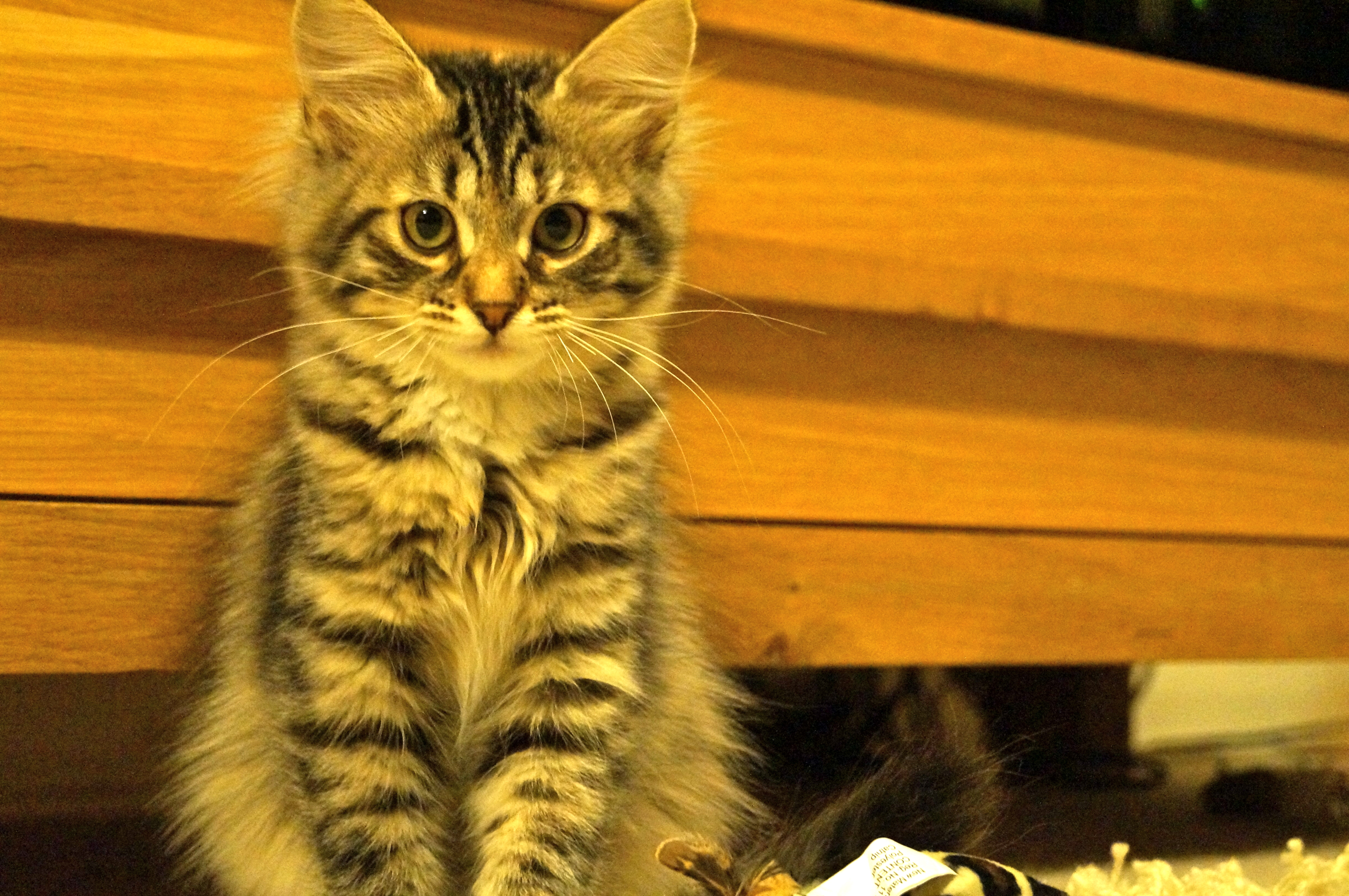
Look ! A cat:

DSC00127

Underneath a thousand blankets, just to find a place

18. Dream All Day – The Posies                                                                                        1996

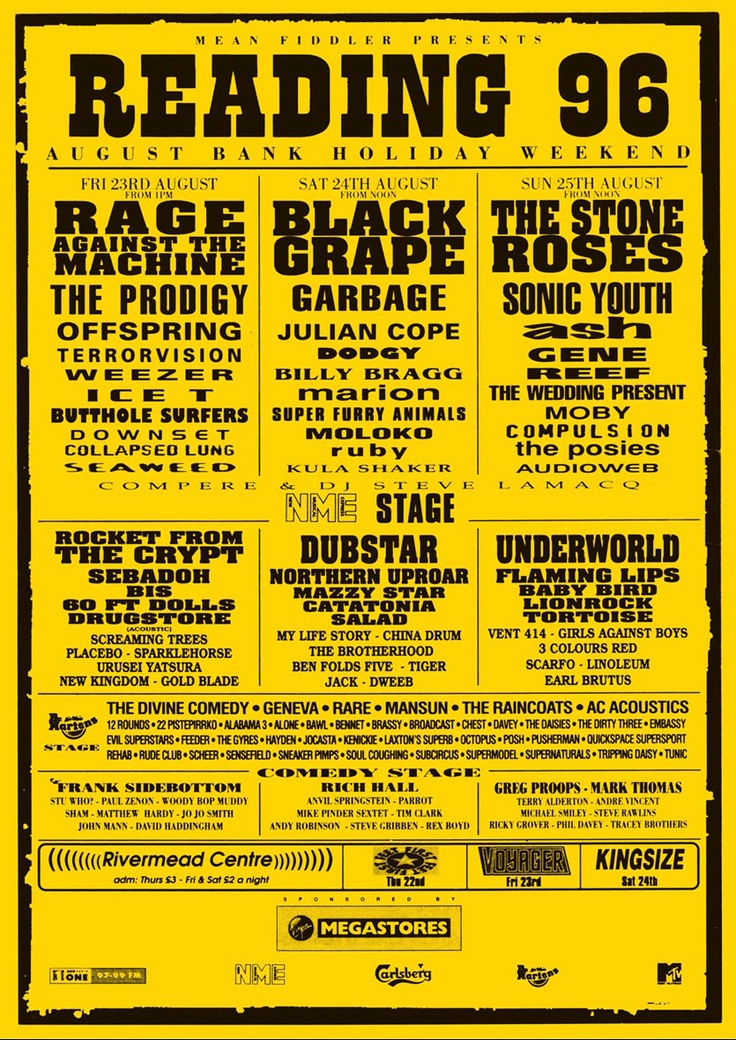
The legendary 1996 Reading Festival… Legendary for me, that is. Not particularly for anyone else I suspect – nothing special about the line up, nothing remarkable happened (beyond, maybe, the shambolic demise of the Stone Roses)… and yet. And yet it remains frozen in my  memory as one of my favourite weekends and, in hindsight, seemed to mark an important transition in my life. I hesitate to say that it drew a direct line between adolescence and adulthood but it does feel a little that way. I was 24 at the time; something of a late developer.

Don’t misunderstand. This is not, probably, going to turn into a lachrymose lament to my lost youth – I haven’t forgotten the mud, the hassle, the people, the hangovers, the Supernaturals, the puking, the dizziness, the traffic, the piss, the toilets and all the rest of it – but I’d be lying if I said there wasn’t a part of me that missed it. For a variety of reasons music has progressively become a less communal experience for me as I’ve gotten older. There was always a balance between the private, listening on my own at home, and the shared, out at a club or, as in this case, a festival. The balance has steadily tipped towards the private over the years and I regret that I’ve let that happen as there’s a whole range of things music can do beyond helping you sit around feeling sorry for yourself…

Surfing various other blogs I came across a brilliant event / idea that some people run down in Devon. The blog’s called Devon Record Club and the basic premise is that they get together on a regular basis, each bringing along a record, and they listen to ’em, discuss, and share their thoughts via the blog. Not complicated, bit like a book club. Bet it’s a lot of fun. Exactly the sort of thing that I, and friends, used to do informally – it was just a natural part of our lives to sit around and talk about why “Verdi Cries” by 10,000 Maniacs should always be in any top 5 best records list… So, if you’re in the Bucks area or fancy doing something virtually – must be a way for that work – then drop me a comment below…

Back at that festival there were inauspicious beginnings in 1996. I was working in Nottingham at the time and didn’t have a car which meant a meandering train journey through the midlands in the rain. Changing trains at a rain sodden Coventry station was just the thing to evoke the festival spirit; “sent to Coventry” indeed. Connection. The train to Reading picked its way down the country, the skies opened and it poured. I was listening to a compilation of old Kandi Klub (my old club haunt in Bristol) favourites during the journey, watching the rain splatter incessantly against the window, and thinking of old flames. Or, in some cases, old flickers. In the movie-of-my-life playing in my head (more of a straight to DVD cult classic than blockbuster success) this made me feel romantically nostalgic, melancholy, deep and imbued with the soul of a poet. To the untrained eye I may have appeared as a mildly sulky young man in need of a hair cut.

On arrival the rain stopped but the break in the weather was short lived and by the time I’d reached the festival site it was pelting down again and the ground had turned to mush. At this point the local Holiday Inn probably looked strangely alluring… Avoiding its charms I met up with I. and R. and we shuffled away to our tent, joining the slow procession past purveyors of, variously, bootleg tee-shirts, posters, beer and drugs. Perhaps it was the weather, or perhaps it was just experience, but the sense of anticipation from previous festivals (we must have been veterans of at least 10 by this point) was conspicuously absent this time out. It all felt almost routine. Fortunately that feeling didn’t last.

Friday. In the morning we trekked into Reading to buy provisions and a water proof coat. Weather noticeably improved after I’d spent £30 on said coat; I should have stuck with the strategically torn bin liner. Managed a quick pint in a pub on the way back and I guess that started it all off as we proceeded to drink for the rest of the day which obviously meant that we got drunk. Really drunk. I should mention bands that we saw that day but none of any note spring to mind. For much of the weekend the bands played a secondary part to our drunken letting down of hair, which is perhaps how it should have always been.

It’s not possible to try and recount a daily version of events from here on in. I doubt I could have recounted it later in 1996, let alone in 2013. Things passed too hazily, too drunkenly. The only constant was booze, each day building on the last to the, frankly, ridiculous events of the Sunday when I think we may have kicked off with vodka at breakfast. I don’t really know what it was about this year that was different to previous festivals in terms of drinking. We’d always had a drink before but we’d never really gone all out and just relentlessly gotten hammered.

Through the fog of time and alcohol there are still memories that loom large. They won’t make any sense – I think the point was that they weren’t supposed to – but they loom large. From beating each other about the arse with some discarded pipe lagging, to the straw fight by the main stage whilst The Posies were playing, to waiting for Billy Bragg in a torrential downpour… just small details that will mean very little if you weren’t there but never fail to raise a wry smile if you were. And then, of course, there was the lemon. At some juncture – may even have been as late as the Sunday (when the wheels really fell off) – someone found the aforementioned fruit. Nothing unusual in that. However, for reasons that even at the time made little sense, we decided to worship it for the rest of the day. Worship quite actively. Largely this involved chanting “lemon” a lot, passing it round to be fondled and kissed, and occasionally encouraging other people to temporarily join our little cult. That’s cult. Journeying round the site we proceeded in single file, usually running, with the leader holding the lemon aloft and the rest of us trailing in its wake; shouting our mantra in a bizarre call and response.

I think it was also the first time I was particular aware that I was getting older – that there was another generation coming up behind. Obviously now it happens all the time (usually in terrible circumstances – 22 year old newly qualified doctor having to check your prostate, that kind of thing). We ended up sat round our camp fire one night with a load of people from neighbouring tents who were all a good few years younger than us – I think they were 16 and 17 as I’m sure we had an astonished conversation about sitting with people born in 1980. They, in turn, were equally astonished that we’d been “lucky” enough to witness Ned’s Atomic Dustbin first hand: in their pomp no less. We were 24ish at the time and incredulous that anyone at a festival couldn’t have been born in the 70s…

Somewhere amid the drink, lemons, lagging, rain and sheer glee of it all, some bands played. Instead of appearing front and centre in my memory they seem to just provide the soundtrack – it was maybe the only festival I’ve been to where seeing the bands wasn’t the main reason for being there. I remember seeing Catatonia – I think Cerys came on stage wearing a big pair of boxing gloves – as we spent much of that day singing “You’ve Got A Lot To Answer For“, apropos of nothing. Otherwise ? The Roses headlined and were awful: lifeless, leaden and topped off by Ian Brown’s atonal apology of a voice. Experience the horror for yourself here if you’re curious. This should have been a massive disappointment as we were (are) all huge fans but, at the time, I think we just found it funny. Black Grape and The Prodigy were the other day’s headliners – the former were good fun, the latter were touting a set that was heard at pretty much every festival in Europe for three years. Beyond that, and the previously mentioned Billy Bragg and The Posies, I’m struggling. Looking at who played I could guess that we would have seen Rage Against The Machine, Drugstore, Super Furry Animals, Ash, The Wedding Present… but I have no memory of any of them. Did I get drunk because the line up was so poor or can’t I remember the line up because I got so drunk ?

Here it is, anyway, for posterity:

reading96

For me the weekend acted as some sort of pressure valve – releasing the pent up stress of a transitory period in my life. The friends that I had in Nottingham were leaving and I had long been looking for a way to move down to London – it took me another 18 months or so but I eventually made it. I’d left University a couple of years prior to this but I think this was the weekend that drew a line under that phase of my life before I moved on to the next – a last outpouring of childish glee before settling in to the serious business of careers and houses and relationships and being a grown up.

So The Posies make the list. Not particularly because I think it’s a great song – it’s a decent slab of power pop but there’s lots of stuff in that genre that I’d ordinarily pick ahead of this (for starters I’d have to dig out the short lived, under appreciated Silver Sun). It’s here simply because I can’t hear it without being back in a field, jumping around, chucking straw (only down due to the mud) at my friends having pretty much as much fun as it’s humanly possible to have.

Anyone up for a 20th anniversary reunion in 2016 ?

You’re invisible now, you got no secrets left to conceal

17. Like A Rolling Stone – Bob Dylan                                                                   1989 (?) – 2013

I believe this is what might be referred to as “messing with the big boys”. I’m not going to kid anyone with a Greil Marcus impression (although I reckon I could muster a “what is this shit ?” to a few Dylan albums) and I’m no Dylanologist so I won’t try to be either. However, it would be wrong to avoid Dylan in this list as, firstly, I am a huge fan and, secondly, so much of what I love in popular music can be traced back to him in some way. Given his catalogue it’d also be relatively easy to pick out something suitably obscure or lesser known but it wouldn’t be true for me: this was the song that made me “get” Dylan and it is a magnificent fucking juggernaut of a record.

I have American radio to thank for this. Don’t get me wrong, I suspect I would have caught up with this song at some point in my life, but the first time happened to be on some classic rock station in the States. You know the ones – we guarantee to play “Stairway To Heaven” (full seven minutes, no commercials) in the next half hour: don’t touch that dial. I imagine the novelty wears off if you actually live in the States but, personally, I bloody love those stations. Anyway, there I am, on what must have been one of the last holidays I took with my parents and sister, sitting in the back of the rental car, and on it comes.

Bang. That snare drum. Everything in my world stopped when I heard that stick hit that drum. It’s just one beat. One note. It snaps you to attention like a gunshot. Bruce Springsteen later said “…on came that snare shot that sounded like someone had kicked open the door to your mind” and I’m not going to argue with Springsteen.

After that snare, and a heartbeat on the kick drum, comes the band, tearing into the song as if they’re trying to grab hold of it and wrestle it to the floor before clinging on for dear life. Al Kooper’s organ – astonishing that the part had just come to him – dances on top of the rising swell, propelling them all forwards, pitching them into Dylan’s words.

Dylan is many things but principal amongst them he’s a writer, a poet. Early on in his career his words are so good that he needed little else to sustain a song: an acoustic guitar, some repurposed traditionals, and that dizzying, ineffable poetry. For me though the golden mid period (early-mid period, what do you call it ?) that began with “Bringing It All Back Home” and culminated in “ Blonde On Blonde” remains the best marriage of his words and music. Three of the greatest albums ever made ? You bet. In fifteen months ? Oh yes. It’s staggering. Throwing off the constraints of working purely in folk forms – and the (perceived) constraints of his audience’s expectations at that time – seemed to release a flood of creativity in him.

In his own words “Like A Rolling Stone”, in written form, initially emerged as ten or twenty (it wouldn’t be Dylan if he was consistent) pages of “vomit”, spewed out on his typewriter. It’s easy to hear the bile in the song and, for a long time, that was mostly what I took out from it: that snarling, sneering how does it feel ? Dylan’s vocals, along with the whipcrack song start, and glorious tumult stirred up by the band, make for a hugely visceral song. For a while you just sit and let the force of it hit you full in the face. And revel in it. As a means of giving expression to an utter disdain for something then it takes some beating and, from time to time, you wouldn’t be human if you didn’t feel that way.

Very recently though the song has really opened up to me in another way, largely because of the final couple of lines which have cast the entire piece in a different light. If most of the song is the hurricane that blows everything away then the final couple of lines are the acceptance that it’s all gone and finding salvation in being free of it all:

When you ain’t got nothing, you got nothing to lose

You’re invisible now, with no secrets to conceal

The protagonist in the song has, in pretty literal terms, lost everything and is now effectively invisible – everyone has seen her fall, there’s nothing to hide, and she’s got nothing left to lose. It’s not hard to take a less literal read on this too: stripping everything back, having your secrets revealed, can be liberating – nothing can touch you now. In that context the chorus doesn’t necessarily have to echo with quite the same mocking refrain:

How does it feel

To be on your own

With no direction home

Like a complete unknown

Like a rolling stone ?

Maybe it actually feels pretty good: free to do anything, go anywhere, be anything you want. Emotionally that’s the essence of what I take from it now.

The other thing that fascinates me about “Like A Rolling Stone” is how raw it is, how it’s almost constantly on the brink of falling apart. Famously Dylan and the assembled band struggled to record it, attempting it across a dozen or so takes but only running through the entire song once – the version preserved forever – on take 4. It was, in many respects, a glorious accident; from changing the original time signature from a 3/4 waltz to the now standard rock and roll 4/4, Dylan switching from piano to guitar, and Al Kooper  – a session guitarist not even booked to play on the song at all – deciding to sit in and contribute that Hammond organ part. It sounds like a glorious accident, seven people creating something in that moment, with the ever present threat of the whole thing collapsing at any moment. There’s a section towards the end (in the lead up to “when you got nothing, you got nothing to lose”) which would simply never be released now as the song almost self destructs – people drop out of time, lose their way, are allowed to catch up, and then the whole thing just about coheres again through the chorus. The whole thing is almost like something that found them rather than the other way round, something in the room that they heard or felt and did their best to reproduce. Maybe that’s why they struggled to replicate it.

So we’re back in a hire car on holiday in the States. I’m sat in the back utterly transfixed for six minutes. We’re a long way from musing on the nature of creativity – twenty pages of vomit alchemised into one of the most famous songs ever recorded via one complete take and an essentially busking organ player. A very long way from the sense of release in being revealed or being open. Even still some way from what became an abiding interest in 60s counter culture, particularly in the States (it was Ken Kesey and “One Flew Over The Cuckoo’s Nest” that fully lit that fuse). Just at the start of those things. Some of them only becoming apparent now.

How does it feel ? How does Dylan make me feel ? Like my world just got a whole lot bigger.

……

There’s an interesting “interactive” video on Dylan’s site if you want to hear the original version of the song (here: http://video.bobdylan.com/desktop.html). It was surprisingly hard to find the original on Youtube which is why I went with the infamous “Judas” performance at the top of the entry – I love that version too (the confrontation in it is compelling) and the whole back story although they kinda lurch into the song and it doesn’t have that same snare crack that hooked me in the first place.

Addendum (March 2014): the vagaries of the internet… that “Judas” performance has now been removed from Youtube as well so I’ve had to stick a less than satisfactory version from Letterman on instead. You all know it anyway, right ?