More than any other record in this list I would urge you, before you read any further, to take ten minutes out and just listen to this one. Quite aside what it means to me and the associations it has it is a sublimely beautiful piece. If you’ve never heard it then it’s worth hearing “clean” before anything I might have to say about it becomes part of your association to it.
Back ? Good. It’s quite something isn’t it ?
My usual start point in approaching any of these posts is to try to learn a little more about the record in question, mostly by listening to it but also by reading about it. Sometimes the latter exercise throws some new light on the music for me but often it’s just checking things I’d always assumed as fact: Abba getting divorced, Al Kooper sitting in on “Like A Rolling Stone” by accident, the difficult gestation of The Wall. I’m not sure what those facts add. I’m not sure that they particularly tell me, or you, anything about my relationship with the record. Not really. They tell you I can find my way around Wikipedia, probably know a little bit of this stuff anyway after *cough* roughly thirty years of listening to music, but beyond that ?
There have been pieces that have gotten closer to the spirit of what I’ve been trying to do I guess. The posts that reflect my love for my wife and family, that’s closer. The poetry. The thinly disguised fiction. All closer. All harder for me to do and all somewhat clumsily executed. But closer I think. I’m always simultaneously most satisfied and most disappointed with those ones – satisfied that I tried and that it rings emotionally true, disappointed that it’s not better written. The other stuff is enjoyable (to me) but I’m less sure what it’s for – the Dylan piece, for example, is okay but the bulk of it, despite its early protestations to the contrary, is trying to do a Greil Marcus-esque job and there’s really no need; he’s pretty good at doing that job already. The more personal bit, the section about “having no secrets to conceal” flirts with something emotionally true to me and then gets cold feet, backs away.
The reality is that there is no “big” secret to conceal. The truth is that I suffer from – or suffer with might be more accurate – depression. Some days it’s bad. Some days, most days fortunately, I don’t really feel it at all. I’ve had long stretches of years in my life without a murmur. Then, in the last couple of years, I’ve had stretches when it’s gotten on top of me, been in danger of being swallowed by the rising tide.
Not every song in this list is about depression (“thank god” – entire rest of reading world*) but this one, for me, is. It’s the one that let me admit to myself what the problem was and start to get some help.
So, back to my usual approach, if we research “Spiegel im Spiegel” then we get something like this (it’s from Wikipedia – as I know absolutely nothing about classical music then I’m prepared to trust it as a reliable guide…):
Spiegel im Spiegel is a piece of music written by Arvo Part in 1978 just prior to his departure from Estonia. The piece is in the tintinnabular style of composition, wherein a melodic voice, operating over diatonic scales, and tintinnabular voice, operating within a triad on the tonic, accompany each other. It is about ten minutes long.
Okay. I got the bit about Estonia. 1978. Ten minutes long. That stuff in the middle might as well have been in Estonian for all I was able to understand it and, do you know what, even if I possessed the technical knowledge to decipher the sentence it still would have told me precisely nothing about my involvement with that piece of music. But that’s what I do, I try to understand stuff – try to take the songs apart to see what makes them work – rather than just sometimes experience it. In microcosm it’s what I do in life, I’m not happy unless I can rationalise something – solve it by understanding it – and sometimes there isn’t a rationale. Sometimes you just have to experience it, let yourself feel it, and wait for it to pass.
I don’t even remember how I found this piece of music. Poking around the web now there seems to be some concern that it’s almost become too ubiquitous, if something can be too ubiquitous. Is it one of those absolutes like unique ? Whatever, it was a surprise to me that it’s well known enough to even provoke a debate. It’s an odd thing to just find though, almost ten minutes of minimalist classical music – it’s not even as if any of the various algorithm sites I sometimes use would have thrown it up as a “people who liked… also liked…” recommendation. Let’s accept it as a gift and call it fate.
My memory of hearing it, whilst not a happy one, is crystal clear. I was lying on the sofa at home. I was spending a lot of time doing that, dimly aware that all was not entirely well. There had been an unprecedented run of what you might call bad luck or you might just figure was how life plays out sometimes; losing a job, struggling a bit with loss of status in a new one, reconstructing my knee (again), some unexpected and particularly unpleasant surgery, and discovering that I’d managed to displace my jaw joint. Away from my house you would never have known. Maybe that was part of the problem, trying to tackle it all myself for fear of letting anyone know that I was struggling. My wife knew of course and I will be forever sorry for the burden that it placed on her.
The circumstantial stuff wasn’t the real issue though. Each element on its own wasn’t ideal but was manageable. Even all of them together might have been okay if I’d not been pre-disposed to mental health problems. Am I pre-disposed ? Is anyone ? Maybe that’s the wrong phrasing. I’ve certainly suffered at various times in my life with mental health problems and this set of challenges pushed me further and further back into myself until I thought I couldn’t get out.
And then I heard this. Whilst that sounds a bit like it’s come straight from the “and with a single bound he was free” school of deus ex machina it genuinely was like that. I lay on the sofa listening to this and it was like someone had thrown me down a torch into the dark pit that I’d taken up residence in – the torch lasted long enough for me to see where I was and realise I was in trouble and probably wasn’t going to get out on my own. It enabled me to see myself very clearly. I don’t know if it’s the repetition or the tempo or just the still tranquility in this piece of music but whatever it is it just allowed me enough space and distance to understand.
Part moved from Estonia and spent much of his life in Berlin. I never studied German and know next to nothing of the language. Until I started this post in my usual researching fashion it didn’t even occur to me to translate the title: it means “mirror in the mirror”. Imagining two mirrors, endlessly reflecting themselves, disappearing into infinity in their planes, is absolutely the essence of how “Spiegel im Spiegel” works for me. For me it’s profoundly moving and desperately sad but also meditative and extraordinarily beautiful.
So it might seem a little strange to be so forthcoming now but there is method in my madness. After a while it’s just tiring carrying around the lie that everything’s always okay. Not allowing the bad stuff expression becomes part of the problem. It’s not about sympathy but I guess it is about empathy. It’s also an acknowledgement that lots of people either have or will experience something like this in their life and I guess this is my small attempt to let them know that I can empathise with that and that things can get better. Don’t try to do it on your own though. People will surprise you (in a good way). Find a doctor, find a therapist, find your family and friends, and they will help you find yourself.
——–
* based on current stats “entire rest of reading world” actually means about 4 or 5 people a day. Surely one will go viral one day ? What’s that you say ? Less depression, more videos about cats. Ah, now I see where this is going wrong…
The legendary 1996 Reading Festival… Legendary for me, that is. Not particularly for anyone else I suspect – nothing special about the line up, nothing remarkable happened (beyond, maybe, the shambolic demise of the Stone Roses)… and yet. And yet it remains frozen in my memory as one of my favourite weekends and, in hindsight, seemed to mark an important transition in my life. I hesitate to say that it drew a direct line between adolescence and adulthood but it does feel a little that way. I was 24 at the time; something of a late developer.
Don’t misunderstand. This is not, probably, going to turn into a lachrymose lament to my lost youth – I haven’t forgotten the mud, the hassle, the people, the hangovers, the Supernaturals, the puking, the dizziness, the traffic, the piss, the toilets and all the rest of it – but I’d be lying if I said there wasn’t a part of me that missed it. For a variety of reasons music has progressively become a less communal experience for me as I’ve gotten older. There was always a balance between the private, listening on my own at home, and the shared, out at a club or, as in this case, a festival. The balance has steadily tipped towards the private over the years and I regret that I’ve let that happen as there’s a whole range of things music can do beyond helping you sit around feeling sorry for yourself…
Surfing various other blogs I came across a brilliant event / idea that some people run down in Devon. The blog’s called Devon Record Club and the basic premise is that they get together on a regular basis, each bringing along a record, and they listen to ’em, discuss, and share their thoughts via the blog. Not complicated, bit like a book club. Bet it’s a lot of fun. Exactly the sort of thing that I, and friends, used to do informally – it was just a natural part of our lives to sit around and talk about why “Verdi Cries” by 10,000 Maniacs should always be in any top 5 best records list… So, if you’re in the Bucks area or fancy doing something virtually – must be a way for that work – then drop me a comment below…
Back at that festival there were inauspicious beginnings in 1996. I was working in Nottingham at the time and didn’t have a car which meant a meandering train journey through the midlands in the rain. Changing trains at a rain sodden Coventry station was just the thing to evoke the festival spirit; “sent to Coventry” indeed. Connection. The train to Reading picked its way down the country, the skies opened and it poured. I was listening to a compilation of old Kandi Klub (my old club haunt in Bristol) favourites during the journey, watching the rain splatter incessantly against the window, and thinking of old flames. Or, in some cases, old flickers. In the movie-of-my-life playing in my head (more of a straight to DVD cult classic than blockbuster success) this made me feel romantically nostalgic, melancholy, deep and imbued with the soul of a poet. To the untrained eye I may have appeared as a mildly sulky young man in need of a hair cut.
On arrival the rain stopped but the break in the weather was short lived and by the time I’d reached the festival site it was pelting down again and the ground had turned to mush. At this point the local Holiday Inn probably looked strangely alluring… Avoiding its charms I met up with I. and R. and we shuffled away to our tent, joining the slow procession past purveyors of, variously, bootleg tee-shirts, posters, beer and drugs. Perhaps it was the weather, or perhaps it was just experience, but the sense of anticipation from previous festivals (we must have been veterans of at least 10 by this point) was conspicuously absent this time out. It all felt almost routine. Fortunately that feeling didn’t last.
Friday. In the morning we trekked into Reading to buy provisions and a water proof coat. Weather noticeably improved after I’d spent £30 on said coat; I should have stuck with the strategically torn bin liner. Managed a quick pint in a pub on the way back and I guess that started it all off as we proceeded to drink for the rest of the day which obviously meant that we got drunk. Really drunk. I should mention bands that we saw that day but none of any note spring to mind. For much of the weekend the bands played a secondary part to our drunken letting down of hair, which is perhaps how it should have always been.
It’s not possible to try and recount a daily version of events from here on in. I doubt I could have recounted it later in 1996, let alone in 2013. Things passed too hazily, too drunkenly. The only constant was booze, each day building on the last to the, frankly, ridiculous events of the Sunday when I think we may have kicked off with vodka at breakfast. I don’t really know what it was about this year that was different to previous festivals in terms of drinking. We’d always had a drink before but we’d never really gone all out and just relentlessly gotten hammered.
Through the fog of time and alcohol there are still memories that loom large. They won’t make any sense – I think the point was that they weren’t supposed to – but they loom large. From beating each other about the arse with some discarded pipe lagging, to the straw fight by the main stage whilst The Posies were playing, to waiting for Billy Bragg in a torrential downpour… just small details that will mean very little if you weren’t there but never fail to raise a wry smile if you were. And then, of course, there was the lemon. At some juncture – may even have been as late as the Sunday (when the wheels really fell off) – someone found the aforementioned fruit. Nothing unusual in that. However, for reasons that even at the time made little sense, we decided to worship it for the rest of the day. Worship quite actively. Largely this involved chanting “lemon” a lot, passing it round to be fondled and kissed, and occasionally encouraging other people to temporarily join our little cult. That’s cult. Journeying round the site we proceeded in single file, usually running, with the leader holding the lemon aloft and the rest of us trailing in its wake; shouting our mantra in a bizarre call and response.
I think it was also the first time I was particular aware that I was getting older – that there was another generation coming up behind. Obviously now it happens all the time (usually in terrible circumstances – 22 year old newly qualified doctor having to check your prostate, that kind of thing). We ended up sat round our camp fire one night with a load of people from neighbouring tents who were all a good few years younger than us – I think they were 16 and 17 as I’m sure we had an astonished conversation about sitting with people born in 1980. They, in turn, were equally astonished that we’d been “lucky” enough to witness Ned’s Atomic Dustbin first hand: in their pomp no less. We were 24ish at the time and incredulous that anyone at a festival couldn’t have been born in the 70s…
Somewhere amid the drink, lemons, lagging, rain and sheer glee of it all, some bands played. Instead of appearing front and centre in my memory they seem to just provide the soundtrack – it was maybe the only festival I’ve been to where seeing the bands wasn’t the main reason for being there. I remember seeing Catatonia – I think Cerys came on stage wearing a big pair of boxing gloves – as we spent much of that day singing “You’ve Got A Lot To Answer For“, apropos of nothing. Otherwise ? The Roses headlined and were awful: lifeless, leaden and topped off by Ian Brown’s atonal apology of a voice. Experience the horror for yourself here if you’re curious. This should have been a massive disappointment as we were (are) all huge fans but, at the time, I think we just found it funny. Black Grape and The Prodigy were the other day’s headliners – the former were good fun, the latter were touting a set that was heard at pretty much every festival in Europe for three years. Beyond that, and the previously mentioned Billy Bragg and The Posies, I’m struggling. Looking at who played I could guess that we would have seen Rage Against The Machine, Drugstore, Super Furry Animals, Ash, The Wedding Present… but I have no memory of any of them. Did I get drunk because the line up was so poor or can’t I remember the line up because I got so drunk ?
Here it is, anyway, for posterity:
For me the weekend acted as some sort of pressure valve – releasing the pent up stress of a transitory period in my life. The friends that I had in Nottingham were leaving and I had long been looking for a way to move down to London – it took me another 18 months or so but I eventually made it. I’d left University a couple of years prior to this but I think this was the weekend that drew a line under that phase of my life before I moved on to the next – a last outpouring of childish glee before settling in to the serious business of careers and houses and relationships and being a grown up.
So The Posies make the list. Not particularly because I think it’s a great song – it’s a decent slab of power pop but there’s lots of stuff in that genre that I’d ordinarily pick ahead of this (for starters I’d have to dig out the short lived, under appreciated Silver Sun). It’s here simply because I can’t hear it without being back in a field, jumping around, chucking straw (only down due to the mud) at my friends having pretty much as much fun as it’s humanly possible to have.
Anyone up for a 20th anniversary reunion in 2016 ?
“It”. The difference between good and great. The intangible quality that separates countless singers with guitars from a star. That rare combination of talent, application, attitude, look, feel, and passion. Jeff Buckley had it. Had it in spades.
Sony execs must have been rubbing their hands together with glee when they signed Buckley; he sang like an angel, was a guitar virtuoso, and looked like a film star. His voice could be Robert Plant one minute, Nina Simone the next, and finish up pitching sounds that would bear comparison with only, maybe, Liz Fraser amongst recent singers. His guitar playing ranged from delicate, intricate picking to ragged distorted chords; fusing rock, jazz, blues, hymns, East and West. Feted to be the new Dylan, the new Springsteen, the new Led Zeppelin, the new Van Morrison: take your pick, who knows which path he’d have trodden.
Personally I suspect he’d have taken an artistic route more akin to Joni Mitchell than, say, any of her male contemporaries – a restless evolution of his sound and a deeper exploration of ever more complex musical forms. I doubt it’d have been necessarily very commercial but it’s impossible to second guess now. Van Morrison came out of “Astral Weeks” with “Moondance” and Springsteen reigned in some of the eclecticism from “Wild, Innocent & The E-Street Shuffle” to produce “Born To Run” so perhaps Buckley might have found a way to simplify.
We’ll never know, of course and it remains frustrating that there’s so little material – a solitary finished album (“Grace”) and the patched together recordings that may or may not have gone on to be its follow up (“Sketches From My Sweetheart The Drunk”). What there is, outside of that, are reams and reams of live recordings – seemingly every time someone pressed record on a mixing desk Sony / Columbia would subsequently release it. Whilst in some respects there’s a faintly depressing aspect to this as the label look to milk their ear marked “legacy” artist – their cash flow projections somewhat inconvenienced by his premature death – it does also provide a fascinating glimpse into Buckley’s evolution as a musician and singer.
The best pre “Grace” document is the “Live At Sin-e” recording, originally put out as an EP in 1993 but then issued as a full double album ten years later. It’s just Buckley, a telecaster, and a couple of hundred people. It’s clearly an environment in which he feels comfortable; there’s a lot of joking around, whether it’s improvising a song to help people find their seats (and then imagining the equivalent punk version for CBGBs), mashing up Nusrat Fateh Ali Khan with Nirvana’s “Teen Spirit”, or calling for “Jim Morrison levels of reverb” via an impromptu tease of the opening bars of “The End”. There’s also, in the same spirit, a lot of improvisation, stretching his own songs out as if he’s still working out the kinks, and extending and shaping the covers like he’s trying to unravel each song to suss out how it works before he puts it back together again. Inevitably some of it’s pretty raw and not everything works. The version of “Lover, You Should’ve Come Over” (which is a stand out on “Grace”) is a bit of a mess and beset with tuning problems and there are moments when some of the goofing around outstays its welcome.
Much of it though, often when it’s more focused and slightly less experimental, is stunning: a gorgeous, fragile take on Edith Piaf’s “Je N’en Connais Pas La Fin”, a melodic run through Dylan’s “If You See Her, Say Hello”, a sensuous “Strange Fruit” (Billie Holiday, Nina Simone), and an utterly lovely read of Van Morrison’s “Sweet Thing”. It’s worth stopping for a second to look again at that set of covers. That’s Edith Piaf, Nina Simone, Billie Holiday, Bob Dylan, and Van Morrison that he’s taking on and making his own as a 26 year old without a record to his name.
And then there’s “Hallelujah”. Back in ’93 the song was far less known than it is now, thanks in no small part to Buckley’s version. Written by Leonard Cohen Buckley uses John Cale’s interpretation as his template and it closes “Live At Sin-e”; the recording is probably the closest point of comparison to my first encounter with the song. At the time, in the months following graduation, I was back living with my parents and working a temporary job dealing with customer queries about their invoices for a mobile phone provider. It was a set of circumstances distinctly lacking in romance or magic.
Buckley was playing at The Fleece And Firkin (now The Fleece) in Bristol to promote “Grace”, it’s basically a pub with a stage, capacity probably around three hundred. The sort of place you can get within feet of the performers and reach on to the stage to pinch a taped down set list at the end. In all honesty I had principally gone that night to see Bettie Serveert who were supporting as I was a big fan of their “Palomine” record. I’d heard some buzz around Buckley and was curious but hadn’t heard a note of his music.
The gig was a revelation. I was there with a friend from school who’d ended up working at the same place as me, in much the same circumstances, and that time at work was significantly enlivened by his conversation and camaraderie – one of the few bright spots in an otherwise gloomy time. I suspect I started watching Buckley’s set with a slight “come on then, let’s see how good you are, impress me” attitude and, early on, the signs weren’t good. He had constant sound issues during the opening songs and some technical glitches, neither of which seemed to help his mood; he seemed tetchy, unable to really get into his performance – the malfunctions interrupting his (and consequently our) reverie. Slowly but surely though he (and band) turned it around; the equipment started to work and they wove a captivating spell.
Buckley was impossible to take your eyes off. On stage he had charisma to burn; a very attractive, sensual man oscillating (wildly) between little-boy-lost vulnerability to lithe sexuality. Irrespective of gender or orientation the man just had “it”. He was also impossible not to listen to. He had the technical chops but his much heralded four octave range doesn’t really tell the story. The range of expression in his vocals was breathtaking, although that’s probably the least appropriate adjective to describe them given his sustain. He sent notes out like birds taking wing: soaring, swooping, climbing and diving. “Grace” as an album acts as a fine showcase for his voice from the pure falsetto of “Corpus Christi Carol” to the heady languor of “Lilac Wine”, the resignation of “Last Goodbye”, the pain in “Lover…”, through to the free style screams of catharsis he lets loose at the close of “Grace” itself. It was a glorious instrument and to hear it in the flesh in such intimate surroundings was a genuine privilege and one of the finest live performances I’ve seen.
He closed with “Hallelujah”, I think it was an encore. Just him and a guitar. You could have heard a pin drop. If you had you probably would have asked it to be quiet. It was just jaw droppingly good. Astonishing. Staggering. Go to town with your own superlatives but he held all of us rapt, perfectly still, in thrall to seven minutes of perfection. We left shaking our heads in mild disbelief. I think I bought “Grace” the next day.
The song suffers a little now for its relative ubiquity, everyone from Bono to X-Factor winner Alexandra Burke has had a go at it. You can argue the toss over whose version is definitive – it seems to usually boil down to a straight fight between John Cale, KD Lang, and Buckley; maybe Rufus Wainwright – but the version I heard first is always the one that sticks for me. Towards the end of his life even Buckley started to lose some of his sparkle in performing it, listen to the recording on “Live At L’Olympia” and he sounds a bit like he’s going through the motions amid the audience singalong (to be fair the cut on “Mystery White Boy” that splices in The Smith’s “I Know It’s Over” is much better). But in the beginning it was, and remains, sublime.
In 1997, at just 30 years old with the world at his feet, he was gone. Drowned whilst swimming Wolf River in Memphis. Speculation persists that he intended to take his own life – vehemently denied by his family – and I guess that the fact that toxicology reports indicated nothing in his system could be read either way. His death was ruled an accident.
It was also, in some respects, an accident that I saw him that night in Bristol. It’s ironic given the dedication and determination he applied to his undoubted gifts: his artistry and musicality was no accident.
It began, as befits a great love story, on Valentine’s Day 1993. Unlikely as it seems, it began in Leicester.
She brought her mates. I turned up alone. She was cool, confident, talented and sassy. I was growing out a haircut gone bad. She was from Boston, Mass. I was from Bristol, Avon. It probably wasn’t meant to be…
She was Tanya Donelly, her mates were her band, Belly, and whilst I might have wished it otherwise our romance never progressed beyond adulation from afar. There are certain bands, certain singers, that you just get a little territorial about – that you claim as your own and stick with regardless. There are just some bands and some singers that you just feel like you get. In this case, as is often the case, timing played its part.
In 1993 I was in my second year at University – or sophomore year at college, if you will, given we’re discussing a band synonymous with college radio in the early 90s. Not that college radio was something that we had in Leicester, not, you know, being actually in America. It was just something that seemed mildly exotic if you spent that time listening to Nirvana, Dinosaur Jr., The Pixies, Throwing Muses, Buffalo Tom and Mudhoney. I digress. Second year, very single, going to gigs on my own… You get the picture ? Yes, we see. It’s not too difficult to imagine that a young man in such circumstances, melodramatic impulses twitching out of control (it was Valentines Day, stick with me) could be receptive to one of those epiphanous moments that music sometimes delivers. And I use the word epiphanous advisedly. If not correctly.
It was also one of those relatively rare occasions when I saw a band promote an album that I hadn’t yet bought – relatively rare now in days of more money than sense, streaming, and Youtube. More common then when the opportunity cost of a record was a night out. Believe me, I sometimes look at that Faith No More live album and wonder at the fun I could have had: it was a double, that’s practically an all-dayer. The upshot of this rudimentary economics diversion was that Belly played a set of unknown (to me) songs and there’s just something more arresting about falling in love with a band in person than on record.
So, worlds turned, the planets aligned, Belly take the stage, and for an hour or so time stands still. I won’t pretend that I can recount the intimate details of that performance, it was too long ago, but, even now, fragments linger. A vulnerable take on “Untogether”, performed by Donelly alone, a joyous, exhilarating rush through “Slow Dog”, and a soaring, spine-tingling, heart-bursting-out-of-your-chest climax of “Stay”. Those were the three clinchers. I’d heard the singles (“Feed The Tree”, “Gepetto”) but it was these album tracks that turned what might have been a fling into a love affair.
“Star” was released in 1993 in the period following Nirvana’s break through in ’91, breaking down the door that Pixies, Sonic Youth, and others had pushed ajar. I guess it would be filed under “alternative”, that entirely unsatisfactory genre definition – alternative to what ? It is certainly different. Beguilingly so.
The album opens with “Someone To Die For”, its chiming, circular guitar figure like a music box slowly rotating, opening its secrets. Slightly eerie, a little sinister. Donelly’s voice floats in, slight reverb lending it a dream like quality; now it feels (and much of the album feels) like that curious state between sleep and waking. There’s a nagging voice here, gently questioning:
Poor thing, poor thing… do you have a sister ?
Would you lay your body down on the tracks for her ?
It’s all a little creepy, somewhat menacing; there’s some unknown danger, threat here which can’t quite be seen. It sets the tone for the rest of the record. I’d like to wake up now.
The sleeping / dreaming theme recurs throughout. Second song, “Angel”, bluntly asserts “I’ve had bad dreams, so bad I threw my pillows away”. It’s a record of the subconscious, images that bubble up in dreams, suggestions of themes – loss, death, nature, childhood – conveyed in fragments, the whole picture never quite revealed.
The menace never leaves: “Witch”’s “you’re not safe, in this house”, “that kid from the bad home came over to my house again, decapitated all my dolls” from “Gepetto”, “see this child twice stolen from me” from “Full Moon, Empty Heart”, “somewhere to scrape your body off my feet” from “White Belly”. It’s twisted and dark, fairy tale nightmares given voice, an exposure of those veiled, dusty recesses of the mind.
The irony is that these dark songs are wrapped in the sweetest melodies and, in some cases, are gloriously catchy. Listen to “Gepetto”, you will be singing along by the end, cheerfully bellowing “decapitated all my dolls” on second listen before then realizing what you’re singing. It tricks you this record. Breezily dances around you, pulling you in, before revealing the trouble in its heart. It’s like a spell. It’s the apple offered to Snow White, the vial marked “drink me” that tempts Alice – take a sip and it will take you somewhere you haven’t been before, somewhere magical, somewhere that’s not quite here. Not everything there is quite as it should be.
The trick works so well that it produced a hit. “Feed The Tree” just broke the Billboard Hot 100, scraped the Top 40 in the UK, and was a staple of MTV. Not bad for a song about commitment and respect told via the metaphor of gathering around the tree at which family members would be buried. It’s an unusual hit but, like “Gepetto”, offers a carefree sing-along if that’s all that you want from it. It also probably would have been the more obvious choice as one of the 42 but I think the album works more effectively as a complete piece, rather than picking out an individual song. It’s a record that I can happily play start to finish and think it works more effectively like that, the recurrence of images and overall mode slowly seeping in. Its follow up, “King”, suffers in comparison by being less coherent. It’s a fine collection of songs (“Seal My Fate” might even be my favourite Belly song) but, to me, lacks the cohesion of “Star”.
So, why lead the piece with that line from “Untogether” ? I’m not sure I fully understand “Star” but I’m not sure that the point is to understand it. It gets under your skin, my unconscious recognizes some of what it’s trying to say even if I can’t consciously process it and pick it apart. It came at a time, the first time really, in my life when I had lost certainty; there was a version of me that I might become and I wasn’t sure that I wanted to. It wasn’t the first (or last) time in my life that some people didn’t like me but it was the first time that their reasons for it bothered me. Too sharp, too self assured, too quick to pick an easy laugh regardless of the impact or victim. I guess it was a lack of confidence masquerading as confidence, sarcasm masquerading as wit. Whatever it was it wasn’t something that I was altogether comfortable with and so began the slow process of unpicking and rebuilding. On some level an ongoing attempt to “change the unchangeably untogether”. The resonance of this record is specifically that it deals below the conscious, gives voice to worry and anxiety in an indirect way, attaches stories and images to feelings that can’t quite be articulated in a straightforward way. I very much doubt that I was even aware that it was worming its way into my head, giving safe outlet to parts of myself that I wasn’t sure how to reconcile, but I suspect that’s exactly what it was doing. It spoke to me and still does.
I saw a lot of bands in ’92 and ’93. Saw a lot of bands on my own. It wasn’t something that I thought then concerned me but despite having a wide circle of friends, there is a slight sense of loneliness that I associate with that time. It might be too trite to describe music as the constant, as my companion through that time in my life (through most times in my life) but there is something of truth in it.
Star became one of my favourite records that year and its twisted, fractured pop sound-tracked the rest of that twisted, fractured year. For that night in the Union Hall though, all of that was remote, temporarily forgotten. Falling in love, even if it’s with a band, is about possibilities, about being at peace in the moment and, on a winter’s night in the East Midlands, the possibilities were endless and I was at peace.
They might be the last truly great American group.
REM never apologised for being artists, for trying to marry head and heart, for refusing to follow pop culture’s relentless march to the intellectual bottom. They were a properly kick ass rock ‘n roll band. They maybe had the best front man in rock in the 80s/90s. Who was also a poet. They believed in things and spoke about them. They campaigned for Amnesty. They appeared on Sesame Street. Michael Stipe. Peter Buck. Mike Mills. Bill Berry. They took it very seriously but laughed at themselves along the way.
There will be a small handful of bands, singers, and artists on this list where I could pick from any of a dozen songs. REM are one of them. The breathless smile-in-the-face-of-the-apocalypse-stream-of-consciousness “It’s The End Of The World (And I Feel Fine)” is worth a place purely for the “time I spent some time alone” harmonies at its close. In stark contrast I could also easily argue the case for “Everybody Hurts”, possibly the purest, most redemptive expression of the universality of human pain committed to record. The straight ahead beauty of “Nightswimming”, the Byrdsian jangle of “Driver 8”, the sheer fun of “Stand”, the chilling darkness of “Country Feedback”… That’s without even mentioning “Losing My Religion”, “Turn You Inside Out”, “World Leader Pretend”, “Talk About The Passion”, “Fall On Me”, “These Days”… A ridiculous embarrassment of riches from which I decided to pick one.
“I Believe” sits eight songs in to 1986’s “Lifes Rich Pageant”, the missing apostrophe apparently deliberate, and for me, shoddy grammar aside, it’s their finest album. For today at least. Ask me tomorrow and it’ll be “Automatic For The People”. Or “Murmur”. And I’ll always carry a torch for “Green” which was my start point with the band. You get the idea.
The song is almost a manifesto, a concise treatise on how to live; it calls to mind Stipe imparting advice to a younger version of himself (tellingly an earlier attempt at the song was entitled “When I Was Young” but failed to make it on to “Fables Of The Reconstruction”, the preceding album).
Lyrically, like many of his songs, it veers from the oblique – the shamanistic imagery, all coyotes, rattlesnakes and fever – to the more explicit and direct.All of it wrapped up in twisting, riddling lines that challenge the listener – both the listener in the song and us, the listeners to the song – to reflect on what’s important in life:
Explain the change, the difference between what you want and what you need, there’s the key
Your adventure for today, what do you do between the horns of the day ?
There’s frequent allusions to marking a period of shaking off younger, foolish ways and embracing change – the man that was “spirited, a rattlesnake” giving way to someone for whom “change is what I believe in”. There’s arguably a read of the song that’s about a rejection of religion – first line’s “young and full of grace” – but it’s not imagery that’s revisited and I think it’s less about casting off something specific, rather a general process of sifting all of the truths inherited in your youth and figuring out which ones you’re going to choose to make a part of yourself. Stipe’s gently playful in his role as the advice giving narrator – co-opting and teasing with exactly the kinds of platitude (“give and take”, “practice makes perfect”, “think of others”) that are frequently passed down as wisdom from adults to children. My favourite section sums this up in a wonderful articulation of life as an evolving process, never fixed, never done (until, ultimately, of course it’s done):
Trust in your calling, make sure your calling’s true
Think of others, the others think of you
Silly rule, golden words make practice, practice makes perfect
Perfect is a fault, and fault lines change
Musically the song’s playful too. The studio version kicks off with a down-home, rootsy banjo that gives way to Buck’s chiming Rickenbacker – a conscious nod to the lyrical themes, taking the threads of the old and weaving them in to something new. Then it just throttles forwards, a bundle of momentum and energy, running helter skelter through the first verse, building to the kick into the chorus. It is impossible to not feel lifted up by this song. On a good day it will make you believe you can do anything. On a bad day it will make you leap around the house grinning like a loon. Either outcome is pretty good I reckon.
The version on the video above is from Tourfilm, the 1990 document of the “Green” world tour. It doesn’t open with the banjo but I particularly love it for showing off the many facets of Stipe – the poet, the incredible singer, the performer. He’s just utterly mesmerising, holding the crowd through a straight poetry recital, an acapella verse, before tearing off his jacket and ripping into the song. He veers from exposed and vulnerable to defiant and bold, always true to himself, fierce in his declamation. Incredible. The band aren’t too shabby either.
Given that my read of the song is fundamentally about embracing change, working through what’s important, and being comfortable in asserting your own identity it’s not difficult to understand why I picked it. Stipe was 26 when he wrote this and I guess that’s a natural point to work through what’s left over from childhood and adolescence and piece your self together. I’m not 26 anymore but there seems no harm in continuing the process.
Disclaimer: I said I’d stretch the definition of “record” and this post definitely tests it to breaking point. At times it also seriously tests my powers of memory: everything here is true but I can’t guarantee that details haven’t been embellished by time. The video footage contains haircuts that some viewers may find distressing. Oh, and in case it gets confusing, there were two people called Phil in the band. I was one of them.
Intro
“The best mates”
– Listen, listen, I’ve got a great name for the band.
– What band ?
– The one we’re starting.
– O-kaay, what is it ?
– Picture this. The stage is dark. Audience going insane. Intro music starts up… “it’s time to play the music, it’s time to light the lights, it’s time to meet The Muppets on the Muppet show tonight”… We’re on stage. Straight into the first song.
– The Muppets ?
– The Muppets.
“The guitarist and the singer”
– Richie’s in.
– Really ? You asked him ?
– Well, I didn’t really let him say no but that doesn’t matter. He’s in.
– Can he play ?
– Can he play ? He’s awesome. Strat. Gibson SG – think he’s played at the Rock Garden or something.
– Sounds promising.
– He’s got a singer as well.
– Who ?
– Andy. You know him, he’s got a room at the other end of block 7 to you.
– Yeah, I know him. Can he sing ?
– Don’t know. Apparently.
“The Chem Soc Ball”
– We’ve got a gig.
– What do you mean we’ve got a gig ? We’re not ready.
– We’ve got a gig. Chemistry Society Ball. I know the guy that’s organising it – I told him that we normally only play around town but that we’d do it for him as a favour.
– I haven’t got an amp…
– Borrow one, it’ll be fine.
– You haven’t got an amp or, in fact, a bass…
– I’m buying one, don’t worry.
– We don’t know any songs…
– I’ve been thinking about that – about a set-list. Just need a few songs that are pretty easy to play but still amazing. I’m thinking rock obviously.
– Obviously… but we don’t have a drummer…
– No but I’ve been recommended a guy. It’ll be fine. Bit older than us, think he’s doing a post-grad in space science or astro physics. Something like that. Got his own kit and, even better, his own car.
– When’s this gig ?
– Two weeks.
“The rocket scientist”
– *knock knock*
– (Answering door) Yeah ? Hi ?
– Alex ?
– Yes
– Hi, I’m Phil, this is Phil. Sorry to disturb you – we’ve heard you’re a drummer.
– Er… yeah, I guess. I play in a couple of bands.
– Fancy joining another one ?
– Well, I suppose I don’t mind sitting in to see how it goes.
– Great, you’re in.
– What are we called ?
– The Muppets. Don’t worry, we’ll probably change it.
Verse one
Late Spring and the French doors leading from Beaumont Hall to the Botanical Gardens are flung open. Outside curious botanists mingle with unwinding students. Inside five young men set about the task of setting up a rehearsal space. On one side of the room someone carefully unpacks a Fender Stratocaster from its flight case, sets up a myriad of effects pedals, pulls a dust cover from a Roland amp, plugs in, briefly consults a digital tuner on the floor and then refines each note by ear. On the other side of the room someone else absent mindedly strums a cheap, unbranded guitar plugged in to a borrowed amp and chats to the bassist. Somewhere in the middle the drummer puts together his kit with a precision that tells of countless hours placing snares, toms and cymbals, whilst the singer paces, nothing to do.
The drummer signals that he’s almost done and one of the guitarists – the one that isn’t holding his instrument like it’s about to bite him – suggests starting with “Knockin’ On Heaven’s Door”. The band are booked to play The Chem Soc Ball and, by way of warm up, have persuaded the social committee at their halls of residence to let them play the hall bar. A set list, largely featuring songs with no more than three chords, has been agreed and this Dylan song, albeit the at-the-time current Guns ‘N Roses version, is on it.
The opening bars of the song ring out into the room, the guitarist picking nonchalantly. A certain tension rests across the remainder of the room – they’ve never played together before, never even heard the drummer, are supposed to be performing publically in a couple of days, and then at a function where people have paid for the privilege of attending. A set of circumstances built on a fair amount of bullshit, an object lesson in how far a lot of front can take you. All of it crystallising in this moment – if they can’t run through a mid tempo, three chord Dylan song then the exercise will surely be exposed for the sham that it is ?
The drummer makes a final adjustment to his snare, sits down on his stool, twirls a stick between his fingers and, four bars in, effortlessly plays a run round his kit before everyone comes crashing in to the first verse. Perfectly on time and in tune. Everyone exhales, looks at each other and grins. Music. They might actually get away with this.
Chorus
The bar at Beaumont Hall is packed. A night’s free entertainment, curiosity value, friendship – whatever the reasons, they had come. It’s hot, the warm evening air ratcheted up several degrees by the mass of bodies. Drink flows liberally and the mood is exuberant, expectant. A receptive home crowd.
Five people detach themselves from the throng and move to the end of the room where instruments are already arranged. The same spot where, two short weeks ago, they’d first come together to play. No stage, just an area for the band demarcated by a line of microphone stands.
The crowd are appreciative before they even hear a note, a cheer erupting at the sight of guitars being slung over shoulders and the crackle of leads pushed into amplifiers. The band pause, look at each other, exchange nods of affirmation and it begins. Thirty breathless, blurred minutes, and eight songs, later it ends – all they had time to learn. They’re not allowed to get away so easily, the audience demanding more. So they play the entire set again, grinning at each other, at this thing they’ve started.
Verse two
Late Autumn, eighteen months on from that first gig, and the five members of The Muppets crowd round a sound engineer in a run down studio in the centre of Leicester. He pushes faders up and down on the mixing desk in front of him, removes his headphones, spins in his chair and looks up at the band: “what’s next ?”
They’ve been there all day having scraped together the cash between them to book out the space and record some songs: their songs. There’s only time to get down four songs, the playback of each one painfully highlighting each mistake, each chord out of time, each dropped note, in a way that’s usually covered up in the immediacy of a live performance. It’s a sobering, painstaking experience but they persevere, repeating takes, over dubbing – trying to make the best document they can.
At the close of the day they leave – a solitary cassette containing four tunes the only tangible reward for their efforts but all flushed with the deep satisfaction at having created something new.
Chorus
The band on stage at Stamford Hall is the same one that started out across the road in Beaumont two years ago. The same but different. Better. The rhythm guitarist now at least looks as if he’s on speaking terms with his guitar. The bass and drums play as a unit, each song not necessarily gathering unwanted pace as it goes but staying in tempo. The lead guitarist still doesn’t realise quite how good he is, knocking out dexterous solos almost casually, and the singer now looks comfortable and confident on stage. They’re tighter musically but more relaxed performing.
The audience is bigger and pulled from a broader constituency than their own circle; still a student crowd but now drawn by word of mouth and reputation. They’re no less engaged for it and, by the end of the set, most of the room is up, dancing.
The University film society are here, recording the gig for posterity – freezing in time the band at their high point. Freezing in time the impetuosity to start something from scratch, the commitment to actually carry it through, and the time to turn it into something good. And, yes, also freezing in time some misguided leather trousers, a waistcoat that’s since gone on to a successful solo career touring with Mumford & Sons, and some of the worst hair ever grown on a human head. Mostly though freezing in time one of many fun, joyful nights playing music.
Bridge
The Muppets played a big part in almost three years of my life; I can remember rather more about the hours of rehearsal and playing than I can about, say, Jean Jacques Rousseau or any of the other great political philosophers that made up my degree course. Think I was more of a John Locke kind of guy.
There are numerous fragments that still raise a smile over twenty years later. Our very first rehearsal was marked with absurdity; as we practiced “Rain” (The Cult) the refrain in the chorus “here comes the rain” caused an elderly couple, outside browsing the Botanical Gardens, to pause at the window, peer in, raise their palms upwards and frown in enquiry. We once played someone’s 21st in London, Richie broke a string on both his guitars mid set, and so the rest of us had to try and fill whilst he repaired the damage – cue the single biggest crime against the blues ever perpetrated as we launched into an impromptu jam. I knew nothing, not even a simple scale, a semi-quaver might as well have been a crisp that failed the quality assurance process at the Walkers factory, so my response to being told that we were going to jam in D was to just play a D chord over and over and over…
There was a regular event at the University for student bands to play – the Old Coffee Bar Club. Periodically it would host covers night which marked a couple of our finer hours as we always flung ourselves into the spirit of it, picking one band, learning a few of their songs and then trying to dress up like them. The Stones were fairly straight forward (“Jumping Jack Flash”, “Sympathy For The Devil”, “Wild Horses”, “ You Can’t Always Get What You Want”) and gave us an excuse to break out a nice line in 60s wigs; presumably I was Brian Jones. Better was Take That (“Only Takes A Minute”, “Take That & Party”, “Could It Be Magic”) where our efforts extended to a couple of brief pieces of choreography and waistcoats over bare (frankly pretty pasty) torsos; presumably I was Jason Orange.
All of those songs, including the Take That ones, stayed in our growing set. By the end we covered a fairly broad range from Seal’s “Crazy” to The Cult’s “She Sells Sanctuary” by way of perennial crowd pleasers – EMF’s “Unbelievable” and the Black Crowes’ take on “Hard To Handle” – through to some slightly more esoteric choices that we liked – The Doors’ “Maggie M’Gill” and JJ Cale’s “After Midnight”. Along the way we lost Bon Jovi’s “Keep The Faith” (top note in chorus too high), Prince’s “Let’s Go Crazy” (very difficult to play tight), and, due to various disagreements, never quite got round to adding Sister Sledge’s “Lost In Music”, REM’s “Losing My Religion”, or Nirvana’s “Smells Like Teen Spirit”. On top of which we’d fashioned about ten of our songs which stood up pretty well – even usually closing with the epic “Boy I’m So Glad (I’m Not You)”, a slow burner that borrowed a bit structurally (okay, quite a bit) from “Freebird”.
Song choices were probably the biggest source of argument in the band as everyone had diverse tastes. They were also a source of tension in that, sometimes, there were songs we couldn’t do due to my lack of technical ability. The most notable instance being Lenny Kravitz’s “Are You Gonna Go My Way”. It’s a pretty simple riff but still too complicated for me and so, despite everyone else firmly believing it would go down a storm, we didn’t do it. This only became problematic when we played a “Battle of the Bands” at one of the halls of residence. By this point we had long since left living in halls and so turned up without an audience full of our friends, albeit with a reputation for being pretty good. First band on were clearly at the point in their group’s life cycle that we’d been at earlier in this piece: brand new, enthusiasm to burn, and a room stocked full of their mates. They opened with sodding “Are You Gonna Go My Way” and the place went berserk. “Battle of the Bands” was declared an unsatisfactory draw. Maybe we pinched it on away goals but it felt like defeat.
And the long mooted name change ? It was discussed many, many times – endless suggestions that not everybody could agree on. As an example, Phil suggested “Seahorse” (him: “it’s exotic and mysterious”, me: “it’s shit”) which was largely ridiculed only for John Squire to name his post Roses band The Seahorses a couple of years later. I was right though, dreadful name for a band. The closest we came to changing was to “The Big Bush Experience” – which I guess we (wrongly) thought was just the right side of cheeky innuendo without being puerile. It only lasted one gig as everyone just kept asking us when we were changing back and referred to as The Muppets regardless. So it stuck.
Final Chorus
The posters outside the Princess Charlotte (don’t look for it, it’s not there anymore) proclaim “local showcase”: bottom of the bill, The Muppets. The posters inside the Charlotte, promoting gigs long since past, whisper the promise of this venue, a roll call of bands that have made it in the last twenty years: Radiohead, Pulp, The Stone Roses, Oasis, Blur, The Killers, Primal Scream, Muse, and the Manics. It might be a spit and sawdust pub in the East Midlands serving up lukewarm beer in plastic glasses but it represents the one thing that drives all aspiring bands: hope.
The bands to be showcased loiter in the back-stage room, all feigning an air of cool detachment, like none of this matters, like it’s something that they do all the time. But it’s all artifice, all a little too studied to be real. There’s palpable nerves all round.
Being bottom of the bill offers only one advantage: you play first. The Muppets have been allocated 15 minutes and four songs but, staying true to the grandest traditions, stretch this out by tacking two songs together and closing with something that goes on for about 7 minutes. In all they probably manage 25 minutes before bowing out, reacting with innocent surprise to the annoyance of the proceeding acts.
The audience reaction is good, if a little less enthusiastic than they’ve become used to. This isn’t solely their crowd. It’s a shift from known student band playing to other students, often at events involving large amounts of booze, to unknown local band playing to paying gig goers. It’s a shift that reveals what’s involved in really trying to make it – the days and days of rehearsing, the relentless slog round pubs and clubs begging to perform, then playing to tiny rooms of people, hoping eventually to build a following. It’s a shift that they never made.
Outro
– We’ve been thinking about the band next year…
– Great, good – we have too.
– Yeah, well it’s a bit awkward, but we’re thinking of staying in Leicester and carrying it on. Only…
– I think we’re thinking the same sorts of things…
– …only, we’d like to move on in a different direction. Andy wants to play guitar, there’s some other stuff we want to try… More blues based. Walking bass lines. That sort of thing.
– So what are you saying ?
– We think it’d be better if we call it a day with the current line up. I mean, Alex is still going to drum, and Phil, if you want to play bass then that might still work…
– But you’re kicking me out ?
– Ah, don’t take it like that, it’s time to change – it’s time to do something else. You’re in to different stuff anyway…
– Is this because of that fucking Lenny Kravitz song… ?
Coda
It wasn’t really about that fucking Lenny Kravitz song. In part, though, it was a reflection (a fair reflection to be honest) on relative technical ability in the band – I couldn’t play to the standard of the others.
To his eternal credit Phil never took up the offer to remain in the band. It was essentially our friendship (and his incredible drive and ridiculous ability to get people to do things that, rationally, made no sense for them to do) that had started the whole thing and our solidarity stood fast to the end. Continues to do so to this day.
The Muppets mark 2 – I genuinely forget what they re-christened themselves – did carry on for a while in Leicester. I saw them play at a pub on new year’s eve, I guess 1994/5, and it was a strange, sad experience watching Andy, Rich, Alex, and some new bassist (who, yes, did indeed play a lot of walking bass lines) run through a lot of our old set. Still no Kravitz though.
However, my abiding memory of those couple of years isn’t one of sadness for what might have been but one of real pride in what we did – it might not seem like much in the scheme of things but we recorded a bunch of our own songs, played to a lot of happy people, and shared a lot of great moments. Some of which – lost in a song on stage, watching the reaction of the audience, seeing people respond to something you’re creating – are amongst the happiest of my life.
“Stella Maris” (Latin: star of the sea) is often used in reference to the Virgin Mary – known in English as Our Lady, Star Of The Sea – and also as a name for Polaris, the North Star. Either way it’s a point of guidance – for lost sailors and lost souls.
The extraordinary Moby track of the same name takes some familiar Moby tropes – appropriated vocal, huge synth chords, a slavering of strings – and blends them into a moving, redemptive piece of music. It’s built from a 12th century plainsong recorded by Trio Mediaeval; a simple but stunning, haunting vocal over a dirge (the original is here and is amazing). Moby distorts and buries the voice beneath those patented, enormous synths, producing an effect that’s akin to half hearing them through ears clogged with water. They’re there but dislocated, distorted, displaced – the purity of the voice struggling to be heard.
There are some records which bypass parts of my conscious, rational mind and cut straight to an emotional truth. This track, by turns breathtakingly beautiful and achingly sad, has the capacity to unlock me with ease. I’ve long believed I’m principally driven by a rational approach to life but, the older (and madder) I’ve got the more I’ve come to appreciate, if not fully understand, that as fallacy. If internalisation was an Olympic sport then, frankly, don’t even show up – I’m taking home that gold medal – and it’s only through external agents that some of the forces at play inside of me find a way out. This is one such agent.
It’s interesting that, effectively, the song has no words – the original piece is in Latin and is rendered largely incoherent in the production anyway. The response engendered – that’s beautiful, that’s colossally sad, that’s like, to nick another Moby song title, the face of god moving over the water – is a gut response to the music. And I can’t deconstruct that. I neither know enough, technically, about how it’s achieved nor have the understanding of why a particularly assembled set of notes and instruments can make the hair on the nape of your neck stand up, or make you cry, or make you dance. “Stella Maris” is not much of a dancer.
As I can’t deconstruct, and in the spirit of National Poetry Day (October 3rd), I thought I’d attempt to construct. This isn’t an attempt at lyrics that the song doesn’t need, rather it’s my closest approximation for how it makes me feel or how it allows me to reference a state of feeling that I am familiar with.
Star Of The Sea
Submerged, sinking, lost, and
Drifting within the murk
Beneath the waves.
Ebbing, flowing.
Immune to the swell; the rise and fall, the salt’s lash.
But trapped; wrecked.
……
Drowning, silent, alone, and
Accepting the deep embrace
Of the implacable sea.
Falling, fading.
Untouched by the storm; the gusting gale, the stinging hail.
But dislocated; numb.
……
An echoing tone through the depths, penetrates.
A light in the gloom,
Distant but fixed, guiding me home.
Surging, rising.
It speaks of water becalmed, of skies quiet and clear.
4. Engine To Turn – Tift Merritt When: Summer 2013
“A musician must make music, an artist must paint, a poet must write, if he is to be at peace with himself. What a man can be, he must be.” Abraham Maslow
Songs can save lives. They can enrich, nourish, bring hope, ease pain, and give expression and outlet to feelings that might otherwise overwhelm.
Three months ago I stood below deck on a moored boat in Bristol, beer in hand, and waited for Tift Merritt to perform. I was all over the place. Two years, perhaps more, of surgery, ill health, redundancy, change, lack of control, listlessness, and uncertainty had coalesced into a series of panic attacks. Constriction of the chest, shortness of breath, a chorus of competing voices yelling for attention in my head; no idea which of them to listen to first. Or whether to listen to any of them. Emotionally and mentally I had run out of road – exhausted – and my body just shut me down.
It’s a terrifying experience to wake up in the middle of the night unable to breathe, heart accelerating in your chest like it’s trying to hit enough speed to break out. I thought I was having a cardiac arrest. Doctor checked everything out and all was fine. Except, obviously, it wasn’t. I was mainlining adrenaline and cortisol, a primitive physiological response to stimulus, to stress.
Societally stress is a loaded word. Sometimes used blithely, mundanely (“stop doing that, you’re stressing me out”) but in its clinical manifestation it’s anything but mundane. And it’s hard to empathise with, to understand. Tolerances are so different, symptoms vary, and causes are wide ranging: one person’s bad couple of years is another’s exciting set of opportunities. I can tell you about the ruptured ligament in my knee and the resulting operations and it’s easy, you’ll “get it”, you can understand the mechanics of it. To tell you about my battles with depression, with an unspecified mental malaise, will be a little harder. I may need to hide behind some records. I may need as many as 42.
So, back on board The Thekla, moored and anchored – ain’t it grand when life throws you a free metaphor ? Tift Merritt is touring her wonderful new album, “Travelling Alone”, and takes to the stage, opening with “Engine To Turn” from her previous record, “See You On The Moon”. It’s one of my favourite songs of hers and, in the space of three minutes, it strips everything away, helps me let go of everything I’ve been holding on to – some of which is profoundly damaging to me – and all that’s left is me, a beer in one hand, my wife’s hand in the other, and the opportunity to listen to a great singer perform. Tears roll down my face and I lose myself in the next 75 minutes of the gig.
“Engine To Turn” is, like much of Merritt’s later work, a deceptively simple song. Four chords; verse, chorus, verse, chorus, bridge, chorus. Lyrically direct, honest, straight, unadorned. Within familiar forms she addresses universal themes – there’s no mistaking what the song is broadly about but it leaves enough space for you to layer in your own experience, for the words to attach themselves to your own meaning.
From the outset the song sets out its challenge, opening up a theme – uncertainty – which has already cropped up in the 42 and, no doubt, will again:
I don’t know how to fix the world.
I don’t know how to fix myself.
Clearly for me personally this strongly resonates, speaking directly to a sense of being unwell, of being broken, and not being entirely clear what to do about it. This is further explored in the metaphor that gives the song its title – “I’m just trying to get the engine to turn”. The machinery is all there but it won’t come to life and typically, to extend the motif, an engine either needs fuel or a spark to get going. As I wrote earlier, I was running on empty, had run out of road. Any more car imagery and this is in danger of turning into a Springsteen song…
However, this isn’t a song that wallows in its own uncertainty, it’s not a pessimistic lament to a life without meaning. There are solutions here, simple articulations of what might work:
…seems like some tenderness could turn the whole thing around…
…seems like I ought to slow down…
…maybe the pieces are here if I just took a good look around…
And finally there’s an almost defiant statement of intent that closes each chorus and, ultimately, the song:
I’m just trying to smile through my tears
And I still got so much to learn
But the best I can is what I have to give
Gonna give it while I’m here
Not beaten. Unbowed. Determined. An eloquent expression of, perhaps, all that life is about.
The final chorus is prefaced by the wonderful bridge, an internal rallying cry that’s the exact opposite of my previously referenced competing voices yelling for attention:
Sometimes there’s a choir in my head
Singing at the top of its voice
Singing at the top of its voice
They sing: don’t look back
Don’t be scared
Don’t be scared
If, at risk of sounding like an X-factor contestant, my “journey” towards dealing with my own demons (and its expression through these words) is about anything then it’s about finding a way for these shouting, squabbling, picky, destructive, competing voices in my head to cohere into a choir that sings up in defiance, support and reassurance.
There’s a Bukowski quote that feels apposite with respect to Merritt’s work over her last couple of records, and particularly so with respect to “Engine To Turn”: “An intellectual says a simple thing in a hard way. An artist says a hard thing in a simple way.”
There’s presumably a story to be told about Merritt’s career, from feted Americana star (debut “Bramble Rose”) to Grammy nomination (second album “Tambourine”), being dropped by Lost Highway, her label, moving to Paris, then to New York, and ultimately recording another three fine singer-songwriter records in the best traditions of Carole King, Lucinda Williams, or Emmylou Harris. But, interesting story that it is, my connection to her, my interest in her, is through her work – through what seems to be her ongoing assertion of personal and artistic integrity and growth. There’s a great recent interview with Backseat Mafia here which explores some of this territory.
Since that relative commercial failure of second album “Tambourine” and the subsequent fall out, Merritt has mined a progressively simpler, sparser seam of songs. In paring back the production and some of the instrumentation in the songs all that’s left is the craft of her songwriting. It says much about her skill that her work sounds just as vital now, if not more so, when delivered with just a voice and acoustic guitar as it did backed by a full band, Memphis style horns, and George Drakoulias production.
In many respects it’s a travesty that her audience in the UK is so limited, there must have been 80 of us at The Thekla on a Friday night. However, I suspect that’s no longer her overriding motivation. There are times in the performance that I saw – and also when I saw her play solo at The Radcliffe Centre in Buckingham (a converted church with a grand piano and great acoustics) a couple of years ago – when she and the band are transported in the performance, caught in a moment in which everything else falls away. The Maslow quote that opens this piece about sums it up; the impulse to create, the impulse to connect, irrespective of the size of the crowd, seems to be the motivating force at work. I can’t speak for the rest of the audience but she created a moment that allowed me to, if only briefly, let go of my troubles and regain some perspective. Music can do that.
Songs can save lives. Don’t be scared. Bukowski again: “We are here to laugh at the odds and live our lives so well that Death will tremble to take us”. Now to work on getting my choir to believe it and sing it loudly and often.
3. You’re All I Need To Get By – Marvin Gaye & Tammi Terrell
When: 1999 to today
Two minutes and fifty one seconds. It will take longer to read these thousand or so words than listen to the song. If you’re short for time then, seriously, skip the words and listen to the song: everything you need to know about joy, about love, about the best parts of life, is there.
Tammi Terrell was born Thomasina Montgomery in 1945. She died, aged just 24, in 1970 of complications from brain cancer. Marvin Gaye was born Marvin Gay in 1939. He died, aged just 44, in 1984: fatally shot by his father. Two lives cut tragically short that entwined to glorious but brief effect, from ’67 until Terrell’s death, on thirty six songs spread across three albums.
Terrell was singing from her mid teens, working back up for James Brown and releasing material as a solo artist until she came to the attention of Berry Gordy who signed her to Motown in 1965. Gordy suggested the name change from Montgomery to Terrell and, two years later, hooked her up with Gaye to record a series of duets. Her life to that point had seen more than its share of pain; Terrell was raped as an eleven year old, was beaten by James Brown, and later suffered further physical abuse from David Ruffin, singer with the Temptations, with whom she had a love affair without realizing that he was married with three children. In contrast to all of that she forged a close, platonic friendship with Gaye and they complemented each other perfectly as performers: her street sass against his boy-next-door charm.
Their partnership was underpinned by the songwriting of Valerie Simpson and Nick Ashford whose opening gift to them was “Ain’t No Mountain High Enough”. As opening gifts go that’s not too shabby. Footage of Gaye and Terrell performing together seems pretty rare but there’s a couple of performances of this song on Youtube (here and here) which are well worth watching to get a visual sense of their chemistry; they are utterly adorable and she’s sensational. There’s also a great 40 minute TV documentary – Unsung – which tells the story of her life if you’re curious for more. It’s a story that’s crying out for a biopic and she deserves to be much better known.
“You’re All I Need To Get By”, their sixth single, would have been part of my childhood. Picking up the thread from the last entry my parents had a number of Motown compilation albums – all in the Motown Chartbusters series. Volume 3 (the one with a silver, almost mirrored cover) is an absolute doozy – all killer, no filler, including:
Marvin Gaye: I Heard It Through The Grapevine
Diana Ross & The Supremes: I’m Gonna Make You Love Me, Love Child
Stevie Wonder: My Cherie Amour, For Once In My Life
The Isley Brothers: This Old Heart Of Mine
Martha Reeves & The Vandellas: Dancing In The Street
The Temptations: Get Ready
Jr Walker & The All Stars: (I’m A) Roadrunner
Smokey Robinson & The Miracles: Tracks Of My Tears
It’s the one you’d send into space, the one that would serve any party anywhere in the world, for any age group. What are you waiting for ? You can pick up volumes 1 to 3 for less than a fiver. Two hours of the finest crafted pop music in history for the price of a couple of cappuccinos.
Musically “You’re All I Need To Get By” departed a little from the Motown template and feels rooted in soul and gospel. Lyrically it’s a heartfelt, straightforward dedication of love. There’s a purity to Gaye and Terrell’s duets, sweet without being saccharine, romantic but real. They’re incredibly light of touch, perfectly capturing the heady sensation of falling in love; for me they’re the perfect encapsulation of that initial realisation that you’ve fallen for someone. They sound like they’re in love – tonally complementing each other, improvised call and response, harmonies to die for. All the more remarkable given that, for the most part, they recorded their vocals separately – scarcely believable when you listen. It sounds like they must have been face to face singing into the same microphone.
For much of my life the sentiment in “You’re All I Need To Get By” was an aspiration, a desire to find the one person that I wanted to spend my days with. That changed in 1999 when, through good fortune and a fair amount of alcohol, I met my wife. I’ve been on innumerable corporate “development” events over the past 18 years or so, learning how to bluff accounting (finance for non-finance managers – as soul destroying as it sounds), how to give feedback (“your punctuality can’t be faulted but….”), and even how to listen (a skill not found in abundance in most large organisations). I’ve taken Myers Briggs to uncover my personality preferences (INTP if you’re interested – if you’re also INTP then you would be), Belbin to work out my team role (can’t remember but definitely not completer finisher), and conducted various quizzes and questionnaires designed to work out what I’m best at. However, the one lasting, constant change to who I am, to my entire life, that arose from one of these events was meeting Nikki.
In early ’99 I had relocated from Nottingham and the world of hosiery and vitamins at Boots to live in London, commuting out to Comet in Rickmansworth. At the time Comet was still part of the larger Kingfisher group and, by some subterfuge, I had blagged my way on to participate in the development events that supported KMDS (Kingfisher Management Development Scheme) – essentially a graduate program to shape their business leaders of tomorrow.
The first event I attended was in Southampton and ran across two days. I have absolutely no idea what the course content was but can remember that we ended up in a dodgy club called Jumpin’ Jacks on the night out: this will tell you all you need to know about my less than meteoric career rise since. During the course of said night out I spent a lot of time talking to Nikki Matthews whom I’d met that day. Sassy, sexy, clever, and prepared to argue the case for late 90s boy bands with a surprising degree of passion. This is her, obviously, not me. Sparks flew.
Fast forward a few months and Nikki moves to Comet. Serendipitous. Once again we got to spend some time together on a development course; this time an outward bound leadership event in Devon. I was a delegate, Nikki was a facilitator. This was the first and last time in my working life that I had to rescue someone from a pothole or salvage toxic nuclear waste from an island (losing only one person to the lake and no-one to the fake radioactive material). Subsequently there hasn’t been much call for either skill in the topsy turvy world of market research. Nikki had to follow me on one of the exercises and appraise my performance: it was also the first and last time she had to chase after me. A post course invitation to lunch, to “get some additional feedback” (real smooth, Phil), and the rest is history.
I can’t genuinely lay claim to “You’re All I Need To Get By” being an intrinsic part of our early relationship; it was never “our song”. In fact, that part of our time together was marked, not entirely ironically, by a shared love of Christina Aguilera’s “Genie In A Bottle” and, later, by Josh Rouse’s “Slaveship”. The reasons for the former now escape me, I may return to the latter at a later stage in the 42.
However, I can lay claim to the song speaking fundamentally to me about the enduring love I have for my wife; both in the expression of the romantic ideal of love but also the recognition that it’s something that takes work, that deepens with effort and time. I can’t say it better than the song says it:
Cause we, we got the right foundation and with love and determination
You’re all, you’re all I want to strive for and do a little more
You’re all, all the joys under the sun wrapped up into one
You’re all, you’re all I need, you’re all I need, you’re all I need to get by
Ultimately that this pure expression of love should come from two singers that led, on the face of it, such tragic lives is fascinating to me. Particularly with respect to Tammi Terrell – on recording this song she had been diagnosed with cancer, had undertaken a major operation to remove a tumour from her brain, and had lived a short life enduring dysfunctional, violent relationships and ongoing pain from her illness. It’s testament to her prowess as a performer or her spirit as a human bring, or both, that she’s able to articulate so convincingly one of the finest experiences as a person – falling and being in love – whilst suffering so much. Her story is an inspiration and, whilst mine might not inspire the world at large in quite the same way, I’ll always endeavour to carry some of the same sentiment, the same courage, and the same joy in being in love and being alive.
If there’s ever a competition to find the worst goth in the history of the UK then I will put my name forwards. I guess this could form the basis of my application.
My first forays into building my own record collection began, in earnest, from the age of around 15. I had a few bits of vinyl from late primary school – notably Abba’s “Super Trouper” LP – and had once traded a T-Rex 7” that had belonged to my dad with my Uncle Steve for… wait for it… Joe Dolce’s “Shaddap You Face”. In my defence I was 9. It’s still not a great defence. However, the arrival of adolescence signaled a renewed interest in music.
Initially it’s fair to say that much of my taste was borrowed, mostly from my parents. Quite a bit of this has stayed with me – Fleetwood Mac’s Rumours, Queen, Neil Diamond, Cat Stevens, Meatloaf, Motown, early Rod Stewart – but it’s fair to say that none of it felt like it was really mine. In most cases it literally wasn’t mine – held on a set of old C60 cassettes that my dad insisted on using despite the fact that you couldn’t fit an album on one side. For a very, very long time I didn’t realise that Pink Floyd’s “The Wall” was a double album; the only up side of this was it made my first listen of “Comfortably Numb” even more jaw dropping. It’s also fair to say that, in the mid to late 80s, this was a collection of artists that was nobody’s idea of “cool”. Such vagaries aside, of course, I can now confidently state the case for any of them – although Meatloaf is a stretch (but a pertinent one given the song at hand, more of which later).
Ah, “cool”. A concept long past my understanding but one that would have greatly preoccupied my teenage self. At that time it probably would have meant owning a Lacoste cardigan, in some suitably pastel shade, and persuading Caroline from the Number 20 bus to see Top Gun with me. Cool, and Caroline, proved elusive. However, irrespective of what this slippery concept fully entailed, the notion that music, or specifically bands, could be a marker for how you presented yourself to the world seemed to be part of it. If adolescence is the time when you begin to build your own identity, and particularly the way in which that identity is shown to the world, then music was very definitely a set of bricks I wanted to use.
So if you’re thinking that we’re headed, inexorably, towards a declaration that my first, independent view of what was cool happened to be goth then you’d be right.
“This Corrosion” was the first single released by the second (arguably third) version of The Sisters Of Mercy. Rising to prominence – or more appropriately emerging from a heavy fug of dry ice – in Leeds during the early 80s the Sisters had basically imploded come 1985. Singer Andrew Eldritch, beginning a pattern that was to repeat through the band’s life, fell out with then guitarist Wayne Hussey and bassist Craig Adams. The latter two formed a new band called The Sisterhood but were thwarted in establishing their new outfit by Eldritch; concerned that the name was too similar to The Sisters Of Mercy he quickly put out a single under The Sisterhood name in order to legally claim it. Allegedly, though never substantiated, it ended in the civil courts with Eldritch suing his former brothers-in-black for £25,000, and winning. When he then put out the album Gift under The Sisterhood name the opening track, “Jihad“, begins with a female voice intoning two, five, zero, zero, zero. History may judge all of this petty but, regardless, one consequence of the ignominy and acrimony surrounding the split and resulting spat over band names was “This Corrosion”.
Hussey and Adams formed The Mission whilst Eldritch, having seen off the perceived threat to the Sisters’ name, picked up his old band moniker and pressed ahead, taking his music away from the guitar orientation of debut album “First And Last And Always”. The first fruit of the new direction was “This Corrosion”, an eleven minute electro-rock track, featuring a 40 piece choir, produced by Jim Steinman (of “Bat Out Of Hell” fame, hence the earlier Meatloaf reference). You don’t really hear a guitar until a solo break, almost four minutes in.
The song directly relates to the break up of Sisters mark 1. According to Eldritch the lyrics are largely a parody – aimed squarely at Hussey – and are deliberately not intended to mean anything; just to sound “cool”. In that, and to my 15 year old self, he very much succeeded. I had no idea what “kill the king when love is the law” or “give me siren, child, and do you hear me call” meant but they sounded amazing. Particularly in the context of a song that, musically, absolutely pummels the senses.
I’m not totally convinced that all of the lyrics are as much a pastiche as Eldritch claims. There are some fairly direct nods to his former band mates: “selling the don’t belong”, “do you have a word for giving away, got a song for me?”, and the final section could be read as Eldritch’s farewell address to them:
I got nothing to say I ain’t said before
I bled all I can, I won’t bleed no more
I don’t need no one to understand
Why the blood run hold
The hired hand
On heart
Hand of God
Floodland and driven apart
Run cold
Turn
Burn
Like a healing hand
Even if, to keep Eldritch at his word, that section is pure mockery, only intended to call Hussey on the (as perceived by Eldritch) meaningless nature of his lyrics, it’s still one of my favourite 30 seconds of recorded music ever. And it’s definitively the coolest.
What’s interesting, in retrospect, about my love of this song is how it bridged what I’d inherited musically and what I went on to seek out. As alluded earlier one of the records my dad passed on to me was Meatloaf’s “Bat Out Of Hell”; an utterly ridiculous, overblown pastiche of 50s American rock and roll. I think it’s fantastic. Bat is as much Jim Steinman’s record as ‘Loaf’s and his production job on “This Corrosion” – New York Choral Society, Wagner, £50,000 budget – followed the basic template he made plain in the title of a song on “Bat Out Of Hell 2”: “Everything Louder Than Everything Else”. Steinman’s orchestration and bombast made it easy to like the Sisters. At the very least you listen to the choir open the track and think: what the hell is that ? Well, you certainly did in a year that boasted Rick Astley’s “Never Gonna Give You Up” as its biggest record.
The song opened up “alternative” music for me, via Bauhaus and Siouxsie – goth opening up indie. It also, strangely, opened up folk music for me, via All About Eve who became associated with the late 80s goth scene (somewhat erroneously but that’s a story for another time). Unknowingly at the time it also primed me for Berlin era Bowie, undoubtedly an influence (musically and stylistically) on Eldritch.
Most importantly it was perhaps the first time I marked out some musical territory that didn’t belong to my parents, wasn’t inherited: was a free choice about my own tastes and how I saw myself. The fact that I was choosing to see myself as a very pale, very thin man, dressed all in black leather, picking his way through a post apocalyptic wasteland, with only a similarly clad female dominatrix for company perhaps says much about the plight of an average 15 year old boy growing up in Plymouth in the late 1980s.
And so here’s why I lay claim to being the UK’s worst goth. Whilst, in my head I stalked the West Country in a long dark trench coat, quoting Poe and Coleridge, my jet black hair lustrous beneath the full moon, in reality my only concession to being an actual goth was to buy a black shirt. A shirt which survived precisely one of my mother’s boiling washes before being forever rendered a washed out grey.

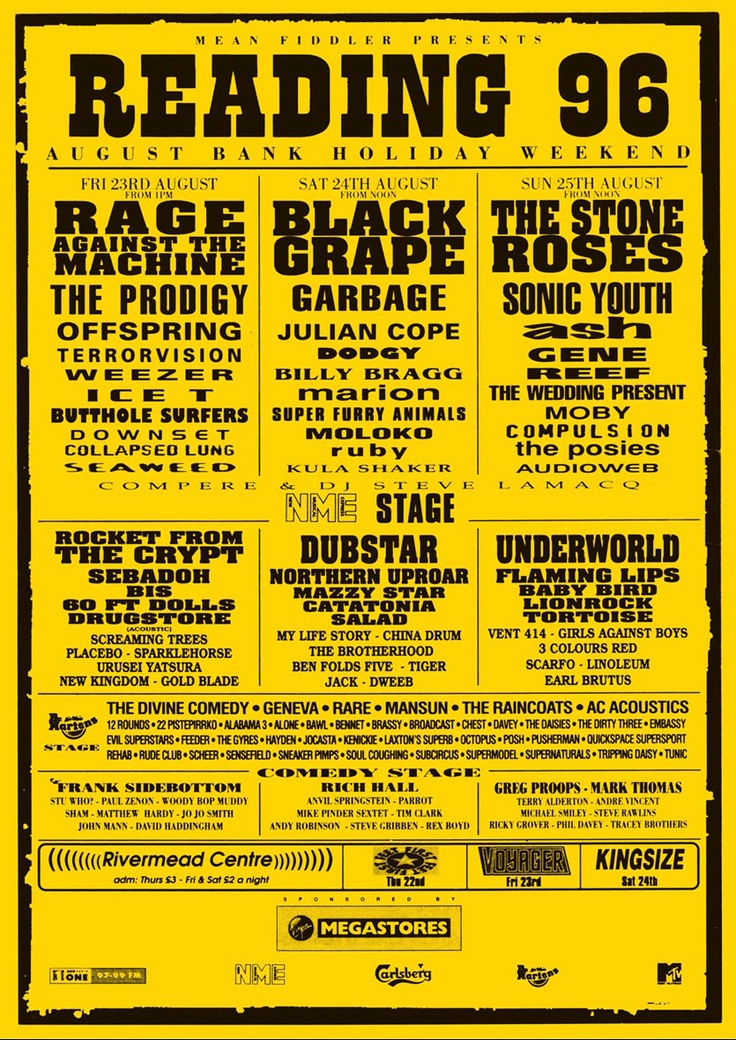
 42 @ 42