Like an extra arm, you are a part of us…

16. Goodbye England (Covered In Snow) – Laura Marling                                                2010/11

Since my daughter was born, just over six years ago, there’s pretty consistently been snow each winter in England. Growing up I remember snow as a rare event – I don’t know factually whether it was, it may just be the vagaries of memory – whereas now it seems to arrive every year.

It’s divisive, snow. With adult eyes I view it as a wearying inconvenience: scraping the car, clearing the drive, being cold and wet, dangerous on the roads. Through a child’s eyes, of course, it’s a massive adventure: building a snowman, throwing snowballs, slipping and sliding, and the delicious prospect of the cancellation of school.

“Goodbye England” was the lead single from Marling’s second album “I Speak Because I Can” and was the song that, to me, heralded the arrival of a very special talent. Her first record “Alas I Cannot Swim” is extremely good but what has struck me as miraculous about Marling is her progression from record to record in such scant time. There’s a discernible growth in confidence in her four albums, appearing in relative quick succession over the last five years, with each building musically on the last. It’s the closest thing I think I’ve heard in my lifetime to the sort of artistic evolution that, say, Dylan or Mitchell went through in the 60s. Ryan Adams also came pretty close for me in the run from Whiskeytown through “Heartbreaker” and up to “Love Is Hell” but there aren’t many others. I appreciate that puts her in some fairly exalted company but I think it’s a valid comparison; I genuinely think she’s that good. I guess there’s an argument that she wears her Bob and Joni influences too freely but, frankly, who doesn’t if you ply your trade as a singer songwriter with an acoustic guitar, and at 23 it’s not like she hasn’t still got time to transcend those influences.

I could have included a number of Marling’s songs in this list and, in fact, originally I’d intended to go with “Sophia” from her third album “A Creature I Don’t Know” – partly because I adore it and partly because I distinctly remember hearing it for the first time and just laughing at how absurdly good it was. So here’s a link to the video for “Sophia” as a little bonus: it is a marvelous thing.

For a while last year – if I’d been writing this last year – then I’d almost certainly have gone with “Night After Night”. Does it borrow a bit from Leonard Cohen’s “Famous Blue Raincoat” ? Yes (which she happily acknowledges). Does it matter ? Not really when it sounds as assured, as poised, as stunning as this. So there’s a link to that too: it is also a marvelous thing.

Or “Flicker & Fail” (very, very Joni Mitchell), or “I Was Just A Card”, or the brutal “Master Hunter”, or the also pretty brutal “Saved These Words”. There are worse ways to spend a Sunday (or any day but I’m posting this on a Sunday) than watching and listening to these.

“Goodbye England” though is the one that I return to with affectionate regularity and, in the spirit of the overall list, has the most personal associations. The song seems to be concerned with the breakdown of a relationship and a desire to escape but those aren’t the reasons that it really chimes for me (although the escape thing is something of a recurrent theme in stuff I like). Marling recounts a story about visiting a hilltop as a child with her father and looking at the snow covered landscape. So struck with the beauty of the scene, and no doubt contemplating the passage of time as his daughter grew up, her father asked her to one day bring him back to the same place, to remember how beautiful the world could be; just once before he died. It’s a feeling that you get a lot as a parent, those peculiar moments when you briefly see the world afresh through your child’s eyes and simultaneously understand how fleeting those moments are – in a way that your child doesn’t. It’s incredibly bittersweet, somehow wrapping up a sudden, strong sense of your own mortality and a desire to preserve the innocence of childhood. It’s not unhappy – those moments can be almost perfect – but there is an abiding melancholy to it. This song does that to me every time.

Sometimes serendipity lends a hand. The song begins with the lines:

You were so smart then

In your jacket and coat

My softest red scarf was warming your throat

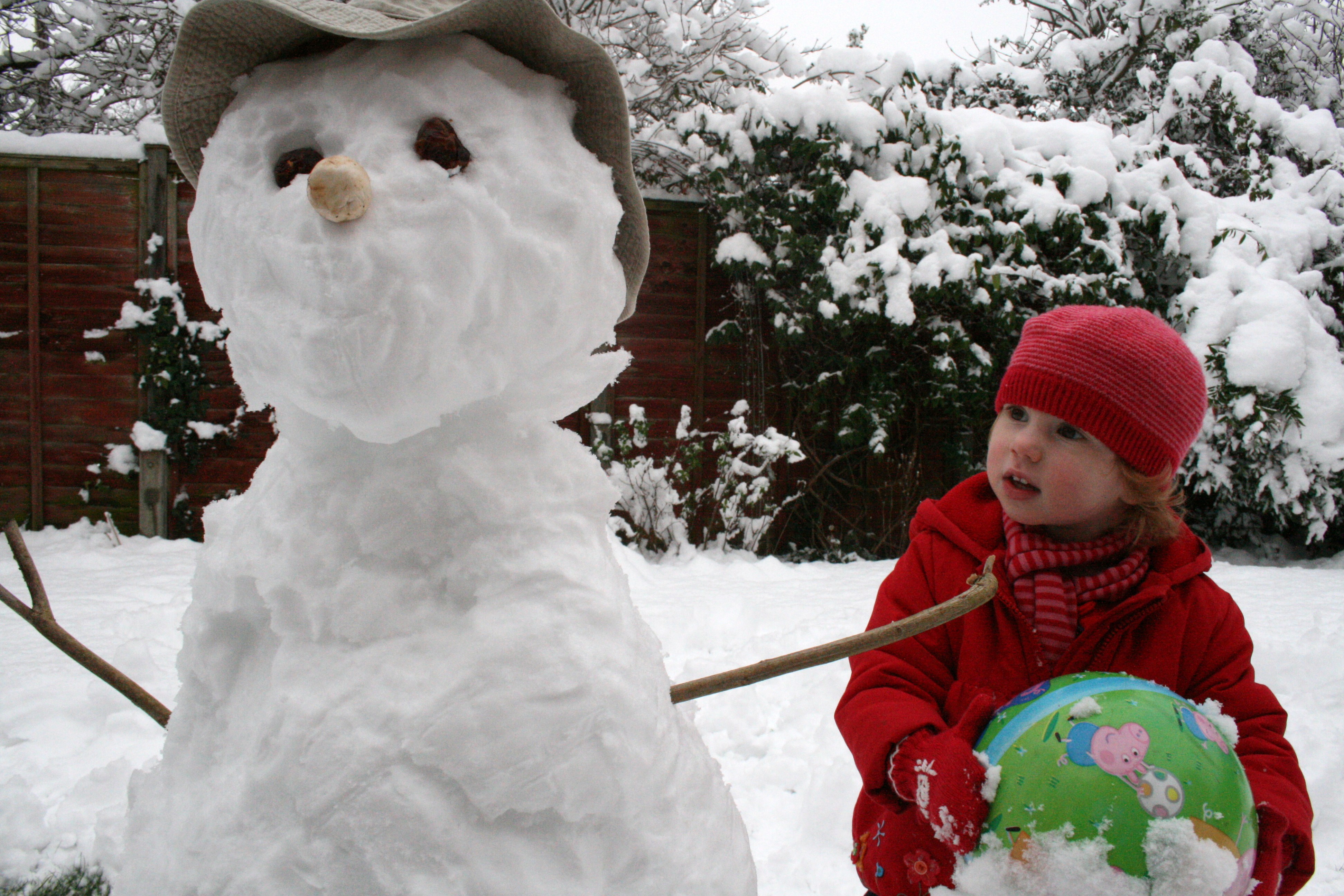
A couple of winters ago I was building a snowman with my daughter and she was traipsing through the white stuff dressed in a red coat and scarf. I think in the context of the song that it’s presumably Marling remembering that her father was the “smart” one with her scarf warming his throat but it doesn’t really matter to me – it instantly triggers the memory of a little girl cheerfully conversing with the snowman rising up out of the ground.

IMG_3853

As the song develops it explores the tension between leaving and staying that Marling feels as (presumably) a relationship ends, reflecting ruefully on the nature of love:

And a friend of mine says it’s good to hear

That you believe in love, even if set in fear

Well I’ll hold you there brother and set you straight

I only believe true love is frail and willing to break

She moves from disbelieving regret (I wrote my name in your book… only god knows why) to frantically pouring out some kind of explanation in a letter (I wrote an epic letter to you… it’s 22 pages front and back) before asserting that it’s too good to be used. A moment of candid self awareness – I tried to be a girl that likes to be used – before, finally, the confident assertion that I’m too good for that: there’s a mind under this hat and the decision to go (And I called them all and told them I’ve got to move).

That middle section is brilliant; sketching out the whirlwind of emotions and uncertainty that accompanies the breakdown of something in eleven perfectly judged lines, capturing the random little asides that the mind throws in to the mix. The wry, self deprecating and I bet you that he cracked a smile following only god knows why is a great touch, as is picking up the thread of being used – from her own letter being too good to be used to recognising that she had played a part that wasn’t her, wasn’t good enough for her, and that she was also too good to be used.

The tension in staying or going then wraps us back into that moment on the hill with her father, now torn between running away (as an independent adult) or returning to her family:

Feel like running

Feel like running

Running off.

And we will keep you

We will keep you, little one

Safe from harm

Like an extra arm, you are a part of us.

“Little one” is what Marling was often called within her family and, serendipity again, is also something that I call my daughter – I doubt it’s uncommon. The “we will keep you” lines deliberately borrow from the mice’s “We Will Fix It” song from Bagpuss, a British kids show from the 70s, which perfectly distills the sense of comfort and nostalgia in returning to the safety of her parents. On another level the Bagpuss tune itself is adapted from a 13th century folk round (“Sumer Is Icumen In”), something that I imagine Marling would be well aware of and that she may well have picked up from her parents; her father was also a musician and ran a residential recording studio, her mother was a music teacher. If it is a nod back to her parents, grounding the song back in a folk tradition which they may have taught her, then it’s a lovely touch. Even if it isn’t then it’s still a delightful moment in the song, it doesn’t need the context to work.

The sense in the song is that her choice is to strike out on her own (it’s called “Goodbye England” after all) but with a promise to return:

I will come back here

Bring me back when I’m old

I want to lay here, forever in the cold.

I might be cold but I’m just skin and bones

And I never love England more than when covered in snow.

I guess as a parent that’s the best you can hope for, that your child grows up confident and assured enough to strike out on their own but always with that promise to return. Like an extra arm, they are a part of us. So next time it snows there will undoubtedly be part of me that sighs heavily and prepares to shovel lumps of it off the drive. There’ll also be part of me though that puts this record on and remembers the privileged time I spent in bringing up my daughter, the opportunities to see the world anew, and the many, many glorious, transient, bittersweet moments along the way.

Don’t you know how sweet and wonderful life can be…

15. Let’s Get It On – Marvin Gaye                                                          Bath, 15th May 2004

A snapshot.

There’s a photograph of him from that day that snap framed the exact moment between being lost and found, taken in the pause as every pair of eyes in the room looked away, looked towards the entering bride and momentarily left the groom. That moment of waiting, anticipating the conclusion of the long procession along the Assembly Rooms’ corridor; it must have been no more than two minutes but it stretched out and back across the five years that had brought them to this point.

Back to…

New Year’s Eve in 1999 and a short break in Scotland, invited to see in the new millennium with a group of friends. It had been a full on black tie big bash with a free, help yourself bar. That last point had seemed particularly important at the time. There’s a photo of him on the night, grinning, holding aloft two bottles of spirits, concocting some poison. They’d gotten happily drunk and she’d ended up falling into the side of the marquee attempting to spin a small girl round in a whirling dance. The child had burst into tears and retreated to look for its parents. She’d sat enveloped in tent and guy ropes and they’d laughed helplessly at each other.

Back to…

New York in February 2000, snow underfoot, tramping their way across Central Park, picking their way down 6th, then Broadway, all the way to Battery Park beneath the long, twin shadows of the World Trade Center. They’d taken the ferry across to Ellis Island, snatching time on deck to gaze back at chrome and steel rising from the sea, before retreating back inside against the biting chill. There’s a photo of him atop deck, hat pulled down over his ears, pointing gleefully at that glorious skyline. The hat and the grin make him look a little unhinged. He feels a little unhinged: giddy with happiness and hope.

Back to…

Carefree days living in West London, first in a small rented place – friends crashing on the pull out futon in the front room, having to tiptoe through their bedroom to use the bathroom – and then in a marginally less small place that they’d bought. Long walks up the King’s Road. Short walks to Ciao at the end of the road, evenings spent eating, drinking, talking and laughing.  His 30th, she’d surprised him with a party in town and friendly faces, past and present, had gathered to share the celebration: a photo of him on the night showing his delight that someone would take the trouble to arrange this for him. And finally back to that botched engagement, back in New York, 2002… But not too botched because here they were.

And now…

Everything in place. Friends and family assembled to bear witness to their promise to each other; a promise that, in reality, they’d made in private years before. All gathered amid Georgian elegance, their day continuing the long tradition of celebration in this venue; he could imagine the ghostly fragments of functions past. He knew how it was supposed to go; the service, signing the register, walking out as husband and wife, drinks, photos, more drinks, dinner, the speeches, and the first dance. A simple set of steps but a million details, each seemingly carrying the threat of catastrophe: they wanted it to be perfect. His speech was ready and they’d picked a fine song as their first dance; full of love, sass, desire, confidence, and fun. It spoke of the promise of setting out on something. It was perfect for them, for the day.

Later on there would be photos of them locked together in that dance, mouthing the words, making each other laugh with pulled faces and jokey moves. Not taking it too seriously whilst knowing it was the most important thing in the world.

Afterwards they’d told him that he’d looked uncomfortable in those moments before she appeared. Had been pacing the floor restlessly, unable to settle – fidgety and anxious. Told him in that good natured banter about worrying whether she would turn up; he took it in the spirit it was intended. He hadn’t been worried; he’d been terrified. Not because he had any doubts that she would be there but because she was a part of him now and to be apart left him feeling less than he was.

She appeared and he exhaled a breath he hadn’t been aware he was holding, a broad and natural smile breaking out on his face. The missing piece returned to him, slotted back together, made whole.

Is there anybody out there ?

14. The Wall – Pink Floyd                                                                                                       1987-

I’ve been spending a bit of time with Roger Waters lately. I won’t lie, he’s not what you’d describe as a “fun guy”. He won’t be put in charge of the children’s entertainment at my daughter’s next birthday* and you can scarcely send him out for a pint of milk without him writing an allegorical concept album about it. “Milking Them Dry” – the story of Daisy, a beautiful friesian that feels alienated from the rest of the herd following the loss of her father in the Second World War and plots revolution against the farmer’s oppressive yoke . Working song titles: “Milking It (Full Fat)”, “Escape (curds and a-whey)”, “Milking It reprise (Semi-Skimmed)”. It’s a sprawling double album and he looked cross when I suggested he could edit it down and release it as “Condensed Milk”.

So we don’t share many laughs, Roger and I, but I still like him. He’s interesting, makes me think, and he’s got a healthy suspicion of authority that appeals to me. He’s compassionate too, underneath that slightly prickly exterior. You have to let him be in charge though. Can’t even tell you what happened when I tried to take the TV remote off him.**

There are a few scenes I like to imagine happened between 1978 and 1980. In one of them Jimmy Carter doesn’t go out jogging, the Iranian hostage crisis doesn’t take 444 days to resolve, and Ronald Reagan remains frozen in memory purely as an actor. That one, though, isn’t entirely relevant to the song at hand. Fragments from the ones that are pertinent might sound something like this.

……

The members of Pink Floyd reconvene at Brittania Row Studios to discuss working on the follow up to Animals. They’re running out of money after a series of ill advised financial ventures and about to incur a huge tax bill.

Dave Gilmour:      We need to record an album… I know the last tour wasn’t much fun but I can’t see                    another way…

Nick Mason:           Has anyone got anything ?

Rick Wright:          Perhaps we can get back to the more atmospheric stuff – more textural, modulations. A little softer than Animals.

Dave Gilmour:      Yes, yes, I think that could really work

Roger Waters:      I’ve got something.

Nick Mason:        Great, Roger, let’s hear it.

Roger Waters:      Well… it’s a twenty six song concept album about personal isolation, dealing with traumatic loss in childhood, which rails against institutionalisation and the abuse of authority. There’s some secondary themes about seeking personal annihilation through substance dependency but I just included that to lighten things up. It ends with every important authority figure from my formative years putting my psyche on trial as I struggle to hold on to my sanity.

Dave Gilmour:      Erm…

Roger Waters:      Hang on… there’s more. When we tour it we’ll physically build an enormous wall on stage so that no one can see us. It’ll be a powerful statement about the separation between artists and their audience.

Rick Wright:          Are you sure about this Roger ? It sounds quite personal. Maybe it’d be better suited to a solo album…

……

Executives from EMI, Floyd’s record label at the time, gather to hear a first playback of the album. One of them (let’s call him Exec number 1) is on the phone to the CEO who’s awaiting their verdict.

CEO:        How’s it sounding guys ? You know I don’t wanna hear that stuff about pigs taking over the farm again.

Exec 1:   I think it was sheep boss.

CEO:      Pigs, sheep… it’s all pretentious crap to me son.

Exec 1:   I think it was that peculiarly British sense of satire boss – you know, tracing the lineage from That Was The Week That Was, Orwell, all that stuff.

CEO:       Like I said son, crap. Now please tell me this is sounding like Wish You Were Here. Not that “Have A Cigar” song though. What the hell was all that about ?

Exec 1:   I have no idea boss. Okay, the playback’s starting…

There’s a pause as “In The Flesh ?” begins…

CEO:      Talk to me guys !

Exec 1:   It sounds great boss – like a straightforward rock album. You’ll love it.

CEO:      What’s that sound in the background ? It sounds like World War 2 kicking off in there. Is that a plane dive bombing your building ?

Exec 1:   Er…it’s on the record boss. I think Roger’s working through some of his feelings about the loss of his father in the war…

CEO:      This is what I was talking about. I don’t want that shit. No one wants that dark stuff anymore. What’s it called ?

Exec 1:   The Wall.

CEO:      The Wall ? No one wants that. Jackson did “Off The Wall”. Off the wall is cool. Even “on the wall” might be okay. Over the wall. Work with me here. No one wants the actual wall.    

Exec 1:   Boss, there’s a song about kids not liking school – it’s kinda catchy.

CEO:      Okay, we can maybe salvage something out of that…

……

A suburban dinner party in late 1979***

Margot:  Jerry ! Jerry, would you decant that Blue Nun please darling. Tom and Barbara will be here soon.

Jerry:      Yes Margot, it’s under control.

Margot:  Can you put on some music too. Something suitable, you know I don’t really like your records Jerry.

Jerry:    I know Margot. What about that Pink Floyd ?

Margot: Oh if you must. Not the one about the donkeys or whatever it was please Jerry. One of those relaxing ones.

Jerry:     Don’t worry, it’s the new one… I expect Tom and Barbara will love it.

Margot:  Yes. That’s what I’m afraid of.

……

Much to the relief of EMI and the band “The Wall” was actually a huge commercial success, currently tracking upwards of 30 million sales worldwide. Much like The Who’s “Quadrophenia” and “Tommy” – its distant rock opera cousins – it also spawned a film adaption, a distinctly gloomy dystopian affair starring Bob Geldof. It’s not much of a date movie. It’s also not much of a dinner party album; sorry Margot.

What it is though is a hugely ambitious piece of work. It’s a record I must have had during my formative years (which may explain a lot…), initially hearing about a third of it on a home-taping-is-killing-music cassette that my Dad had before later discovering that the record didn’t abruptly end midway through “Another Brick In The Wall pt 3” but actually had another hour to run. It’s a record that particularly appealed to my teenage self – it was about something and seemed important even if you weren’t quite sure what. I guess, for me, it was probably the nearest equivalent to mooching around Parisian cafes and ostentatiously reading Camus or Sartre. There weren’t many Parisian cafes in Plymouth or Bristol. In those days there wasn’t even a Costa. Now that’s dystopia.

So, despite being a record that’s fundamentally about personal alienation, it’s not one that especially resonates with me of late or during periods in my life when I’ve felt down. It’s just one that I find really interesting, it largely appeals to my intellect rather than my heart. I always find something new in it, always think I’ve uncovered a little more of the puzzle that Waters has put together. I still can’t decide if it’s not half as clever as it thinks it is or much cleverer than I’ve ever given it credit for. As previously stated it’s certainly ambitious – taking on an apparently autobiographical view of Waters’ childhood, facing in to feelings of abandonment after the loss of his father, and tackling his increasing sense of isolation. All via an elaborate metaphorical construct – the wall – which he builds around himself to cut himself off from everyone around him. In case that wasn’t enough there’s also a tranche of stuff (which was extended in the film and, latterly, in “The Final Cut”, Waters’ final album with Floyd) exploring the dangers of totalitarianism and the horrors of war. It’s consciously not lightweight.

I’ve dwelt on Roger Waters thus far (perhaps a little unfairly – Roger, if you’re reading this, it was all meant affectionately) and it’s hard not to listening to late period Floyd. He was undoubtedly the principal driving force in the band by the end and ultimately it broke the group apart until Gilmour picked up the pieces and released “A Momentary Lapse Of Reason”. It’s a great shame that the group lost its capacity to collaborate as, odd songs apart, the final two Floyd albums, for me, lack some of the darkness, some of the bite, that Waters brought to the party whilst his own solo output lacks the musicality of the best Floyd records. They were better together. The best moments on The Wall highlight this too. It’s often (and I’ve largely done it here too) thought of as very much Waters’ album but Gilmour’s contribution in particular is immense. Whilst he only gets a writing credit on three songs – “Young Lust”, “Comfortably Numb”, and “Run Like Hell” – his guitar playing is absolutely phenomenal throughout, culminating in “Comfortably Numb” and the solo to end all solos.

There are a few guitar solos I know by heart. Not to play, clearly, but I can hear them whenever I want in my head, every inflection, every note. “Comfortably Numb” is top of that pile. It’s not fast, not especially showy, and there aren’t actually that many notes but it’s huge: epic. We should reclaim the word epic specifically for this guitar solo. I don’t think anyone balances tone quite like Gilmour, those squalling slabs of noise, like being buffeted in the wind, and pure, clean high notes. Few guitarists have his capacity for space either; he understands when not to play or when to leave a gap. His sound on that solo is enormous; I had a vision of him standing in a warehouse in front of a monstrous array of Marshalls blasting it out but a quick search seems to suggest that he doesn’t use a Marshall, gets all of his distortion from pedals, and prefers to record via a small amp in a small room. So, just shows how much I know…

Musically, in many respects, “The Wall” is fairly straightforward by Pink Floyd standards. It’s largely a rock album and most of the songs – albeit they knit together – clock in around the three or four minute mark. It even contains a “hit” – the education establishment bashing “Another Brick In The Wall pt 2”. It’s interspersed with snippets of dialogue and snatches of voices from Waters’ imagined past (“how can you have any pudding, if you don’t eat your meat ?”) but it’s far less experimental than the albums that preceded it. This may be just as well given that the overall concept and lyrical concerns are so grandiose – hanging those ideas on music any more complex and the whole thing might have just collapsed.

Lyrically it’s great and Waters expresses his main themes through a range of voices, principally via his gestalt character Pink whose story “The Wall” tells – it’s a device that puts a little (but frankly only a little) distance between Waters himself and the lyrics. Through Pink we get a frightened child looking to his mother for protection, a process that starts the construction of the wall (“Mother did it need to be so high ?”), the failed husband (“day after day, love turns grey, like the skin of a dying man”), the rock star (“I am just a new boy, stranger in this town, where are all the good times, who’s gonna show this stranger around ?”), and, slowly, the lonely, broken man driven to the brink of insanity (“I’ve got wild staring eyes, and I’ve got a strong urge to fly… but I’ve got nowhere to fly to”). Alongside that we also get the cast of supporting characters – his mother, the school master, a groupie, and then various nightmarish, hallucinatory voices from within Pink’s / Waters’ damaged self. It ultimately culminates in the freakish spectacle of “The Trial” in which Pink’s derangement is such that he imagines various key figures from his past putting him on trial to answer the charge of showing feelings – to which he can only plead “crazy, crazy, toys in the attic… I am crazy”. He’s found guilty and the wall is ordered torn down: he must face the outside world again.

The album closes on a curiously ambiguous note with final track “Outside The Wall”. A plaintiff clarinet picks out a gentle melody and Waters sings the following lines, each one echoed by a supporting choir, almost murmured in the background:

All alone, or in twos,

The ones who really love you 
walk up and down outside the wall.

Some hand in hand
 and some gathered together in bands.

The bleeding hearts and artists 
make their stand.

And when they’ve given you their all

Some stagger and fall:

After all it’s not easy 
banging your heart against some mad bugger’s wall 

It’s never explained what happens to Pink. The inference in the song is clear – there are people who will love you (and, in this instance, potentially save you) but you have to be prepared to let them in and they won’t wait around forever – but whether Pink manages to escape his isolation isn’t apparent. Perhaps the final clue rests in the way that the album is bookended. It begins with the words “…we came in ?” and ends with “isn’t this where….” suggesting a repeating cycle. Perhaps he isn’t fated to escape.

Waters though evidently did. Whilst not all of his post Floyd output is to my taste he’s never less than interesting and there was something genuinely touching about seeing his reconciliation with the band at Live 8 in 2005 before Rick Wright’s death three years later. “The Wall”, in more recent years, has taken on new life – particularly post the fall of the Berlin Wall – with some of the broader anti-totalitarianism themes perhaps assuming greater prominence but, for me it remains largely a more personal document; a fascinating glimpse of an artist openly working through his own internal struggles and coming to terms with his past.

……

*although… can you imagine ? It would be amazing:

–  “Dad, Dad, look at that inflatable pig !”

–  “It’s a searing critique of the bloated nature of capitalism inspired by George Orwell’s savage satire of Stalinism: authority corrupts and inevitably leads to totalitarianism”

–  “No Dad, it’s definitely a pig”

–  “….”

–  “Do you think he knows any Disney songs ?”

**brilliantly, of course, Roger Waters is also the name of one of the beavers in a Sylvanian Family (a set of children’s toys comprising various families of woodland animal folk) which I can’t believe was accidental – particularly given its description as “everyone’s best friend because he’s always very friendly and jolly” !

***will make more sense if you’ve seen the late 70s British sit com “The Good Life

As long as we keep our stride, I believe we’ll be fine…

13. Walking To Do – Ted Leo & The Pharmacists                                         2013 and the future

I had a wobble today. A sense of wondering what the point in carrying on with this was. Maybe I’d gotten a little too obsessed with the WordPress stats page (there’s nothing more dispiriting than a day of no visitors and no views) and a little removed from the original point in writing again.

So what was the original point ? I guess it was a combination of things. In part a recognition that, in some shape or form, putting thoughts down on paper (in actuality or virtually) has been a part of my life since I was 12 or 13 and not doing it cuts off an important outlet for me. Also, in part, a desire to prove to myself that I could commit to and complete a writing project of a certain size and scale – this was a way in, a route to getting past a novel length number of words within a defined timescale. The 42 was plucked somewhat arbitrarily based on my age at upcoming birthday next February and, slightly more esoterically, as a reference to the answer to life, the universe and everything from “The Hitch-Hiker’s Guide To The Galaxy”. There have been a number of occasions in the last few weeks when I wished I’d picked a nice, round, small number like 20. Finally, the point was that this was intended to be about me as much as it was about a bunch of records – a means for me to work some stuff out after a difficult couple of years. My choosing to do that in a public space stemmed from a genuine desire to connect with people, both people I already know, and maybe people that just found this stuff. Being honest about certain things – not always being okay, depression, a love of country music – has generally been a positive experience and prompted a richer connection with people. Not everyone obviously, I appreciate the country music thing is hard for some people to accept.

There’s a place I go sometimes and I don’t know how I get there. Why would I ? It’s not somewhere I want to go, just somewhere I end up. It’s a place where I’m locked away inside myself. Stuck. There’s a bunch of metaphors that I’ve thought to myself when I’m there – it’s like being deep under water, not able to surface; it’s like being overrun with weeds, nothing else can grow; it’s like being in a cave, it’s dark and you can’t find the way out. None of them are really adequate and I don’t have the breadth of expression in my writing to explain it. Put in clinical terms it’s depression and it’s fucking horrible.

I wasn’t there today but there was a wobble. I was a bit flat. Could hear that, at first, small, insistent voice that wanted to just give in, sink into it, and stop bothering with anything. Because: what’s the point ? I was trying to write. Trying to force some words out about Springsteen’s “The Wild, The Innocent & The E-Street Shuffle” and feeling mildly intimidated by it. The record is so good and he’s so important to me – in a way far beyond anyone else covered on the 42 so far – that I’ve been running a bit scared of trying to tackle it. My gung ho attitude to it first thing this morning (the product of a couple of weeks of pure, unambiguous happiness and contentment) quickly evaporated as I got stuck in clichés about melting pots of musical styles and hyperbole about New Jersey’s favourite son. Or at least that’s how it felt to me. Reading it back some of it’s not so terrible.

So I stopped doing that. I stopped doing that and, perhaps with half an eye on the weeds analogy above, I raked leaves up in the garden. If you know me at all you’ll know that this is somewhat out of character. In fact, I believe it may be the first time in my life that I’ve raked leaves in my garden. After all, what’s the point ? They’ll only fall down again next Autumn.

But there was something in it that got me to thinking about tending. Obviously, in a literal sense, about tending to the garden but – and here’s that forced metaphor again – also about tending to myself. It was the first time in a long time that I’d been aware of that nagging, disruptive, unhealthy voice in my head telling me that I was worthless and had chosen to quiet it. Not in a dramatic way, just in the simple act of finding something else to do. In not continuing to bang my head against its own internal brick wall. That image doesn’t work does it ? How can you bang your head internally ? You get the general idea. There’s a wonderful bit in the Steve Coogan / Rob Brydon series “The Trip” (which I’ve already referenced in “The Winner Takes It All” piece) where Coogan trys to cross a river across a series of stepping stones but gets stuck, and subsequently falls in. Brydon baits him by shouting “you’ve got stuck halfway to your destination, you’re stuck in a metaphor”. Well, clearing the lawn of leaves I was stuck in my own.

When I came back into the house the record that I put on was this one. It was deliberately chosen because it has become my go-to record for hope, for determination, and for helping me believe that everything will be okay. It’s not a record that’s specifically about depression but it acknowledges that life sometimes throws up the “cruel and hard” but that you’ll be fine if you stay on your feet and keep walking. It’s enough in the ballpark of how I feel for me to force my own interpretation onto it – to adopt its positivity and spirit as rallying cries. If we were doing a quick round of “what’s your theme song” (really ? you’ve never done that ? must just be me) then, lately, I’ve tried to make this mine.

It’s fairly straightforward lyrically, adopting an extended metaphor about life being a journey to be walked through and how two people can draw strength from each other by walking alongside each other. There’s a neat rejection, early on, of the idea that meaning in life comes from some external, higher power:

Would you take me where my feet feel happy in their own time

And the cathedral of reason let’s the bells chime

And the lighting is fine ?

I’m old enough to know that people waiting for some big sign

Should quit their waiting on the Divine

Divine is what’s in your mind

From then on it’s a message of companionship and support – a sharing of the journey, a sharing of perspectives – and a clarion call that there’s more to do, more to see:

I see the road is long so get on my side – there’s a whole lot of walking to do

And if we stay on our feet, we’ll make it in our own time

And though the road has got some steep climbs, I believe we’ll be fine

Towards the close there’s a quieter section (you musician types might refer to this as “the break down”) which, literally, recounts the places that the singer and companion have journeyed together: my house to your house, Bethnal Green to the tube, Aoyama to Shobuya, Rock Park Creek to the Avenue, and on past the zoo… There’s a whole lot of walking to do. It’s brilliantly done, rooting the song back in reality after the abstracts of the original analogy: this is where we’ve already come from, where we’ve already been… Still lots of places, literally and figuratively, to go in future.

Right at the close the song unwinds with a jubilant call and response, pitched full of joy, life and defiance:

Well I’m here – and you’re here – and it’s true: there’s a whole lot of walking to do

And I’m cool – and you’re cool – and it’s true: there’s a whole lot of walking to do

There’s no fuss and I trust – I trust you: there’s a whole lot of walking to do

And you’re strong and I can be too: there’s a whole lot of walking to do

And you do – and I do – there’s a whole lot of walking to do

There’s a clue too in the “you do, and I do” that the companion in this song is Leo’s wife, which clearly makes sense in the context of the rest of the song. I always take that as my read anyway and this is another song that reminds me of the continued strength and support of my own wife. I always think of her in that final section of the song.

It finally ends with the sound of glasses chinking as if everyone’s sat in a bar, surrounded by friends, and enjoying life. I adore the end of this song. I adore the whole song and am indebted to a very old friend for introducing me to Ted Leo. I love that it doesn’t gloss over that life can be hard but that it’s okay, if we stick together we can get through it. I love that, musically, it kicks righteous ass: if you want to ignore the words and just jump around inanely to it, go right ahead, this song will serve you well. I love that it’s smart; richly observed without disappearing up its own arse (which may or may not be where I’m currently headed). But whatever, love makes you crazy and I love this song.

So, now we’re a long way from the wobble. A long way from the deep sea depths or the choking weeds or the cave. We’re out in the open, drinking in the air, grateful for being alive, for sharing it with some incredible people, and with some belief that there’s more to come. And that it will be good.

There’s a whole lot of walking to do.

And every breath we drew was hallelujah…

12. Hallelujah – Jeff Buckley                                                                                        Bristol, 1995

“It”. The difference between good and great. The intangible quality that separates countless singers with guitars from a star. That rare combination of talent, application, attitude, look, feel, and passion. Jeff Buckley had it. Had it in spades.

Sony execs must have been rubbing their hands together with glee when they signed Buckley; he sang like an angel, was a guitar virtuoso, and looked like a film star. His voice could be Robert Plant one minute, Nina Simone the next, and finish up pitching sounds that would bear comparison with only, maybe, Liz Fraser amongst recent singers. His guitar playing ranged from delicate, intricate picking to ragged distorted chords; fusing rock, jazz, blues, hymns, East and West. Feted to be the new Dylan, the new Springsteen, the new Led Zeppelin, the new Van Morrison: take your pick, who knows which path he’d have trodden.

Personally I suspect he’d have taken an artistic route more akin to Joni Mitchell than, say, any of her male contemporaries – a restless evolution of his sound and a deeper exploration of ever more complex musical forms. I doubt it’d have been necessarily very commercial but it’s impossible to second guess now. Van Morrison came out of “Astral Weeks” with “Moondance” and Springsteen reigned in some of the eclecticism from “Wild, Innocent & The E-Street Shuffle” to produce “Born To Run” so perhaps Buckley might have found a way to simplify.

We’ll never know, of course and it remains frustrating that there’s so little material – a solitary finished album (“Grace”) and the patched together recordings that may or may not have gone on to be its follow up (“Sketches From My Sweetheart The Drunk”). What there is, outside of that, are reams and reams of live recordings – seemingly every time someone pressed record on a mixing desk Sony / Columbia would subsequently release it. Whilst in some respects there’s a faintly depressing aspect to this as the label look to milk their ear marked “legacy” artist – their cash flow projections somewhat inconvenienced by his premature death – it does also provide a fascinating glimpse into Buckley’s evolution as a musician and singer.

The best pre “Grace” document is the “Live At Sin-e” recording, originally put out as an EP in 1993 but then issued as a full double album ten years later. It’s just Buckley, a telecaster, and a couple of hundred people. It’s clearly an environment in which he feels comfortable; there’s a lot of joking around, whether it’s improvising a song to help people find their seats (and then imagining the equivalent punk version for CBGBs), mashing up Nusrat Fateh Ali Khan with Nirvana’s “Teen Spirit”, or calling for “Jim Morrison levels of reverb” via an impromptu tease of the opening bars of “The End”. There’s also, in the same spirit, a lot of improvisation, stretching his own songs out as if he’s still working out the kinks, and extending and shaping the covers like he’s trying to unravel each song to suss out how it works  before he puts it back together again. Inevitably some of it’s pretty raw and not everything works. The version of “Lover, You Should’ve Come Over” (which is a stand out on “Grace”) is a bit of a mess and beset with tuning problems and there are moments when some of the goofing around outstays its welcome.

Much of it though, often when it’s more focused and slightly less experimental, is stunning: a gorgeous, fragile take on Edith Piaf’s “Je N’en Connais Pas La Fin”, a melodic run through Dylan’s “If You See Her, Say Hello”, a sensuous “Strange Fruit” (Billie Holiday, Nina Simone), and an utterly lovely read of Van Morrison’s “Sweet Thing”. It’s worth stopping for a second to look again at that set of covers. That’s Edith Piaf, Nina Simone, Billie Holiday, Bob Dylan, and Van Morrison that he’s taking on and making his own as a 26 year old without a record to his name.

And then there’s “Hallelujah”. Back in ’93 the song was far less known than it is now, thanks in no small part to Buckley’s version. Written by Leonard Cohen Buckley uses John Cale’s interpretation as his template and it closes “Live At Sin-e”; the recording is probably the closest point of comparison to my first encounter with the song. At the time, in the months following graduation, I was back living with my parents and working a temporary job dealing with customer queries about their invoices for a mobile phone provider. It was a set of circumstances distinctly lacking in romance or magic.

Buckley was playing at The Fleece And Firkin (now The Fleece) in Bristol to promote “Grace”, it’s basically a pub with a stage, capacity probably around three hundred. The sort of place you can get within feet of the performers and reach on to the stage to pinch a taped down set list at the end. In all honesty I had principally gone that night to see Bettie Serveert who were supporting as I was a big fan of their “Palomine” record. I’d heard some buzz around Buckley and was curious but hadn’t heard a note of his music.

The gig was a revelation. I was there with a friend from school who’d ended up working at the same place as me, in much the same circumstances, and that time at work was significantly enlivened by his conversation and camaraderie – one of the few bright spots in an otherwise gloomy time. I suspect I started watching Buckley’s set with a slight “come on then, let’s see how good you are, impress me” attitude and, early on, the signs weren’t good. He had constant sound issues during the opening songs and some technical glitches, neither of which seemed to help his mood; he seemed tetchy, unable to really get into his performance – the malfunctions interrupting his (and consequently our) reverie. Slowly but surely though he (and band) turned it around; the equipment started to work and they wove a captivating spell.

Buckley was impossible to take your eyes off. On stage he had charisma to burn; a very attractive, sensual man oscillating (wildly) between little-boy-lost vulnerability to lithe sexuality. Irrespective of gender or orientation the man just had “it”. He was also impossible not to listen to. He had the technical chops but his much heralded four octave range doesn’t really tell the story. The range of expression in his vocals was breathtaking, although that’s probably the least appropriate adjective to describe them given his sustain. He sent notes out like birds taking wing: soaring, swooping, climbing and diving. “Grace” as an album acts as a fine showcase for his voice from the pure falsetto of “Corpus Christi Carol” to the heady languor of “Lilac Wine”, the resignation of “Last Goodbye”, the pain in “Lover…”, through to the free style screams of catharsis he lets loose at the close of “Grace” itself. It was a glorious instrument and to hear it in the flesh in such intimate surroundings was a genuine privilege and one of the finest live performances I’ve seen.

He closed with “Hallelujah”, I think it was an encore. Just him and a guitar. You could have heard a pin drop. If you had you probably would have asked it to be quiet. It was just jaw droppingly good. Astonishing. Staggering. Go to town with your own superlatives but he held all of us rapt, perfectly still, in thrall to seven minutes of perfection. We left shaking our heads in mild disbelief. I think I bought “Grace” the next day.

The song suffers a little now for its relative ubiquity, everyone from Bono to X-Factor winner Alexandra Burke has had a go at it. You can argue the toss over whose version is definitive – it seems to usually boil down to a straight fight between John Cale, KD Lang, and Buckley; maybe Rufus Wainwright – but the version I heard first is always the one that sticks for me. Towards the end of his life even Buckley started to lose some of his sparkle in performing it, listen to the recording on “Live At L’Olympia” and he sounds a bit like he’s going through the motions amid the audience singalong (to be fair the cut on “Mystery White Boy” that splices in The Smith’s “I Know It’s Over” is much better). But in the beginning it was, and remains, sublime.

In 1997, at just 30 years old with the world at his feet, he was gone. Drowned whilst swimming Wolf River in Memphis. Speculation persists that he intended to take his own life – vehemently denied by his family – and I guess that the fact that toxicology reports indicated nothing in his system could be read either way. His death was ruled an accident.

It was also, in some respects, an accident that I saw him that night in Bristol. It’s ironic given the dedication and determination he applied to his undoubted gifts: his artistry and musicality was no accident.

Let me bid you farewell…

11. Brothers In Arms – Dire Straits                                                                When: June 6th, 1944

Before

He’d held a gun before:

Well before June ’44,

Bagging rabbits in the fields near his home.

He gripped it tight as the boat lurched on through the foam.

He’d run before:

Countless miles before the war,

Across grass, through woods; blood pumping, his heart.

Now his legs scrambled on sand as the beach blew apart.

He’d known friends before:

But not like the 48, this Marine Commando corps,

Bunkered under dunes; for respite, to hide.

O’Boyle, the Corporal, lay dead by his side.

I’d been to church before:

Usually head bowed, eyes fixed on the floor;

Not a believer in gods but respectful of men.

Especially one, that after the war, found peace with a Wren.

I’d remembered before:

Silly stuff – an accident, bowling a ball through his patio door

Or watching him wind up Grandma, a sparkle in his eye,

Perfected and practiced as their years had gone by.

I’ll remember again:

A silent two minutes for those lost and those slain.

And the quiet dignity of the man that I knew

Who never asked us for anything but that we live our lives true.

……

For my grandfathers: inspired by the one I was fortunate to know but not forgetting the one that, unfortunately, I barely had time with before he passed away.

I don’t want to talk, if it makes you feel sad

10. The Winner Takes It All – Abba                                                                                 When: 1981

There are some records that are so well known, so entrenched in cultural memory, that they will elicit a response, for good or ill, purely from reading the title. Their ubiquity making a straight appraisal of the original work more difficult – shorn of surprise and laden down with acquired baggage across the years.

Abba’s “The Winner Takes It All” is very, very much one of those records and, to some extent most of Abba’s songs have now taken on a life beyond themselves. They’ve spawned a musical which, apparently, 54 million people around the world have seen. That, in turn, produced the highest grossing musical film of all time, taking north of $600 million at the box office, which is now the biggest selling DVD ever in the UK. One in four UK households gazing in wonderment at how Pierce Brosnan, utterly incapable of carrying a tune in a bucket, landed his part. There are innumerable tribute bands, from the affectionate Australian parody “Bjorn Again” (now a franchise in its own right spanning several bands) to Abbatoir, possibly the only Abba heavy metal group – certainly the best named – amongst the tributes.

There’s a slew of cover versions spread across a surprising range of artists. From U2 to Kylie to the Glee cast  (“Dancing Queen”), Swedish metaller Yngwie Malmsteen and The Sisters Of Mercy united in their desire for a man after midnight on “Gimme Gimme Gimme (although disappointingly Yngwie changes “man” to “love”), Wilco having fun with “Waterloo”, Elvis Costello taking “Knowing Me, Knowing You” pretty seriously, Erasure less seriously tackling “Take A Chance On Me”, and McFly – putting it politely – butchering “ The Winner Takes It All” for the Olympics.

Somewhere in all of that are the songs. Somewhere underneath the layered on kitsch, the gurning Meryl Streep, that French & Saunders skit, the inevitable stampede to the dance floor of all generations at every wedding in Britain, are the songs. And what songs. If you think there’s a better run of pop singles, excepting that other fab four, in the last forty years then I’m happy to have the debate: meet me at Ikea and we’ll sort it out over some meatballs. Seriously. “Dancing Queen”, “Waterloo”, “Knowing Me, Knowing You”, “Take A Chance On Me”, “SOS”… Three minute masterpieces one and all. No irony. No guilty pleasure. Just dazzling, mesmerising nuggets of pop music gold.

Top of the pile amid all of those great songs sits “The Winner Takes It All”. Famously it’s about divorce and often assumed to be autobiographical, charting the breakdown of the marriage of Bjorn Ulvaeus and Agnetha Faltskog – the song’s writer and vocalist respectively. Ulvaeus acknowledges the song’s broad inspiration but outright refutes that it’s a specific commentary on his own marital failure. It’s a view that Faltskog shares, both of them claiming that there were no winners or losers in their divorce, but it’s hard to believe that personal circumstances didn’t bleed into this song; art surely mirroring life. In some senses it almost doesn’t matter whether it really is or isn’t about the songwriter and the singer. In knowing the narrative, understanding their circumstance, the damage is essentially done – it’s too compelling to ignore and you find yourself inclined to layer in additional pathos to the song that the knowledge evokes.

However, the song doesn’t need the listener to be aware of that context for its weary, almost broken, sadness to resonate. If anything perhaps all of that real life, intra-band drama is just another of those distractions, those side shows, that have attached themselves to Abba. Just something else that gets in the way of being able to purely hear the song.

So I count myself fortunate that my introduction to Abba wasn’t via any of the myriad spin offs from recent years. I was utterly unburdened by back story or by camp revivals or by West End musicals or by Julie Walters dancing on a table. I experienced Abba, and this song, as it happened, not through the rose tinted glasses of nostalgia. Probably not rose tinted glasses of nostalgia given how their legacy seems to have been treated. The official Mamma Mia hotpants* of nostalgia perhaps. The feather boa of schmaltz. You get the idea.

I was 10 years old and “Super Trouper” was one of the first albums (vinyl) that I owned – I think it was a Christmas present but I might be mis-remembering. Perhaps it was the year that I didn’t get the Millennium Falcon and that’s why its melancholic stylings resonated so strongly: it didn’t look like much but it had it where it counts. At that point I imagine my preoccupations largely revolved around Star Wars, making up stories in my head, and wondering whether Anna Jackson liked me more than any of the other boys in class. Plus ca change, plus c’est la meme chose. Apart from the Anna Jackson bit obviously…

Then I heard this song and something new was added to that list of preoccupations; the realisation that music could give voice to how you felt. Clearly I didn’t feel like I was going through a divorce with an attractive blonde woman from Sweden. Not literally. I probably didn’t even know where Sweden was given I had a teacher at the time that insisted that Sydney was the capital of Australia. I could, though, feel the hurt in that voice, the vulnerability in the section towards the end when the instrumentation drops away and Agnetha sings “I don’t want to talk” for the second time in the song. The vocals on this record are extraordinary, technically accomplished but, more importantly to my ears, they just ache. Underneath the arrangement, the typically Abba-esque soft focus production, the trills and frills, there’s a lead vocal that is simultaneously pure but brutally raw. She sounds bruised, resigned and hurt beyond measure. I think it’s quite astonishing. Even as a 10 year old I understood that this was a song rooted in deep sadness; it was probably my first experience of hearing some of my own feelings of sadness echoing back through a song.

It fascinates me where this comes from. I play a game now with my six year old daughter – putting on a piece of music and asking her whether it’s happy or sad or angry or whatever she thinks it is. She’s almost always right. No baggage, no real understanding of the lyrical content, and yet she’s almost always right. We are seemingly preconditioned to process certain sounds, certain patterns of sounds, and for them to evoke a particular emotional response. Someone smarter than me can perhaps explain that to me one day, tell me why it came about, why we evolved in such a way. To me it’s one of the few things in real life that feels like magic and “The Winner Takes It All” was my first glimpse of that magic.

*This one is essentially a real thing although presumably without any in built capacity to look back wistfully to the past: available here.

……

I couldn’t satisfactorily make this fit in the rest of the piece but it would be remiss of me to not also point you in the direction of the rather wonderful Steve Coogan and Rob Brydon version of the song from the utterly fantastic “The Trip”; funnily enough, in the context of that whole series, they probably got closer to the underlying spirit of disconsolance in the song than any other version I’ve heard since the original.

It must be the time of year…

9. December – All About Eve                                                             Nottingham, December 1996.

A short story.

This feels true. It isn’t, of course. I know that. She would know that. The details are all wrong and nostalgia and memory aren’t the same thing. But you don’t know that. All you need to know is that once upon a time we tried again. Failed again.

……

I think it must be the time of year; it had started in late Autumn. Back then we were two chronically shy souls tentatively finding each other; the falling leaves marking our own inexorable falling in love. There was an awkwardness between us, somehow in us, at first which held a certain naïve charm. An innocence. I don’t know, maybe we were just foolish kids. It had ensured that those beginnings had run on from October into December, two months of careful courtship – our painfully slow reaching for each other as old fashioned as that word implies.

So this time of year always brought it back, the magical blaze of the beginning sustained over those months that ran from fireworks to fairy lights – the world alive with lights in the darkness.

It had ended a handful of years later in the same span of months; still those clear, crisp skies, and the aging sun hung low, but now with a snap and bite to the wind. Still discernibly Autumn but withering into Winter.

And now here I was, lost and lonely, reaching for her again across the years, looking for what we’d once had. Choosing to be blind to the reasons why it had failed the first time, the second time, all of the times. I reached for the phone, dialled a number. The brief silence before the dial tone sounded was enough to give me pause and I hung up, put the phone down again, picked up a bottle of cheap red wine and poured another glass.

Eventually I reached again for the phone. Dialled a number.

……

She had stayed for the weekend as usual – it had become our habit over the past six months. She’d even stayed on Sunday night which was less common as it meant an early start for her long drive back south to make it to work on Monday morning. Neither of us could have known for certain that it was our last night together, lying there squeezed together on my single bed. If we had would it have been different ? Would we have made love, reconciled to the end and spending those last moments lost in each other ? Perhaps we’d have talked, spent the time making sure we were right that this was the end, that there wasn’t some way we could make it work that we’d missed ?

I don’t think we’d have talked. We’d never spent our time together talking, never found a way to open ourselves up honestly and ask for what either of us needed. We wrote, that was what we did. Even in those beginnings we wrote to each other, exchanging letters in person, the sender waiting nervously as the recipient read. It was the only way we found to express ourselves. The next day would bring a reply – a conversation played out over days, in slow motion, that might have taken minutes if we’d been able to break the silence. Perhaps we imagined ourselves characters in one of the Austen novels we’d been studying. Maybe we were just foolish kids.

Things had briefly flared again in those last months, occasionally a spark catching flame in the dying embers, but ultimately turning to ash. Picking our way back across familiar ground felt good at first, a small reminder of the rush of being sixteen and falling headlong into first love. But we weren’t sixteen this time. Besides, even when we had been the evanescent rush hadn’t sustained us once that initial thrill had passed. Don’t misunderstand, I’m not denying the truth of what we felt that first time: it was something extraordinary. You only fall first once and we fell so hard we were left gasping for air. But this time ? Could it be taking our breath away again ? Were we just clinging on to the feeling of being in love or were we really in love ? That I even wondered seemed to suggest an answer.

She left before dawn as I slept.

……

When I got up I found that she’d left a letter. Carefully placed where it couldn’t be missed. A letter to say all of things that we couldn’t say. Just like in the beginning, just like always. It was a letter of the future, talking of all the things she would do, all the places she would go, all the dreams she still had. She wanted to move on with her life and was asking if I wanted to come along.

I knew that I didn’t.

I knew but it broke my heart all the same.

You can’t change the unchangeably untogether

8. Star – Belly                                                                               When: 1993

It began, as befits a great love story, on Valentine’s Day 1993. Unlikely as it seems, it began in Leicester.

She brought her mates. I turned up alone. She was cool, confident, talented and sassy. I was growing out a haircut gone bad. She was from Boston, Mass. I was from Bristol, Avon. It probably wasn’t meant to be…

She was Tanya Donelly, her mates were her band, Belly, and whilst I might have wished it otherwise our romance never progressed beyond adulation from afar. There are certain bands, certain singers, that you just get a little territorial about – that you claim as your own and stick with regardless. There are just some bands and some singers that you just feel like you get. In this case, as is often the case, timing played its part.

In 1993 I was in my second year at University – or sophomore year at college, if you will, given we’re discussing a band synonymous with college radio in the early 90s. Not that college radio was something that we had in Leicester, not, you know, being actually in America. It was just something that seemed mildly exotic if you spent that time listening to Nirvana, Dinosaur Jr., The Pixies, Throwing Muses, Buffalo Tom and Mudhoney. I digress. Second year, very single, going to gigs on my own… You get the picture ? Yes, we see. It’s not too difficult to imagine that a young man in such circumstances, melodramatic impulses twitching out of control (it was Valentines Day, stick with me) could be receptive to one of those epiphanous moments that music sometimes delivers. And I use the word epiphanous advisedly. If not correctly.

It was also one of those relatively rare occasions when I saw a band promote an album that I hadn’t yet bought – relatively rare now in days of more money than sense, streaming, and Youtube. More common then when the opportunity cost of a record was a night out. Believe me, I sometimes look at that Faith No More live album and wonder at the fun I could have had: it was a double, that’s practically an all-dayer. The upshot of this rudimentary economics diversion was that Belly played a set of unknown (to me) songs and there’s just something more arresting about falling in love with a band in person than on record.

So, worlds turned, the planets aligned, Belly take the stage, and for an hour or so time stands still. I won’t pretend that I can recount the intimate details of that performance, it was too long ago, but, even now, fragments linger. A vulnerable take on “Untogether”, performed by Donelly alone, a joyous, exhilarating rush through “Slow Dog”, and a soaring, spine-tingling, heart-bursting-out-of-your-chest climax of “Stay”. Those were the three clinchers. I’d heard the singles (“Feed The Tree”, “Gepetto”) but it was these album tracks that turned what might have been a fling into a love affair.

“Star” was released in 1993 in the period following Nirvana’s break through in ’91, breaking down the door that Pixies, Sonic Youth, and others had pushed ajar. I guess it would be filed under “alternative”, that entirely unsatisfactory genre definition – alternative to what ? It is certainly different. Beguilingly so.

The album opens with “Someone To Die For”, its chiming, circular guitar figure like a music box slowly rotating, opening its secrets. Slightly eerie, a little sinister. Donelly’s voice floats in, slight reverb lending it a dream like quality; now it feels (and much of the album feels) like that curious state between sleep and waking. There’s a nagging voice here, gently questioning:

Poor thing, poor thing… do you have a sister ?

Would you lay your body down on the tracks for her ?

It’s all a little creepy, somewhat menacing; there’s some unknown danger, threat here which can’t quite be seen. It sets the tone for the rest of the record. I’d like to wake up now.

The sleeping / dreaming theme recurs throughout. Second song, “Angel”, bluntly asserts “I’ve had bad dreams, so bad I threw my pillows away”. It’s a record of the subconscious, images that bubble up in dreams, suggestions of themes – loss, death, nature, childhood – conveyed in fragments, the whole picture never quite revealed.

The menace never leaves: “Witch”’s “you’re not safe, in this house”, “that kid from the bad home came over to my house again, decapitated all my dolls” from “Gepetto”, “see this child twice stolen from me” from “Full Moon, Empty Heart”, “somewhere to scrape your body off my feet” from “White Belly”. It’s twisted and dark, fairy tale nightmares given voice, an exposure of those veiled, dusty recesses of the mind.

The irony is that these dark songs are wrapped in the sweetest melodies and, in some cases, are gloriously catchy. Listen to “Gepetto”, you will be singing along by the end, cheerfully bellowing “decapitated all my dolls” on second listen before then realizing what you’re singing. It tricks you this record. Breezily dances around you, pulling you in, before revealing the trouble in its heart. It’s like a spell. It’s the apple offered to Snow White, the vial marked “drink me” that tempts Alice – take a sip and it will take you somewhere you haven’t been before, somewhere magical, somewhere that’s not quite here. Not everything there is quite as it should be.

The trick works so well that it produced a hit. “Feed The Tree” just broke the Billboard Hot 100, scraped the Top 40 in the UK, and was a staple of MTV. Not bad for a song about commitment and respect told via the metaphor of gathering around the tree at which family members would be buried. It’s an unusual hit but, like “Gepetto”, offers a carefree sing-along if that’s all that you want from it. It also probably would have been the more obvious choice as one of the 42 but I think the album works more effectively as a complete piece, rather than picking out an individual song. It’s a record that I can happily play start to finish and think it works more effectively like that, the recurrence of images and overall mode slowly seeping in. Its follow up, “King”, suffers in comparison by being less coherent. It’s a fine collection of songs (“Seal My Fate” might even be my favourite Belly song) but, to me, lacks the cohesion of “Star”.

So, why lead the piece with that line from “Untogether” ? I’m not sure I fully understand “Star” but I’m not sure that the point is to understand it. It gets under your skin, my unconscious recognizes some of what it’s trying to say even if I can’t consciously process it and pick it apart. It came at a time, the first time really, in my life when I had lost certainty; there was a version of me that I might become and I wasn’t sure that I wanted to. It wasn’t the first (or last) time in my life that some people didn’t like me but it was the first time that their reasons for it bothered me. Too sharp, too self assured, too quick to pick an easy laugh regardless of the impact or victim. I guess it was a lack of confidence masquerading as confidence, sarcasm masquerading as wit. Whatever it was it wasn’t something that I was altogether comfortable with and so began the slow process of unpicking and rebuilding. On some level an ongoing attempt to “change the unchangeably untogether”. The resonance of this record is specifically that it deals below the conscious, gives voice to worry and anxiety in an indirect way, attaches stories and images to feelings that can’t quite be articulated in a straightforward way. I very much doubt that I was even aware that it was worming its way into my head, giving safe outlet to parts of myself that I wasn’t sure how to reconcile, but I suspect that’s exactly what it was doing. It spoke to me and still does.

I saw a lot of bands in ’92 and ’93. Saw a lot of bands on my own. It wasn’t something that I thought then concerned me but despite having a wide circle of friends, there is a slight sense of loneliness that I associate with that time. It might be too trite to describe music as the constant, as my companion through that time in my life (through most times in my life) but there is something of truth in it.

Star became one of my favourite records that year and its twisted, fractured pop sound-tracked the rest of that twisted, fractured year. For that night in the Union Hall though, all of that was remote, temporarily forgotten. Falling in love, even if it’s with a band, is about possibilities, about being at peace in the moment and, on a winter’s night in the East Midlands, the possibilities were endless and I was at peace.

Trust in your calling, make sure your calling’s true

7. I Believe – REM                                                             When: always

They might be the last truly great American group.

REM never apologised for being artists, for trying to marry head and heart, for refusing to follow pop culture’s relentless march to the intellectual bottom. They were a properly kick ass rock ‘n roll band. They maybe had the best front man in rock in the 80s/90s. Who was also a poet. They believed in things and spoke about them. They campaigned for Amnesty. They appeared on Sesame Street. Michael Stipe. Peter Buck. Mike Mills. Bill Berry. They took it very seriously but laughed at themselves along the way.

There will be a small handful of bands, singers, and artists on this list where I could pick from any of a dozen songs. REM are one of them. The breathless smile-in-the-face-of-the-apocalypse-stream-of-consciousness “It’s The End Of The World (And I Feel Fine)” is worth a place purely for the “time I spent some time alone” harmonies at its close. In stark contrast I could also easily argue the case for “Everybody Hurts”, possibly the purest, most redemptive expression of the universality of human pain committed to record. The straight ahead beauty of “Nightswimming”, the Byrdsian jangle of “Driver 8”, the sheer fun of “Stand”, the chilling darkness of “Country Feedback”… That’s without even mentioning “Losing My Religion”, “Turn You Inside Out”, “World Leader Pretend”, “Talk About The Passion”, “Fall On Me”, “These Days”… A ridiculous embarrassment of riches from which I decided to pick one.

“I Believe” sits eight songs in to 1986’s “Lifes Rich Pageant”, the missing apostrophe apparently deliberate, and for me, shoddy grammar aside, it’s their finest album. For today at least. Ask me tomorrow and it’ll be “Automatic For The People”. Or “Murmur”. And I’ll always carry a torch for “Green” which was my start point with the band. You get the idea.

The song is almost a manifesto, a concise treatise on how to live; it calls to mind Stipe imparting advice to a younger version of himself (tellingly an earlier attempt at the song was entitled “When I Was Young” but failed to make it on to “Fables Of The Reconstruction”, the preceding album).

Lyrically, like many of his songs, it veers from the oblique – the shamanistic imagery, all coyotes, rattlesnakes and fever – to the more explicit and direct. All of it wrapped up in twisting, riddling lines that challenge the listener – both the listener in the song and us, the listeners to the song – to reflect on what’s important in life:

Explain the change, the difference between what you want and what you need, there’s the key

Your adventure for today, what do you do between the horns of the day ?

There’s frequent allusions to marking a period of shaking off younger, foolish ways and embracing change – the man that was “spirited, a rattlesnake” giving way to someone for whom “change is what I believe in”. There’s arguably a read of the song that’s about a rejection of religion – first line’s “young and full of grace” – but it’s not imagery that’s revisited and I think it’s less about casting off something specific, rather a general process of sifting all of the truths inherited in your youth and figuring out which ones you’re going to choose to make a part of yourself. Stipe’s gently playful in his role as the advice giving narrator – co-opting and teasing with exactly the kinds of platitude (“give and take”, “practice makes perfect”, “think of others”) that are frequently passed down as wisdom from adults to children.  My favourite section sums this up in a wonderful articulation of life as an evolving process, never fixed, never done (until, ultimately, of course it’s done):

Trust in your calling, make sure your calling’s true

Think of others, the others think of you

Silly rule, golden words make practice, practice makes perfect

Perfect is a fault, and fault lines change

Musically the song’s playful too. The studio version kicks off with a down-home, rootsy banjo that gives way to Buck’s chiming Rickenbacker – a conscious nod to the lyrical themes, taking the threads of the old and weaving them in to something new. Then it just throttles forwards, a bundle of momentum and energy, running helter skelter through the first verse, building to the kick into the chorus. It is impossible to not feel lifted up by this song. On a good day it will make you believe you can do anything. On a bad day it will make you leap around the house grinning like a loon. Either outcome is pretty good I reckon.

The version on the video above is from Tourfilm, the 1990 document of the “Green” world tour. It doesn’t open with the banjo but I particularly love it for showing off the many facets of Stipe – the poet, the incredible singer, the performer. He’s just utterly mesmerising, holding the crowd through a straight poetry recital, an acapella verse, before tearing off his jacket and ripping into the song. He veers from exposed and vulnerable to defiant and bold, always true to himself, fierce in his declamation. Incredible. The band aren’t too shabby either.

Given that my read of the song is fundamentally about embracing change, working through what’s important, and being comfortable in asserting your own identity it’s not difficult to understand why I picked it. Stipe was 26 when he wrote this and I guess that’s a natural point to work through what’s left over from childhood and adolescence and piece your self together. I’m not 26 anymore but there seems no harm in continuing the process.

As the song says: “fault lines change”.