Tag Archives: Whiskeytown

Just Write: Week 7, 10th March – part 1

Another snappy title… but I haven’t thought of anything pithy to replace it yet. Next term, next term. It’s hardly as if this site is optimised for search anyway…

Have divided week 7 of the writing class into two as there was a fair amount of writing. Part one then covers the homework from last time; writing trigger was simply “No”, he said. Again we were supposed to write early in the week and edit later. Again there was a reasonable amount of the former and relatively little of the latter. I did, however, find that what I’d written fitted together with something else that I had from a few months ago and both pieces spend some more time with Emily, whom we met a couple of posts ago. She’s in there somewhere although I’m still not sure she’s coming out quite the way she is in my head. Anyway, feedback and comments very welcome as this may – may – be part of a bigger piece eventually. Here ’tis:

“No”, he said. He always said no and she’d almost given up asking.

“Come on Wil, why can’t we just try it ? It’s only one song.”

“We don’t play country music Em. I don’t know how many times we have to go through this. It’s not what we’re about.”

“It’s not country Wil” she half heartedly protested. “I’d say it’s more Americana.”

“Americana ?” he sneered back. “That’s what you have at Starbucks isn’t it ?”. He grinned smugly at his own joke and, not for the first time in recent months, Emily wanted to slap him.

“So what are we about then ?” she said instead, pretending to ignore his ridiculous pun.

The smile vanished from Wil’s face immediately; there was nothing he took more seriously than the band. Emily couldn’t decide if he was more annoying when he was trying to be funny or when he was deadly serious.

“Suburban alienation” he declared solemnly.

Emily strongly suspected that the most suburban alienation he’d ever experienced had been when the guy in Tesco Express had taken one look at his fake ID and refused to sell him a bottle of Strongbow but she played along.

“Alienation ?”

“Yeah, alienation. In the suburbs.”

“The suburban bit is important ?” she enquired, tilting her head, bemused. He mistook it for a doe eyed expression of puzzlement and genuine interest.

“Oh god yeah. It’s like everyone in this town is sleeping, not really alive. I don’t belong here Em, I belong in the city but I’m trapped. That’s why I had to start the band, to try to wake everyone up from their sad and cosy lives.”

In ten minutes he would actually belong in double chemistry but Emily resisted the temptation to remind him.

“I’m not destined for Leighton Buzzard” he finished, moodily staring into the middle distance.

“That’s what I’m talking about.” Emily decided to try one last time. “Let’s do a Whiskeytown song. It’s about escape. They’re all about escape those songs…”

“Did The Clash sing country ?” he asked

“I guess not” she sighed. “But they did embrace a lot of styles…”

“We’re not doing it Em. MK Ultra will never be some hillbilly country hick band”.

…… 

“Play something !”

The shout came from someone at the bar, a regular maybe. The crowd were impatient now, sensing that the band perhaps weren’t about to usher in “a rock and roll liberation from comfortable suburban mediocrity” as the posters outside the pub proclaimed. Emily looked out at the audience and wasn’t convinced that they wanted liberating anyway; there were only five people there and she had a sense that the only mediocrity on offer was currently being served up by the band.

“Play something !” hissed a voice to her left. It was Wil, singer and guitarist in MK Ultra. The name had been his idea (“MK Ultra, like the FBI mind control experiments, like extreme Milton Keynes”) but he’d even got that wrong, she thought, it was the CIA not the FBI. The posters had been his idea too – emblazoned with “wake up Milton Keynes” across the top above a picture of Che Guevera, that suburban mediocrity quote running across the bottom. Emily remembered him picking them up from a local printers (“they need to look professional”) and then helping him add the band’s name by hand; he’d forgotten to include it.

Wil was crouched on his haunches trying to untangle a broken string from his guitar. They’d been half way through a cover of the Manics’ “If You Tolerate This Then Your Children Will Be Next” which Wil had sarcastically dedicated to the educational establishment of the Greater Bucks area, before his top E string had snapped, bringing the song lurching to a halt.

“We can’t play anything” Emily hissed back. “What are we going to do with just bass and drums ?” She was the band’s reluctant bassist as Wil had insisted that she couldn’t play guitar and she had gone along with it, content to stay out of the spotlight. The five members of the audience had turned their attention back to the bar, a couple of them talking amongst themselves. One of them finished up his pint and began to pull on a coat.

“Come on Em, do something” muttered Wil, briefly looking up from his unsuccessful attempts to re-string. He looked desperate. Playing in Milton Keynes had been a big deal for him. Besides none of the pubs in Leighton Buzzard would let them play anymore.

“I only know country songs, remember ?”

Wil frowned but recognised that the tangle of guitar string that had now managed to wrap itself around his wrist was going to take a while to sort out.

“About escape, yeah ?”

“Yes”, she said, her heart suddenly accelerating. He gestured with his head towards his acoustic guitar propped up beside his amp.

“Just don’t introduce it, okay ?” he said. Then added, “or, if you do, then say it’s Americana.”
Like an extra arm, you are a part of us…

16. Goodbye England (Covered In Snow) – Laura Marling                                                2010/11

Since my daughter was born, just over six years ago, there’s pretty consistently been snow each winter in England. Growing up I remember snow as a rare event – I don’t know factually whether it was, it may just be the vagaries of memory – whereas now it seems to arrive every year.

It’s divisive, snow. With adult eyes I view it as a wearying inconvenience: scraping the car, clearing the drive, being cold and wet, dangerous on the roads. Through a child’s eyes, of course, it’s a massive adventure: building a snowman, throwing snowballs, slipping and sliding, and the delicious prospect of the cancellation of school.

“Goodbye England” was the lead single from Marling’s second album “I Speak Because I Can” and was the song that, to me, heralded the arrival of a very special talent. Her first record “Alas I Cannot Swim” is extremely good but what has struck me as miraculous about Marling is her progression from record to record in such scant time. There’s a discernible growth in confidence in her four albums, appearing in relative quick succession over the last five years, with each building musically on the last. It’s the closest thing I think I’ve heard in my lifetime to the sort of artistic evolution that, say, Dylan or Mitchell went through in the 60s. Ryan Adams also came pretty close for me in the run from Whiskeytown through “Heartbreaker” and up to “Love Is Hell” but there aren’t many others. I appreciate that puts her in some fairly exalted company but I think it’s a valid comparison; I genuinely think she’s that good. I guess there’s an argument that she wears her Bob and Joni influences too freely but, frankly, who doesn’t if you ply your trade as a singer songwriter with an acoustic guitar, and at 23 it’s not like she hasn’t still got time to transcend those influences.

I could have included a number of Marling’s songs in this list and, in fact, originally I’d intended to go with “Sophia” from her third album “A Creature I Don’t Know” – partly because I adore it and partly because I distinctly remember hearing it for the first time and just laughing at how absurdly good it was. So here’s a link to the video for “Sophia” as a little bonus: it is a marvelous thing.

For a while last year – if I’d been writing this last year – then I’d almost certainly have gone with “Night After Night”. Does it borrow a bit from Leonard Cohen’s “Famous Blue Raincoat” ? Yes (which she happily acknowledges). Does it matter ? Not really when it sounds as assured, as poised, as stunning as this. So there’s a link to that too: it is also a marvelous thing.

Or “Flicker & Fail” (very, very Joni Mitchell), or “I Was Just A Card”, or the brutal “Master Hunter”, or the also pretty brutal “Saved These Words”. There are worse ways to spend a Sunday (or any day but I’m posting this on a Sunday) than watching and listening to these.

“Goodbye England” though is the one that I return to with affectionate regularity and, in the spirit of the overall list, has the most personal associations. The song seems to be concerned with the breakdown of a relationship and a desire to escape but those aren’t the reasons that it really chimes for me (although the escape thing is something of a recurrent theme in stuff I like). Marling recounts a story about visiting a hilltop as a child with her father and looking at the snow covered landscape. So struck with the beauty of the scene, and no doubt contemplating the passage of time as his daughter grew up, her father asked her to one day bring him back to the same place, to remember how beautiful the world could be; just once before he died. It’s a feeling that you get a lot as a parent, those peculiar moments when you briefly see the world afresh through your child’s eyes and simultaneously understand how fleeting those moments are – in a way that your child doesn’t. It’s incredibly bittersweet, somehow wrapping up a sudden, strong sense of your own mortality and a desire to preserve the innocence of childhood. It’s not unhappy – those moments can be almost perfect – but there is an abiding melancholy to it. This song does that to me every time.

Sometimes serendipity lends a hand. The song begins with the lines:

You were so smart then

In your jacket and coat

My softest red scarf was warming your throat

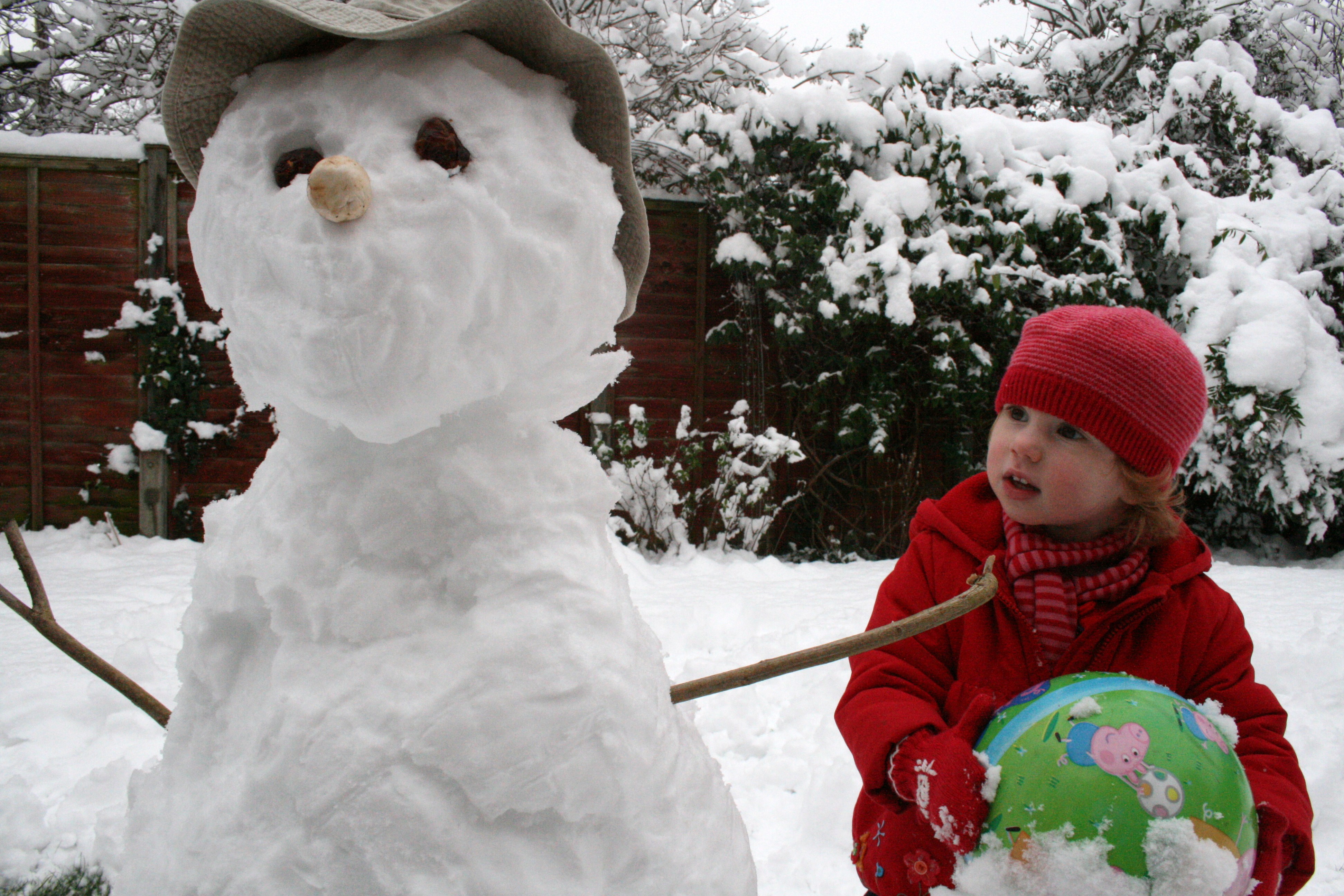
A couple of winters ago I was building a snowman with my daughter and she was traipsing through the white stuff dressed in a red coat and scarf. I think in the context of the song that it’s presumably Marling remembering that her father was the “smart” one with her scarf warming his throat but it doesn’t really matter to me – it instantly triggers the memory of a little girl cheerfully conversing with the snowman rising up out of the ground.

IMG_3853

As the song develops it explores the tension between leaving and staying that Marling feels as (presumably) a relationship ends, reflecting ruefully on the nature of love:

And a friend of mine says it’s good to hear

That you believe in love, even if set in fear

Well I’ll hold you there brother and set you straight

I only believe true love is frail and willing to break

She moves from disbelieving regret (I wrote my name in your book… only god knows why) to frantically pouring out some kind of explanation in a letter (I wrote an epic letter to you… it’s 22 pages front and back) before asserting that it’s too good to be used. A moment of candid self awareness – I tried to be a girl that likes to be used – before, finally, the confident assertion that I’m too good for that: there’s a mind under this hat and the decision to go (And I called them all and told them I’ve got to move).

That middle section is brilliant; sketching out the whirlwind of emotions and uncertainty that accompanies the breakdown of something in eleven perfectly judged lines, capturing the random little asides that the mind throws in to the mix. The wry, self deprecating and I bet you that he cracked a smile following only god knows why is a great touch, as is picking up the thread of being used – from her own letter being too good to be used to recognising that she had played a part that wasn’t her, wasn’t good enough for her, and that she was also too good to be used.

The tension in staying or going then wraps us back into that moment on the hill with her father, now torn between running away (as an independent adult) or returning to her family:

Feel like running

Feel like running

Running off.

And we will keep you

We will keep you, little one

Safe from harm

Like an extra arm, you are a part of us.

“Little one” is what Marling was often called within her family and, serendipity again, is also something that I call my daughter – I doubt it’s uncommon. The “we will keep you” lines deliberately borrow from the mice’s “We Will Fix It” song from Bagpuss, a British kids show from the 70s, which perfectly distills the sense of comfort and nostalgia in returning to the safety of her parents. On another level the Bagpuss tune itself is adapted from a 13th century folk round (“Sumer Is Icumen In”), something that I imagine Marling would be well aware of and that she may well have picked up from her parents; her father was also a musician and ran a residential recording studio, her mother was a music teacher. If it is a nod back to her parents, grounding the song back in a folk tradition which they may have taught her, then it’s a lovely touch. Even if it isn’t then it’s still a delightful moment in the song, it doesn’t need the context to work.

The sense in the song is that her choice is to strike out on her own (it’s called “Goodbye England” after all) but with a promise to return:

I will come back here

Bring me back when I’m old

I want to lay here, forever in the cold.

I might be cold but I’m just skin and bones

And I never love England more than when covered in snow.

I guess as a parent that’s the best you can hope for, that your child grows up confident and assured enough to strike out on their own but always with that promise to return. Like an extra arm, they are a part of us. So next time it snows there will undoubtedly be part of me that sighs heavily and prepares to shovel lumps of it off the drive. There’ll also be part of me though that puts this record on and remembers the privileged time I spent in bringing up my daughter, the opportunities to see the world anew, and the many, many glorious, transient, bittersweet moments along the way.